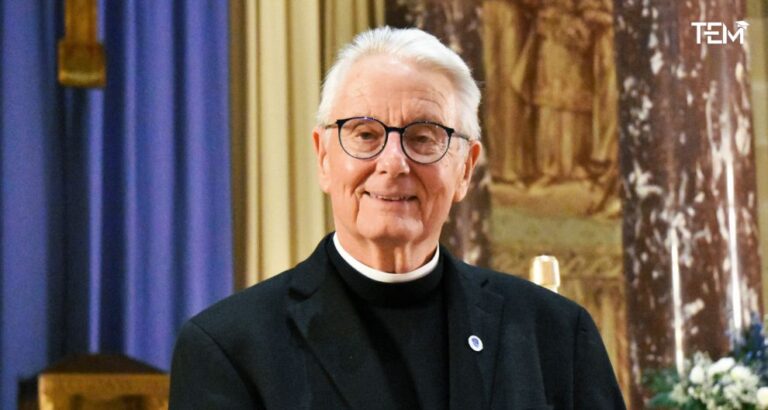
Education often finds its truest form in the lives of those who never stop learning. Some people begin their journeys with clear direction, while others discover their purpose through exploration and change. Fr. Phillip J. Brown, President-Rector of St. Mary’s Seminary & University in Baltimore, belongs to the latter group. His path has been shaped by curiosity, reflection, and a steady commitment to service and a growing sense of vocation rooted in his Catholic faith.
What began as a love for music at the University of Michigan gradually turned into a deeper calling. After earning his degree in music and teaching piano privately, Father Brown entered law school and spent six years in legal practice. Yet, the pull toward something more meaningful led him to the sacred ministry. Serving as a pastor and high school chaplain opened his eyes to the needs and potential of young people and a life of service in the Church and its educational mission. This commitment to education aligns with his identity as a Sulpician priest (P.S.S.), a society dedicated to seminary formation.
Those years transformed his outlook and ignited a lifelong devotion to education. Later, his work in canon law, seminary formation, and leadership at St. Mary’s further strengthened that purpose. Inspired by the mentors who shaped his own growth, Fr. Brown continues to guide students with the same integrity, empathy, and dedication that once inspired him.
Leading with Faith and Purpose
Fr. Brown’s role today bridges leadership and mentorship in equal measure. Serving as both CEO and pastor of the seminary community, he balances the demands of administration with the heart of a teacher. “It’s a challenging role with many diverse responsibilities,” he shares, reflecting on the depth of his work.
His journey reached two defining moments when he was appointed Rector of Theological College in Washington, where he once studied, and later as President-Rector of St. Mary’s Seminary in Baltimore. Founded in 1791, the first Catholic seminary in the United States, St. Mary’s holds a historic place in American Catholic education, a legacy Fr. Brown continues to uphold with pride and purpose.
Shaping the Next Generation of Servant Leaders
The longest-serving seminary rector in the country, Fr. Brown’s leadership centers on forming priests who combine intellectual depth with genuine compassion. His focus has been on shaping pastors who can guide their communities with wisdom, empathy, and strength. “Our goal is to prepare men who are not only well educated, but who also bring real pastoral sensitivity to their ministry,” he explains.
To support this vision, he has developed initiatives that foster emotional maturity, character formation, and selfless service. Each program encourages seminarians to grow as men of integrity who understand both the privilege and responsibility that come with serving others through priestly life.
A Vision Focused on the Future
Fr. Brown’s vision for St. Mary’s looks firmly ahead, grounded in the realities of today and the possibilities of tomorrow. He believes the strength of a seminary lies not in its numbers but in the depth of its formation. “We are focusing on quality, not quantity,” he says.
His strategy is to “right-size” the program, creating a model that reflects the Church’s current needs rather than longing for a past era. With this approach, Fr. Brown aims to prepare priests equipped for the challenges of modern ministry, ready to serve communities with purpose, and confident they have made a lasting difference.
Forming the Whole Person
For Fr. Brown, genuine preparation for priestly life begins with human formation, the foundation upon which all other aspects of ministry rest. He believes that before a man can serve others, he must understand himself, cultivate emotional maturity, and develop habits that sustain both his spirit and his work. “Human formation is key to our goals,” he explains. “It’s where character, balance, and purpose take shape.”
At St. Mary’s, this formation integrates the human, spiritual, intellectual, and pastoral dimensions of a priest’s life. Seminarians are encouraged to build steady, healthy routines, nurture a deep prayer life, and remain lifelong learners. The program helps them temper enthusiasm with realism, learning to embrace the joys and challenges of ministry with humility and self-awareness.
Ultimately, the goal is not only to prepare capable priests but to form whole persons: men of integrity who serve freely, joyfully, and with lasting balance.
Bridging Tradition and Practice
Fr. Brown places strong emphasis on ecumenism in his teaching, seeing it as both a duty and a necessity. “The divisions among Christians are a scandal to the world and hinder the mission Christ entrusted to us,” he says. He encourages students to approach one another with respect and love, regardless of differing perspectives.
In his canon law courses, Fr. Brown goes beyond the technical details. He connects the principles to real-world ministry, helping future priests understand how Church law shapes their daily responsibilities and interactions, and preparing them to serve their communities with wisdom and practical insight.
Balancing Scholarship and Service
Fr. Brown’s scholarship focuses on applying Church law in ways that are both thoughtful and pastorally sensitive. He explores the relationship between Church and civil law and has worked extensively on structuring Catholic institutions, particularly schools, to strengthen their educational mission. “The most important work is finding ways to support these institutions so they can continue serving their communities,” he explains.
Alongside his academic work, Fr. Brown has faced personal challenges, including discerning God’s call amid significant responsibilities and navigating the difficulties the Church has encountered in recent decades. These experiences have shaped his resilience and commitment to service.
Envisioning a Balanced Education
If Fr. Brown had unlimited resources to influence public education, he would focus on creating a more balanced curriculum. “Arts and humanities need equal weight alongside science and career preparation,” he says. His vision includes developing students as well-rounded individuals rather than solely emphasizing achievement.
He also seeks to address the disproportionate role of athletics in schools, aiming to cultivate environments where intellectual, artistic, and personal growth are valued equally alongside physical accomplishments.
Looking Ahead to Retirement
Fr. Brown plans to begin semi-retirement in 2026, shifting his focus toward scholarship, writing, and personal pursuits. “I hope to explore academic and popular writing on priestly formation and key issues in canon and civil law,” he explains. He also looks forward to dedicating more time to music and composition, reading, and enjoying hobbies like golf, swimming, and outdoor activities. This next chapter promises a balance of intellectual engagement and personal fulfillment after decades of leadership and service.
Finding Balance amid Demands
Fr. Brown acknowledges that work-life balance can be difficult, especially for educators and administrators. He emphasizes focus and knowing when to step back. “If a task comes at the expense of your health, it’s not worth it,” he explains. He also follows a simple philosophy: “If there’s a solution, solve it; if not, why worry? Stop worrying and get a good night’s sleep.” These principles help him maintain clarity, energy, and well-being while managing a demanding role.
Leading with Patience and Respect
Fr. Brown’s leadership rests on disciplined patience and genuine respect for others. “Most problems solve themselves if you give them time,” he explains. He believes that everyone is trying their best and that a leader’s role is to provide support, remove obstacles, and create the conditions for others to succeed. Success as a leader often shows up as the accomplishments of those you guide. Fr. Brown emphasizes the importance of acknowledging these achievements while quietly celebrating one’s own contributions, which will foster a culture of appreciation, growth, and lasting impact.
Quotes
“Show your appreciation; provide people with what they need to succeed; make it your job to remove the obstacles to other peoples’ success.”
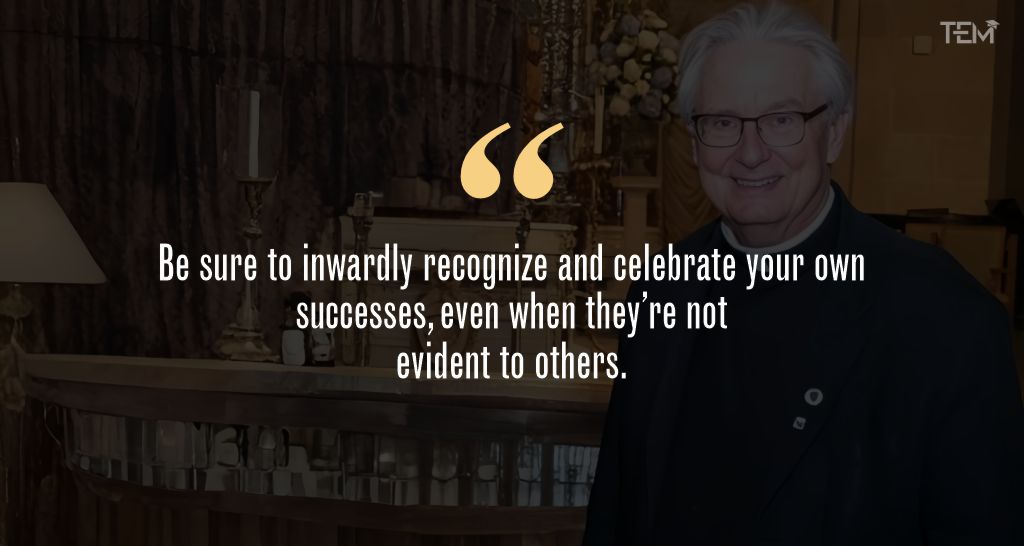
“Be sure to inwardly recognize and celebrate your own successes, even when they’re not evident to others.”
Also Read: The 10 Inspiring Education Leaders