Higher education has changed dramatically in the last 15 years. Student populations are more mobile, research partnerships have grown more complex, and the technology footprint inside a university is closer to a mid-sized enterprise than a traditional classroom environment.
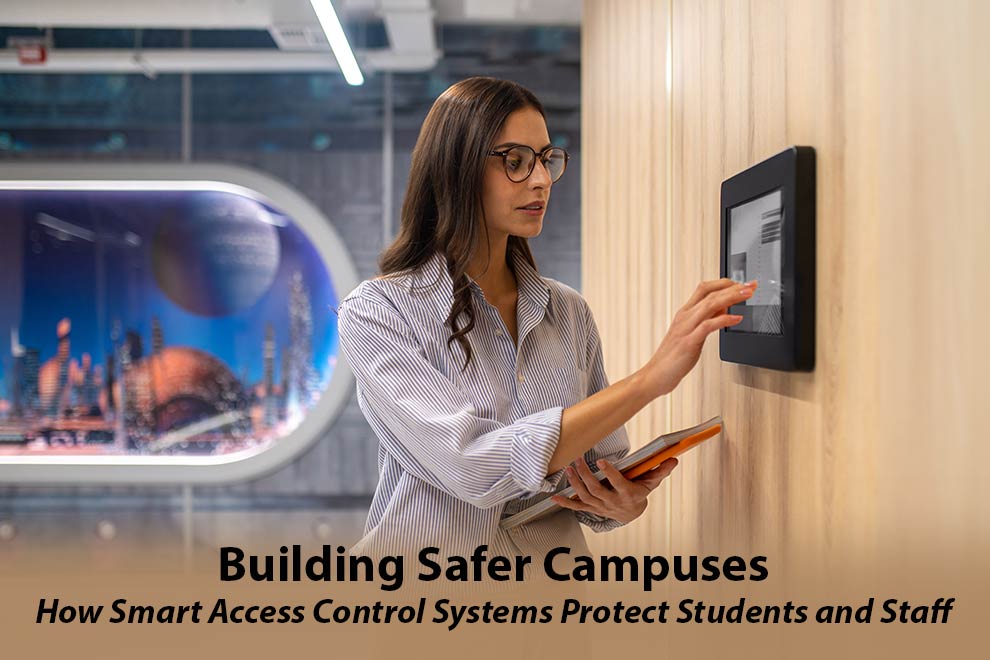
Campuses today are operating as mini cities with housing, labs, health centers, tech centers, food service networks, athletics facilities, and thousands of daily access demands concentrated into one geographic footprint. With that level of movement and responsibility, safety can’t be rooted in outdated security philosophy. Leadership must evolve the way access is controlled, monitored, and managed. Smart access control is becoming a foundational infrastructure choice for modern schools, and here’s how they are helping to improve safety.
They Help Campuses Protect High Value Areas and Manage Constant Movement
Colleges and universities often contain some of the highest density access traffic you’ll find anywhere. Thousands of people are coming and going all day with different authorization needs. Students accessing dorms. Research assistants entering restricted labs. Facilities staff moving in and out of maintenance areas. Contractors needing limited temporary access for short term work. School access control systems are designed to secure campus specific environments and provide structured entry management in a way that traditional locks simply cannot. This is exactly how these systems are positioned, because campuses have security challenges that change hour by hour, not just week by week.
If a college tries to run modern enrollment numbers with legacy entry methods, the risk exposure becomes disastrous. Smart access creates clean permission boundaries. It allows leaders to modify access rules in minutes without physically changing hardware, which matters more on campuses than almost any other environment.
Access Helps Protect Computers Running University Management Systems
Smart access systems don’t just protect physical rooms. They can also protect the digital environment by controlling who physically sits at computers that connect into critical academic systems. Many universities now run scheduling, student data, curriculum records, housing records, and course administration digitally. Using a university management system centralizes campus workflows. If those machines are physically accessible to anyone without restriction, the entire software environment becomes vulnerable.
When access control limits room entry into specific digital labs or admin spaces, it helps the school protect sensitive information that impacts both academic function and compliance. A person without authorization shouldn’t be able to walk into a lab, sit at a workstation, and pull up student records or research data. Smart access control creates a physical security boundary that supports cybersecurity strategy, not just facility management.
It Reduces Human Error and Improves Emergency Response Times
The hardest part of campus incident response historically is confusion during the first few minutes. Who was in the building? Who removed equipment? Who entered restricted lab spaces? Who had access to the area where something occurred? Smart access solves one of the biggest pain points, because it creates precise digital logs without forcing staff to manually document patterns. Emergency teams, campus police, and administrators get immediate clarity.
This dramatically reduces time wasted guessing. It prevents finger pointing. And it supports the right corrective measures happening faster. When every door and permission change is controlled and logged, leadership isn’t scrambling to piece together gaps after the fact. They already know what to look at and where to start.
Reinforces Dorm Safety Without Turning the Campus Into a Fortress
Residential life is often where campus safety concerns become the most emotionally charged. Students deserve to feel safe where they sleep. Parents assume their children are protected once they leave the classroom. Smart access allows campuses to tighten protection of dorm entrances and shared residential spaces without turning the entire campus experience into a police state.
Access control can create rules that allow only students assigned to that building inside. Guests can receive temporary codes. Access rules can tighten automatically during late night hours. A lost key card doesn’t require changing an entire lock system. Leaders can remove access instantly.
This protects not just physical safety but student peace of mind. They can still freely enjoy the independence of college while knowing that their physical living environment is carefully monitored and protected.
Smart Access Makes Facility Operations More Predictable
Universities are notorious for their maintenance complexity. Athletics facilities require access for media on some days and not others. Science buildings may contain hazardous equipment that is strictly regulated. Fine arts buildings require special protection for equipment that can’t easily be replaced. Traditional locking systems aren’t built for constant reconfiguration. Smart access systems reshape this problem.
When access rules shift, the system shifts with them. Maintenance teams, visiting academic partners, IT contractors, student workers, and seasonal staff can be given access profiles that match their actual needs instead of blanket access that introduces unnecessary exposure.
Also Read: How To Track And Monitor Shipments For Better Logistics Control