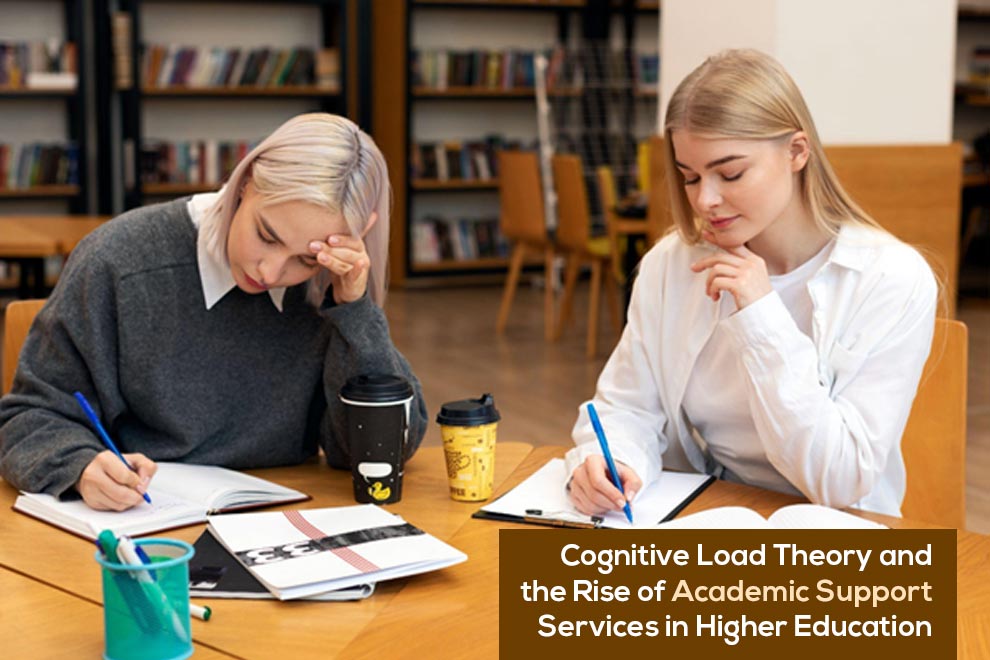
There is a clear link between cognitive load and how students learn. Cognitive load is about how much information the mind can handle at once. When there is too much work, learning drops. This happens often in higher education.
Students frequently have to manage intensive reading, writing, and difficult deadlines at the same time. This creates pressure, and the focus shifts towards finishing the tasks. Understanding becomes harder.
Over time, some students look for ways to reduce this load. Academic support services are part of that response and are often used when coursework becomes difficult to manage alongside other responsibilities. Platforms like Nerdpapers support students by helping them manage deadlines and workload pressure while maintaining academic standards.
Key Takeaways (TL;DR)
- Cognitive load affects how much students can actually learn.
- Too much work at once reduces focus.
- Higher education often pushes this limit.
- Learning turns into task completion.
- Some students look for ways to reduce the load.
- Support is used when the workload becomes hard to handle.
What Cognitive Load Theory Actually Means for Students
Cognitive Load Theory is about how much the mind can work with at one time. The brain does not hold unlimited information. When too much comes in at once, things start to slip. This affects learning more than effort does.
In class, this shows up when students read long texts and then move to another task right away. Notes pile up and the instructions overlap. The mind tries to keep everything active. At some point, it stops working well. This can happen even if the student understands the topic.
For many students, the problem is not the subject itself. It is the amount of thinking required at the same time. Too many steps, a lot of details, too many deadlines. This creates overload. Learning becomes slower. Sometimes it does not stick. This varies by situation.
What Cognitive Load Theory Actually Means for Students
This idea comes up when students try to keep up with normal coursework. It shows up in daily study, not in theory.
How the mind handles information
Cognitive Load Theory is about limits. The mind can only hold a certain amount at one time. When new information keeps coming in, older information gets pushed out. This makes learning harder. It does not mean the student is not trying.
In many cases, students deal with several ideas at once. A lecture moves fast. Notes are taken quickly. Instructions are added on top. The mind has to track all of this. At some point, it stops keeping up. This depends on the situation.
What this looks like during coursework
This often shows up during normal classwork. First, you read, then you write, and after that, you do another task. Deadlines are very close, and your mind keeps changing focus. This change requires both time and effort.
For students, the issue is not one hard topic. The main problem is that there are too many steps at the same time, details stack up, tasks overlap, the load grows, and learning slows down. Sometimes the material does not stay for long.
Why Cognitive Overload Is Increasing in Higher Education
This change did not happen all at once. It built up as courses and expectations changed.
More work packed into less time
Courses now cover more material in the same amount of time. Readings are longer. Assignments come more often. Deadlines sit closer together. The pace stays fast even when topics are complex.
In many cases, students move from one task straight into another. There is little space to process what came before. The mind stays busy the whole time. This adds pressure. It does not always feel obvious at first.
More demands outside the classroom
Higher education is not limited to classes anymore. Many students work part-time jobs. Some manage internships or other responsibilities. Schoolwork fits around these, not the other way around.
When time is limited, mental effort increases, and tasks are rushed. Planning becomes harder. The load grows even if the material itself is manageable. This depends on the situation.
Constant switching and digital pressure
Learning now happens across screens and platforms. Instructions are split between emails, portals, and documents. Students switch tools often, and this makes them switch their attention.
Over time, this constant movement adds strain. As a result, the focus drops dnd mmall details get missed. The overload builds quietly. It usually shows up later.
How Students Manage Cognitive Load on Their Own
Most students try to deal with overload before asking for anything else. They adjust how they work. This happens in small ways.
Breaking work into smaller pieces
One common response is to split tasks. A large assignment is broken into steps. Reading is spread out. Writing is done in parts. This makes the work feel lighter.
In practice, this does not always work. Deadlines still exist. Steps still pile up. The load drops a bit, but not fully. This varies.
Using schedules and routines
Some students rely on planners or fixed study times. Work is assigned a slot. Tasks are done in a set order. This helps reduce last-minute pressure.
Even with a plan, things shift. New tasks appear, old ones take longer, and as a result, the schedule breaks and the mental load returns.
Leaning on peers and campus resources
Students also talk to classmates. They compare notes. They ask questions. Study groups form around shared stress. Campus resources are used in similar ways, such as discussion with teachers during office hours, writing centres, and tutoring sessions. These help clarify tasks, but do not remove the workload.
When Self-Management Isn’t Enough: Structured Academic Support
This point usually comes after students have already tried to manage things on their own. It shows up when normal strategies stop working.
When coursework exceeds mental limits
Some coursework goes beyond what students can manage alone. Tasks become long and detailed. Deadlines sit close together. Even careful planning does not lower the load much.
At this stage, effort stops being the main issue. The mind stays crowded. Attention gets split. Progress slows. This does not happen the same way for everyone.
Seeking structure to meet expectations
In these situations, students look for structure. The goal is to stay aligned with course rules. Instructions still matter. Standards do not change.
Structure helps reduce confusion. Steps are clearer. Tasks feel more contained. Time pressure eases slightly. This varies by course.
External academic support as a practical step
External academic support exists for this reason. It handles parts of the work that take the most mental effort. This lowers unnecessary strain. The work itself does not disappear.
Some students use professional writing support when the overall load becomes too heavy to manage alone. This depends on timing and workload.
The expectations stay the same. The pressure is just carried in a different way.
Assignment-Specific Pressure and Targeted Help
This pressure usually comes from one task, not the whole course. It shows up suddenly and takes over attention.
When one assignment becomes too heavy
Some assignments demand a lot in a short time. Research, structure, and formatting are expected together. The instructions are clear, but the volume is high. This alone can push the mental load up.
At the same time, other deadlines do not pause; the task stack Focus has to be split. The strain grows quickly. This depends on timing.
Time limits more than skill gaps
In many cases, students know what to do. The issue is not ability. There is not enough time to handle everything properly.
When time runs short, thinking becomes rushed. Small details get missed. Instructions blur together. The overload comes from juggling tasks, not from the topic itself.
Narrowing the load to one task
Some students deal with this by narrowing their focus. Instead of managing everything at once, they reduce the weight of one assignment. This makes the rest of the workload easier to handle.
This is where assignment-specific academic help comes in, such as support used when students say they need someone to help with homework for a single task. It is used to handle the academic pressure from that one deadline that is difficult to manage.
The assignment still has to meet the same rules. The load is just limited to keep it manageable.
Do Academic Support Services Reduce Learning?
This concern comes up often. It is usually raised when support is mentioned at all.
The difference between help and replacement
Using support does not automatically remove learning. Learning depends on how the support is used. In many cases, students still read, review, and submit work themselves.
When support replaces all effort, learning drops. But when it is used responsibly to maange tasks overload, learning can still happen. So, both are not the same. If you understand the intent behind them, they are different from each other.
How support fits into existing academic systems
Support already exists inside universities. Tutors explain the material. Writing centres review drafts. Teaching assistants give feedback. These are normal parts of learning.
External support works in a similar way for some students. It handles parts of the workload that cause strain. The content still follows course rules. Expectations do not change.
The role of cognitive load
Cognitive load theory focuses on limits. When limits are exceeded, learning suffers. Reducing unnecessary load can help students focus on understanding.
This does not guarantee better learning. It also does not remove responsibility. The effect depends on how and why the support is used.
What This Trend Reveals About Modern Higher Education
This trend points to changes in how higher education works now. It is less about individual students and more about the system around them.
Increased demands without matching support
Coursework has grown heavier over time. More content is added. Fewer things are removed. Expectations rise, but time stays the same.
In many programs, this becomes normal. Heavy weeks are expected. Long assignments are common. The load is treated as part of the process. This does not always get questioned.
Adaptation rather than failure
Students respond to these conditions in practical ways. They adjust how they work. They look for ways to manage pressure. This is not always about avoiding effort.
Seeking support often comes from overload, not inability. The system creates strain. Students adapt to keep up. This depends on context.
A gap between learning theory and course design
Cognitive load theory has been known for years. Course structures do not always reflect it. Content keeps expanding.
This gap leaves students to manage the overload on their own. Support services fill that gap. The design itself stays the same.
Final Reflection: Learning Works Best Within Human Limits
This idea comes back to limits. Learning has always had limits, even if they are easy to ignore.
Cognitive load sets a boundary on how much the brain can handle at once. When work stays inside that boundary, learning is steadier. When it goes past it, things start to break down. This shows up in missed details and shallow understanding.
Higher education often pushes past these limits. More work has been added. Time does not expand. Students adjust in practical ways. This is part of how the system works now.
Support shows up because the pressure exists. It is tied to workload, not motivation. The limits stay the same. The system keeps moving.
Also Read: Adult Education Theory: Modern Solutions for Trainers