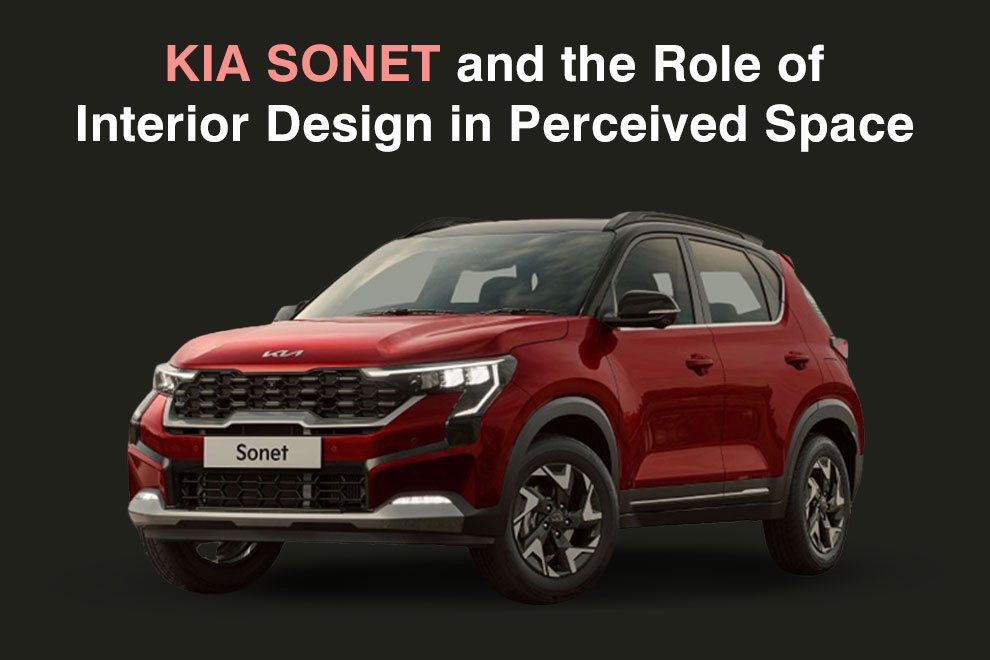
In compact SUVs, physical dimensions are constrained by segment regulations, yet buyer expectations around space and comfort continue to rise. As a result, manufacturers increasingly rely on interior design to influence how spacious a vehicle feels rather than how large it actually is. The Kia Sonet demonstrates how thoughtful cabin design can significantly enhance perceived space, creating an experience that exceeds its compact footprint.
This approach highlights the growing importance of design psychology in modern automotive interiors.
The Difference Between Actual and Perceived Space
Actual space is defined by measurable dimensions such as wheelbase, headroom, and legroom. Perceived space, however, is shaped by how occupants experience the cabin visually and physically.
Elements such as layout, lighting, material choice, and feature placement can make a cabin feel more open or more confined. In compact SUVs like the Kia Sonet, where physical expansion is limited, enhancing perceived space becomes a key design objective.
The goal is to make the cabin feel larger without increasing the vehicle’s size.
Horizontal Dashboard Layout
One of the most effective techniques used in the Sonet is a horizontal dashboard layout. The integration of a 26.03 cm (10.25”) touchscreen infotainment system and a full digital cluster creates a wide visual span across the front of the cabin.
This horizontal emphasis visually stretches the cabin, making it appear wider. The seamless alignment of screens reduces visual fragmentation, creating a cleaner, more spacious feel.
Such design strategies are commonly seen in larger SUVs and premium vehicles, reinforcing the Sonet’s perceived scale.
Lighting and Cabin Ambience
Lighting plays a crucial role in shaping the perception of interiors. The Sonet features LED ambient lighting for the cabin, enhancing the atmosphere and adding depth to the interior.
Ambient lighting reduces the visual boundaries within the cabin, making it feel less enclosed. It also allows for a more personalised environment, which contributes to overall comfort.
In combination with natural light from features such as a sunroof (available in select variants), lighting helps create an open and inviting space.
Seat Design and Ergonomics
Seat design also influences perceived space. The Sonet includes features such as:
- Front ventilated seats
- 4-way power driver’s seat
These seats are designed to optimise posture and comfort while minimising bulk. Slim seatbacks can increase the feeling of legroom for rear passengers, even if actual dimensions remain unchanged.
Ergonomic positioning ensures that occupants experience space efficiently rather than simply measuring it.
Material Choices and Colour Schemes
Interior materials and colour schemes significantly affect how space is perceived. The Sonet uses layered materials and contrasting textures to create visual depth.
Lighter tones and reflective surfaces can make the cabin feel more open, while darker accents add definition without overwhelming the space. This balance prevents the interior from feeling cramped.
Material quality also contributes to perceived premium-ness, which is often associated with larger vehicles.
Centre Console and Layout Efficiency
The centre console in the Sonet is designed to maximise usability without occupying excessive space. Features such as centrally positioned AC vents and accessible controls ensure that the layout remains functional and uncluttered.
An organised layout reduces visual congestion, making the cabin feel more spacious. When controls are intuitive and within reach, the overall experience becomes more comfortable.
Efficient use of space is as important as the amount of space available.
Technology as a Space Enhancer
Modern technology can also enhance perceived space. The Sonet integrates:
- Kia Connect with 70+ connected features
- Voice-controlled functions
- Digital interfaces for navigation and vehicle information
By reducing the need for physical controls and simplifying interaction, these systems create a cleaner cabin environment.
Digital interfaces replace multiple physical buttons, creating a more streamlined, spacious appearance.
Safety and Visibility
Visibility plays a subtle but important role in perceived space. Features such as the 360-degree camera and blind-spot monitor improve driver awareness and reduce the feeling of confinement.
When drivers feel more aware of their surroundings, the cabin feels less enclosed. This psychological effect contributes to a more open driving experience.
The Role of Digital Evaluation
Modern buyers often assess interior design through images and virtual comparisons before visiting showrooms. Online car-buying platforms such as ACKO Drive allow users to examine cabin layouts, feature placement, and design elements in detail before booking a vehicle online.
This digital exposure makes interior design a critical factor in initial impressions. Vehicles that appear spacious and well-designed are more likely to attract attention.
Conclusion
The Kia Sonet illustrates how interior design plays a crucial role in shaping perceived space. Through horizontal layouts, ambient lighting, ergonomic seating, efficient material use, and advanced digital interfaces, it creates a cabin that feels larger than its physical dimensions suggest.
In compact SUVs, where space constraints are unavoidable, the ability to enhance perception becomes a defining advantage. The Sonet demonstrates that in modern automotive design, how space is experienced can be just as important as how it is measured.
Also Read: Design That Protects and Inspires: Lessons from Car Upgrades