Public education often becomes the clearest mirror of a community’s hopes. When a city wants safer streets, stronger families, and better opportunities, it usually begins by looking at its schools. Classrooms reveal what a community believes about its children and how seriously it plans for the future. Across the country, districts that improve do so not through slogans but through patient, practical work that touches daily teaching and learning.
Northeast Ohio has seen that truth firsthand. Cities in the region have worked for years to rebuild local institutions after economic shifts and population changes. Schools became the meeting ground where those challenges turned into plans for renewal. Families asked for steadier leadership, higher expectations, and learning that felt connected to real life beyond graduation.
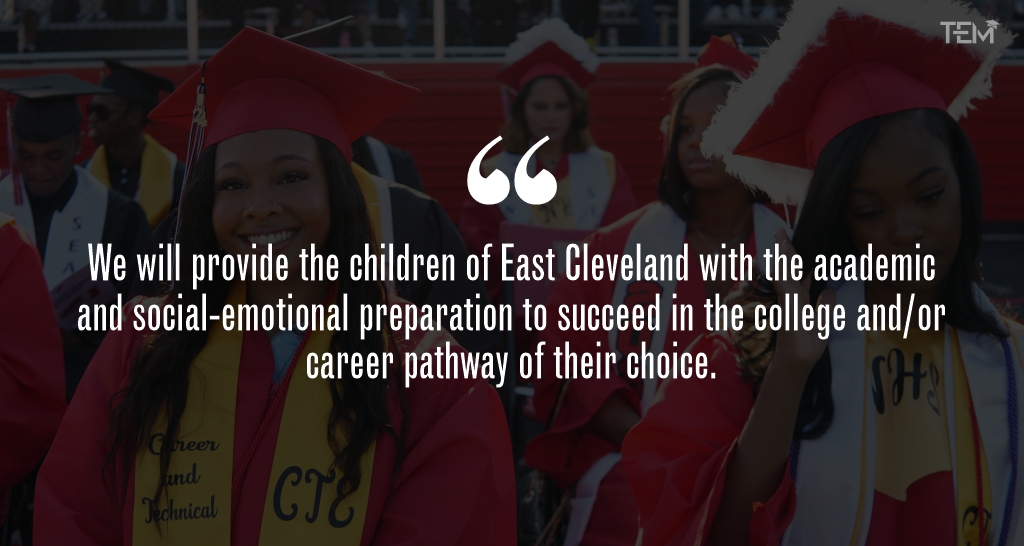
East Cleveland City Schools emerged from that same landscape with a clear direction. The district adopted a mission to deliver rigorous, equitable, and joyful learning that prepares students for college, career, and citizenship. Leaders organized their efforts through a Revitalization Plan and a strategic roadmap known as the Flight Path, placing student growth at the center of every decision.
By the third year of the plan, the district met 16 of 20 performance metrics, raised its Performance Index by more than 12 points, and earned a three-star overall rating with a four-star Progress score. Those results showed that steady, organized reform could translate into measurable gains for students.
The state’s release of East Cleveland City Schools from receivership confirmed that momentum. Today, the district moves forward with renewed stability and a sharper sense of purpose. Its story reflects a community that chose to invest in its children and in the schools that shape their futures.
District Structure and Leadership Model
School districts often struggle when decisions feel distant from classrooms. East Cleveland chose a different approach by keeping its organization simple and close to students. The district operates as a compact PK–12 system that includes neighborhood elementary schools, Kirk Middle School, and Shaw High School. Families move through a connected pathway rather than a scattered collection of buildings.
To keep that pathway focused, the district organizes its work into Empowerment Zones. Each zone is guided by a zone executive who oversees a specific area of responsibility. The Talent Engine supports the people who teach and serve students. The Learning Core shapes instruction and curriculum. The Data Core tracks progress and helps schools respond quickly to student needs. The Systems Spine manages daily operations, and the Fiscal Core protects the resources that make everything possible.
This structure places accountability close to the work. Zone leaders concentrate support where it matters most, while principals retain clear ownership of what happens inside their schools. Teachers know who to turn to for help, and families experience a system that speaks with one voice. The model treats leadership as a shared responsibility rather than a distant office downtown.
By organizing in this way, East Cleveland Schools connects strategy to everyday practice. The design encourages collaboration across departments and keeps attention on the single goal of student success.
Academic Programs and Measurable Strengths
East Cleveland Schools builds its academic program around the idea that students need different kinds of support at different stages of their growth. In the elementary grades, the district focuses on strong foundations in literacy and numeracy. Teachers use Universal Design for Learning and a multi-tiered system of supports to reach students with varied learning styles and needs. The goal is to make early classrooms places where every child can enter reading and mathematics with confidence.
Middle school shifts that foundation toward acceleration. Students work toward grade-level mastery while schools track progress through MAP growth targets. At Shaw High School, the program widens again to include credit recovery, career and technical education pathways, and steady college counseling. The design treats high school as a launch point rather than a finish line.
Recent results show how this approach has taken root. In grades three through five, the core-course passing rate reached 97.2 percent. Grades six through eight recorded a 96 percent passing rate, and students in grades nine through twelve achieved a 100 percent pass rate in Algebra II when they met the district benchmark. Early learning has also strengthened, with preschool literacy climbing to 63.5 percent and kindergarten through second grade literacy rising to 46.6 percent.
The district speaks honestly about the work that remains. The Performance Index stands at 52.5 percent against a goal of 60, and chronic absenteeism measures 53.2 percent compared with a target of 20. Leaders continue to run focused improvement sprints aimed at graduation rates and standardized testing, treating these challenges as the next steps rather than final judgments.
East Cleveland City Schools measures success one classroom and one student at a time. The mix of structured programs and clear data offers a steady picture of progress and direction.
How the District Defines Excellence and Ensures Equity
East Cleveland describes excellence in simple, practical terms. Excellence means consistent and measurable growth for every student, not only for a small group at the top. The district measures success by how reliably children move forward from where they begin, whether they need extra help or advanced challenge. That definition keeps attention on daily progress instead of distant labels.
Equity turns that definition into action. The district uses needs-based budgeting so that dollars follow students and schools with the greatest challenges. Staffing decisions work the same way. Literacy specialists, tutors, and counselors are placed where they can close gaps and support teachers in real time. Empowerment Zones receive resources according to student need rather than tradition or habit.
Transparency strengthens the approach. Leaders share public reports that explain how money, people, and programs are assigned across the system. Families can see the reasoning behind decisions, and schools understand what they are expected to deliver in return. The process treats equity as a visible practice rather than an abstract promise.
By linking growth to resources and openness, the school district creates a common standard for fairness. The district asks every adult to believe that each child can improve and then builds structures that make that belief possible.
Family, Community, and Student Supports
East Cleveland Schools treats families and neighbors as partners rather than visitors. The district co-designs programs with the Mayor’s Office, local organizations, and parents so that initiatives grow from real community needs. Conversations at kitchen tables and community centers shape decisions as much as meetings inside a central office.
To keep those relationships active, the district follows a calendar-driven family engagement system. Events, workshops, and school meetings appear on a shared schedule that families can rely on throughout the year. A Partnership Directory helps schools coordinate services with outside agencies, reducing confusion and making support easier to reach.
Student services extend well beyond the classroom. Career counseling introduces young people to options in growing industries, and many students earn recognized credentials before graduation. Recent data show that 65.7 percent of targeted students completed an industry credential, a step that connects schoolwork to real paychecks. Mental health services and internships aligned with local workforce needs add further layers of support.
The district views these efforts as part of the same mission as reading and mathematics. When families feel welcomed, and students see clear pathways after high school, learning gains a practical purpose. East Cleveland Schools works to surround children with a network that prepares them for life inside and outside the school doors.
Academic Progress and Release from State Oversight
East Cleveland Schools reached a turning point when years of careful documentation met clear academic results. Through the process outlined in Ohio Revised Code 3302.103 and the district’s Revitalization Plan, leaders presented evidence that improvement had become steady rather than temporary. The Performance Index rose by more than 12 points, and the state’s Progress rating moved from two stars to four stars. The district also achieved 16 of the 20 metrics set in its plan.
Based on that record, the state formally released East Cleveland from receivership. The decision rested on technical evidence of student growth and consistent implementation, not on administrative convenience. State reviewers looked at classroom results, systems of support, and the durability of new practices before closing the oversight chapter.
The achievement carries weight beyond local borders. Nationally, few districts complete a receivership that lasts seven and a half years while maintaining continuous leadership and showing verified academic gains. East Cleveland Schools managed both, demonstrating that long-term commitment can outlast the disruptions that often stall reform.
The release did not mark an end to improvement. Instead, it signaled that the district had regained local control with stronger habits and clearer direction. East Cleveland now carries responsibility for its next stage, backed by proof that progress can be measured and sustained.
Where the District Is Headed Next
East Cleveland City Schools views progress as a continuing journey rather than a finished project. The district plans to complete the Optimizing the Future facilities realignment so that buildings, schedules, and resources better match student enrollment and program needs. Leaders believe that well-designed spaces can strengthen instruction as much as new textbooks or technology.
Academic priorities will focus on deepening early literacy teams and strengthening math mastery across grade levels. Teachers and specialists will expand the practices that have already shown results, giving students more consistent support from preschool through high school. The district also intends to close remaining gaps in graduation rates and chronic absenteeism, two areas that shape long-term opportunity for young people.
Another goal centers on stability. East Cleveland aims to institutionalize the Flight Path so that progress continues even when leadership changes. Systems, not personalities, will guide decision-making and protect the gains students have already achieved.
The next chapter builds on lessons learned over the past several years. The district moves forward with a clear map, realistic priorities, and a commitment to steady improvement for every child.
Quote
Also Read: The 10 Elite School Districts Shaping Education in 2026