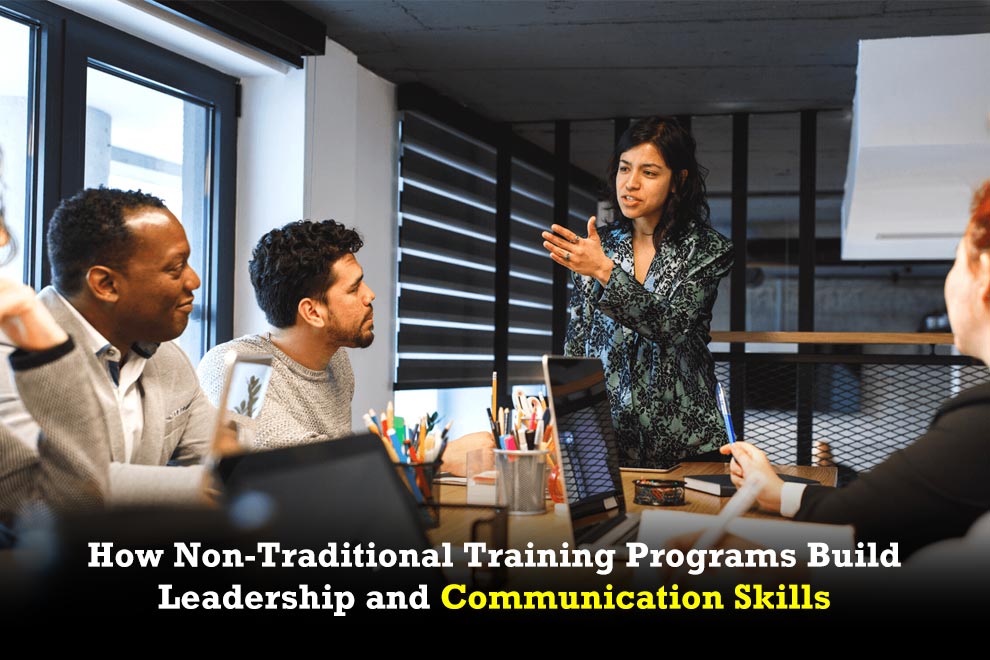
Leadership and communication are no longer skills reserved for executives or managers. In today’s evolving professional landscape, individuals across industries are expected to collaborate, guide teams, and express ideas clearly. While traditional degrees still provide foundational knowledge, many people are discovering that non-traditional training programs offer more practical ways to develop these essential soft skills. From hands-on workshops to experiential learning environments, these programs encourage real-world interaction, problem-solving, and adaptability.
Unlike classroom-heavy education, non-traditional training emphasizes participation, reflection, and practice. These experiences often place individuals in unfamiliar scenarios where they must communicate effectively, make decisions quickly, and lead without formal authority. Over time, this builds confidence and improves interpersonal abilities that are difficult to learn through textbooks alone.
Learning Through Real-World Scenarios
One of the biggest advantages of non-traditional training is its focus on real-world application. Participants are often required to complete tasks, collaborate in teams, or solve problems under time constraints. These environments mimic workplace dynamics and help individuals practice communication in realistic settings.
For example, leadership boot camps, adventure-based learning, and skill workshops often require participants to delegate roles, negotiate solutions, and present outcomes. These activities naturally strengthen leadership qualities such as decision-making, accountability, and adaptability. Instead of memorizing theories about leadership, individuals experience what it means to guide a team toward a shared goal.
Communication also improves in these settings because participants must clearly explain ideas, actively listen, and provide feedback. Over time, these repeated interactions help individuals become more comfortable speaking in groups and handling professional conversations.
Building Confidence Through Experiential Learning
Confidence is a critical component of both leadership and communication. Many people struggle to express ideas or take initiative due to lack of real-world experience. Non-traditional training programs bridge this gap by encouraging hands-on participation.
Workshops involving role-playing, simulations, or group challenges push individuals outside their comfort zones. When participants successfully complete tasks, they gain confidence in their abilities. This confidence then translates into stronger communication, as individuals become more willing to speak up, share ideas, and lead discussions.
Additionally, experiential learning often includes reflection sessions where participants review their performance. These discussions help individuals understand their communication strengths and identify areas for improvement. Constructive feedback in a supportive environment accelerates personal growth.
Encouraging Collaborative Leadership
Modern leadership is less about authority and more about collaboration. Non-traditional training programs often emphasize team-based activities where leadership roles shift depending on the task. This approach teaches participants that leadership is situational and that everyone has the potential to guide others.
Participants learn to manage group dynamics, resolve conflicts, and motivate team members. These experiences foster emotional intelligence, which is essential for effective leadership. By understanding different perspectives and adapting communication styles, individuals become more effective in diverse environments.
Some professional development initiatives organized by groups such as Bar Authority group focus on mentoring, peer learning, and collaborative skill-building. These formats encourage participants to share experiences and practice leadership within a supportive community. The emphasis on teamwork and open dialogue strengthens both communication and leadership capabilities.
Developing Active Listening Skills
Strong leaders are not just good speakers; they are also excellent listeners. Non-traditional training programs often incorporate activities that require participants to understand instructions, interpret feedback, and respond thoughtfully. These exercises promote active listening, which is a vital communication skill.
For instance, group problem-solving tasks require individuals to consider multiple viewpoints before reaching a solution. Participants learn to ask clarifying questions, acknowledge others’ ideas, and build consensus. These habits improve workplace communication and reduce misunderstandings.
Active listening also strengthens leadership by helping individuals make informed decisions. Leaders who listen carefully to their teams are better equipped to address concerns, delegate tasks effectively, and maintain positive relationships.
Improving Adaptability and Decision-Making
Non-traditional training environments often involve unpredictable challenges. Participants may be given limited time, incomplete information, or changing objectives. These conditions encourage quick thinking and adaptability—two qualities essential for leadership.
When individuals must make decisions in dynamic situations, they learn to communicate clearly and confidently. They practice explaining their reasoning, persuading others, and adjusting strategies when needed. These experiences prepare them for real-world scenarios where flexibility and strong communication are crucial.
Such training also helps participants manage pressure. By learning to remain calm and focused, individuals become better leaders who can guide teams through challenging situations.
Enhancing Public Speaking and Presentation Skills
Many non-traditional programs incorporate presentations, group briefings, or storytelling exercises. These activities help participants organize thoughts and communicate them effectively. Over time, individuals become more comfortable speaking in front of others and presenting ideas clearly.
Public speaking exercises also improve body language, tone, and clarity. Participants receive feedback on their delivery, which helps refine communication techniques. These skills are valuable in professional settings, whether leading meetings, pitching ideas, or training team members.
The informal nature of non-traditional training often reduces fear and encourages experimentation. Participants can try different communication styles and learn what works best for them.
Leadership Through Teaching and Coaching
Another powerful aspect of non-traditional training is the opportunity to teach others. Many programs encourage participants to guide peers or mentor newcomers. Teaching requires clear communication, patience, and structured thinking—all essential leadership qualities.
For example, a swim coach often develops leadership skills by guiding learners, providing instructions, and motivating individuals with varying abilities. This type of role naturally builds communication confidence and helps individuals learn how to adapt their message for different audiences. Coaching environments also encourage empathy, which strengthens leadership effectiveness.
By teaching others, participants reinforce their own knowledge while learning how to inspire and support team members.
Strengthening Emotional Intelligence
Emotional intelligence plays a major role in leadership and communication. Non-traditional training programs often emphasize self-awareness, empathy, and interpersonal skills. Through group activities and feedback sessions, participants learn to recognize emotions, manage reactions, and communicate respectfully.
These experiences help individuals handle conflicts constructively. Instead of reacting impulsively, participants learn to pause, understand different viewpoints, and respond thoughtfully. This ability is especially valuable in leadership roles where maintaining team harmony is important.
Emotional intelligence also improves communication clarity. Leaders who understand their audience can tailor messages effectively and build stronger connections.
Encouraging Creativity and Innovation
Traditional education sometimes focuses on structured learning, whereas non-traditional programs often encourage creative thinking. Participants are asked to brainstorm ideas, develop solutions, and experiment with new approaches. This fosters innovation and improves communication.
When individuals share creative ideas, they learn to articulate thoughts clearly and persuade others. These discussions also encourage open-mindedness and collaboration. Creative problem-solving environments naturally build leadership skills, as participants take initiative and guide discussions.
Innovation-driven training also prepares individuals for modern workplaces where adaptability and fresh ideas are highly valued.
Long-Term Impact on Professional Growth
The leadership and communication skills gained through non-traditional training programs extend beyond the training environment. Participants often notice improvements in workplace interactions, team collaboration, and confidence. These skills help individuals take initiative, manage responsibilities, and build professional relationships.
Employers increasingly value candidates who demonstrate strong interpersonal abilities. Non-traditional training provides tangible experiences that individuals can reference during interviews or performance evaluations. The hands-on nature of these programs also ensures that skills are retained and applied effectively.
Additionally, participants often develop a growth mindset. They become more open to feedback, willing to learn, and prepared to adapt to changing environments. This mindset supports long-term career development.
Conclusion
Non-traditional training programs offer a powerful alternative to conventional learning methods. By focusing on real-world scenarios, experiential learning, and collaboration, these programs help individuals develop leadership and communication skills in practical ways. Participants gain confidence, improve active listening, and learn to adapt in dynamic situations.
From coaching roles to group-based challenges, these experiences encourage individuals to step into leadership positions naturally. Over time, the skills gained through non-traditional training enhance professional growth, strengthen relationships, and prepare individuals for modern workplace demands. As industries continue to evolve, these flexible and hands-on learning approaches are becoming increasingly valuable for anyone looking to improve leadership and communication abilities.