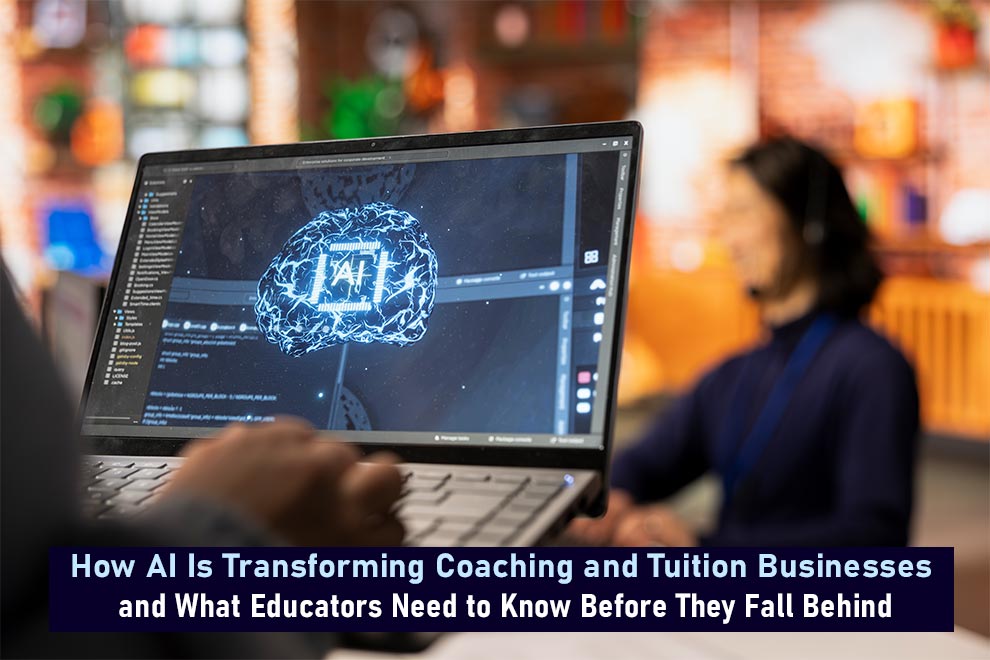
Artificial intelligence is changing the way people learn. Coaching centers, tuition providers, and private educators are no longer limited to traditional teaching methods. AI tools are helping businesses automate tasks, personalize lessons, and improve student outcomes. This shift is happening quickly, and those who do not adapt risk falling behind.
In the past, tutoring businesses relied heavily on manual systems. Scheduling classes, tracking attendance, managing payments, and updating progress reports took hours every week. Teachers often spent more time on administration than on teaching. Today, AI is reducing that burden. Smart systems can handle scheduling, send reminders, and even suggest lesson plans based on student performance.
The impact is measurable. Many tutoring businesses that adopt AI tools report up to a 40 to 60 percent reduction in administrative workload. This allows educators to focus on what matters most, helping students learn effectively. At the same time, AI improves the student experience by offering faster feedback and more tailored support.
AI is not replacing teachers. It is enhancing their ability to teach. Educators who understand this shift can use technology to grow their businesses and deliver better results. Those who ignore it may struggle to keep up with changing expectations.
The Rise of Personalization in Learning
One of the biggest advantages of AI in education is personalization. Every student learns differently. Some need more time with certain topics, while others move quickly. Traditional classrooms often struggle to adapt to these differences.
AI solves this challenge by analyzing student data. It tracks performance, identifies weak areas, and adjusts lessons accordingly. For example, if a student struggles with algebra, the system can recommend extra practice or simpler explanations. This targeted approach improves understanding and confidence.
Coaching centers using AI-powered platforms have seen clear results. In one case, a tutoring center introduced adaptive learning tools and noticed a 25 percent increase in student retention within six months. Students felt more supported, and parents saw measurable progress.
Personalization also extends to communication. Automated systems send updates to parents about student performance. Teachers receive insights that help them adjust their teaching strategies. This creates a more connected and responsive learning environment.
However, personalization requires strong data management. Educators must ensure that student data is handled securely and ethically. Transparency builds trust, especially when dealing with younger learners.
Automation Is Redefining Operations
Running a coaching or tuition business involves many moving parts. Scheduling classes, managing teachers, handling invoices, and tracking attendance can quickly become overwhelming. AI-driven platforms simplify these tasks.
Automation tools can assign classes based on teacher availability, student preferences, and room capacity. Payment systems send invoices and reminders automatically. Attendance tracking becomes seamless through digital check-ins. These improvements save time and reduce errors.
Sandro Kratz, Founder of Tutorbase, understands this challenge deeply. “When I ran tutoring centers, I saw how much time was lost on manual tasks. We built Tutorbase to remove that burden. I have seen centers cut their admin workload by half and use that time to improve teaching quality. Automation does not replace educators. It gives them the freedom to focus on students.” His experience building a global platform highlights how operational efficiency drives growth.
Automation also improves scalability. A tutoring business that once managed 50 students can now handle hundreds without increasing staff significantly. This opens new opportunities for expansion.
Still, educators must choose tools carefully. Not all platforms offer the same level of reliability. Testing and gradual implementation help ensure smooth transitions.
AI Is Changing the Student Experience
Students today expect fast and interactive learning experiences. They are used to instant feedback and digital tools. AI helps meet these expectations.
Chatbots can answer common questions instantly. Virtual tutors provide explanations outside of class hours. AI-powered quizzes give immediate feedback, helping students correct mistakes quickly. This keeps learners engaged and motivated.
Gamification is another growing trend. AI systems create challenges, rewards, and progress tracking that make learning more enjoyable. Students feel a sense of achievement as they move through levels and milestones.
Taylor Pace, representing Hey Congrats, highlights the emotional side of achievement. “I have seen how recognition motivates people to keep going. When students receive certificates or milestones, it reinforces their effort. We focus on creating meaningful ways to celebrate progress. AI can track achievements, but recognition makes them feel real.” His perspective shows that technology works best when combined with human appreciation.
Despite these benefits, balance is important. Too much reliance on automation can reduce human interaction. Students still need guidance, encouragement, and personal connection from educators.
What Educators Must Do to Stay Competitive
The shift toward AI is not optional. It is becoming a standard expectation. Educators who want to stay competitive must take action now.
First, they need to understand the tools available. AI platforms for scheduling, learning management, and analytics are widely accessible. Even small tutoring businesses can adopt them without large investments.
Second, educators should focus on training. Learning how to use AI tools effectively is key. A well-trained team can maximize benefits and avoid common mistakes.
Third, data literacy is becoming essential. Teachers and administrators must understand how to interpret insights generated by AI systems. This helps them make better decisions about curriculum and student support.
Sandro Kratz emphasizes preparation. “AI is not something you add later. It should be part of your long-term strategy. I always encourage educators to start small, test tools, and build systems that can grow. The earlier you adapt, the stronger your position becomes.” His advice reflects the importance of proactive planning.
Collaboration also matters. Educators can learn from each other by sharing experiences and best practices. Communities and networks help accelerate adoption.
The Role of Presentation and Achievement
As education becomes more digital, the way achievements are presented still matters. Certificates, diplomas, and recognition play a key role in motivation.
Taylor Pace of Honor U shares this perspective. “We believe achievements should be presented with pride. When students receive well-designed certificates or diplomas, it adds value to their hard work. AI can track progress, but presentation makes success tangible. I have seen how meaningful recognition boosts confidence and encourages continued learning.” His work shows that traditional elements still hold importance in a digital world.
Combining AI tracking with physical or visual recognition creates a complete experience. Students not only see their progress on a screen but also receive something they can keep and celebrate.
Challenges and Ethical Considerations
While AI offers many benefits, it also brings challenges. Data privacy is a major concern. Education platforms handle sensitive information, including student records and personal details. Strong security measures are essential.
Bias in AI systems is another issue. If algorithms are not designed carefully, they may produce unfair outcomes. Educators must ensure that tools are tested and monitored regularly.
Cost can also be a barrier for smaller businesses. While many tools are affordable, implementing multiple systems can add up. Careful budgeting and prioritization help manage expenses.
Finally, there is the risk of over-reliance on technology. AI should support teaching, not replace human judgment. The best results come from combining technology with experience and empathy.
Conclusion: Embracing the Future of Education
AI is transforming coaching and tuition businesses in powerful ways. It improves efficiency, enhances personalization, and creates better learning experiences. Educators who embrace this change can grow their businesses and deliver stronger results.
Sandro Kratz shows how automation can reduce workload and increase focus on teaching. Taylor Pace highlights the importance of recognition and presentation in motivating students. Together, their insights reveal a balanced approach to innovation.
The key lesson is clear. AI is a tool, not a replacement. It works best when combined with human expertise and care. Educators who adapt early will stay ahead. Those who wait may find it harder to compete.
The future of education belongs to those who are willing to learn, adapt, and evolve. By using AI wisely, coaching and tuition businesses can create meaningful, scalable, and impactful learning experiences for students everywhere.
Also Read: Self-Study vs Coaching: What Works Best for UPSC?