In a city known for its deep medical roots and neighborhood-driven care, dental education has long carried a dual responsibility. It must train skilled clinicians while staying closely tied to the people it serves. That balance is not easy to sustain over time, yet some institutions have managed to grow without losing that connection.
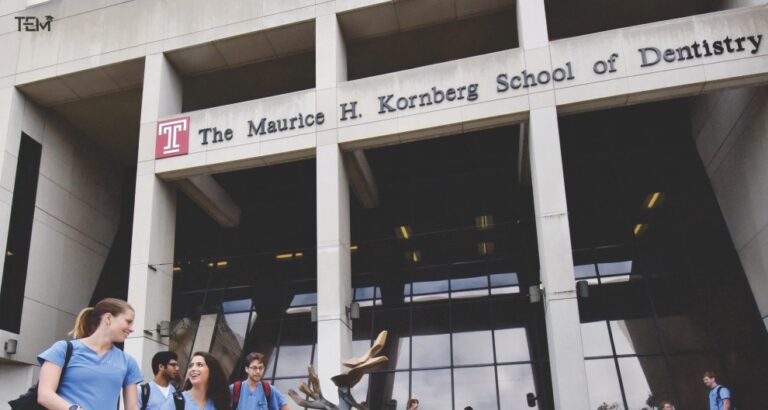
Among them is the Temple University Maurice H. Kornberg School of Dentistry, a school with origins that reach back to 1863. It began as the Philadelphia Dental College, opening its doors to just eleven students at a time when formal dental education was still taking shape in the United States. Over the years, it did not remain small for long. As dentistry evolved, so did the school, eventually joining Temple University in 1907 and later taking on the Kornberg name in 2006.
What stands out is not just its age, but how it has chosen to grow. The school’s mission centers on preparing dentists from varied backgrounds while keeping patient care grounded in evidence and compassion. Its clinics, which serve over 30,000 patients each year in North Philadelphia, reflect that intent in practice. Students are not removed from real-world challenges. They are trained within them.
The vision follows a similar line of thinking. Rather than focusing only on technical skills, the school pushes its students to think beyond the dental operatory. It encourages them to become public health advocates, lifelong learners, and problem solvers who can respond to changes in healthcare as they happen. Over time, this approach has shaped a learning environment that feels less like a closed academic system and more like an active part of the community it serves.
A Philosophy Built Around the Patient, Not the Procedure
Step into the clinics at the Kornberg School of Dentistry, and the first thing that becomes clear is that care does not begin with a procedure. It begins with the person. That idea sits at the center of the school’s education model and quietly shapes how students learn to think, decide, and act.
In recent years, the school has reworked how care is delivered by adopting a patient-centered system supported by lean management principles. The goal is simple to state but harder to execute. Every step in the care process must serve the patient’s overall well-being, not just address isolated dental issues. For students, this means learning to look beyond symptoms and consider patterns, risks, and long-term outcomes.
One of the clearest expressions of this approach is the Patient Wellness Report. Rather than treating care as a series of visits, this system tracks each patient’s progress across key stages of treatment. It adjusts to individual risk profiles and measures outcomes across multiple areas of health.
The effect on students is subtle but lasting. They are not trained to complete procedures alone. They are trained to follow through, assess results, and take responsibility for the full arc of care.
Programs That Reflect the World Students Will Serve
A dental school’s programs often reveal what it truly values. At Kornberg, the structure of its degrees points to something clear. It is not trying to produce one kind of dentist. It is preparing many, each shaped by different paths into the profession.
The Doctor of Dental Medicine program admits 140 students each year, forming the core of the school’s academic life. Alongside them, up to 30 internationally trained dentists enter through an advanced standing pathway, joining directly in the third year. This mix changes the classroom dynamic. Students are not only learning dentistry. They are learning how dentistry is practiced across cultures and systems.
Beyond the predoctoral program, the school runs seven residency tracks, covering specialties such as endodontics, orthodontics, prosthodontics, and oral surgery. Each program is intentionally small, allowing for closer mentorship and more hands-on experience.
Interest in these programs has not wavered. Applications have remained strong, even during uncertain global periods, with growing diversity across gender, background, and country of origin. Set within an urban environment, the experience extends beyond coursework. Students engage with real communities, gaining a perspective that feels grounded rather than simulated.
Admissions That Look Beyond the Obvious
Getting into Kornberg is not reduced to numbers on a page. The process starts with academics, but it does not end there. Applications are read with a wider lens, one that tries to understand how a candidate thinks, works, and responds to challenges over time.
The admissions committee looks closely at academic performance, including GPA and Dental Admission Test scores. These remain important. At the same time, equal weight is given to qualities that are harder to measure but easier to observe in patterns. Communication, ethics, and professionalism are considered alongside a student’s commitment to dentistry and the clarity of their long-term goals.
What stands out is how diligence is interpreted. It is not judged by a single achievement. It shows up in consistency. Sustained academic effort, long-term volunteer work, and the ability to push through setbacks all carry weight in the review process. Life and work experiences are not treated as extras. They help explain the person behind the application.
There is also a clear effort to keep the door open to students from different backgrounds. Financial need-based scholarships support those who may not otherwise have access, while the selection process itself avoids narrowing talent to a single type.
Leadership That Keeps the Work Real
The direction of a school often shows up in small, everyday choices. What gets measured, what gets questioned, and what gets repeated in classrooms and clinics. Much of that direction can be traced to Dr. Amid I. Ismail, Dean, Kornberg School of Dentistry, whose work has long sat at the intersection of public health and dental education.
Since 2009, his approach has stayed consistent. Build a system where students do not just learn procedures, but understand the outcomes of their decisions. That thinking has shaped how care is evaluated, how faculty stay aligned in their teaching, and how students are trained to look beyond immediate treatment.
He sums it up without overcomplicating it: “If you only focus on the procedure, you miss the reason it matters.” That idea carries weight across the school. Students are expected to leave with more than technical ability. They are expected to think in terms of people, context, and long-term impact.
A Structure That Keeps Leadership Within Reach
Leadership at Kornberg does not sit behind closed doors. It is spread across roles that stay close to daily operations, with decisions shaped through ongoing input rather than top-down direction. This horizontal structure allows different parts of the school to stay connected, especially where academics and patient care overlap.
A group of associate deans leads key areas of the school. Maria Fornatora focuses on the academic program, while Leona Sperrazza oversees clinical delivery. Student experience and diversity are guided by Jo Ann Nyquist, and research efforts are led by Marisol Tellez. Graduate education, admissions, finance, and hospital affairs are handled by Louis DiPede, Mustafa Badi, Jerry Barber, and Mehran Hossaini. Administrative continuity is supported by Bonny Reeder.
Oversight does not rest with individuals alone. Committees across the curriculum, faculty development, and outcomes assessment help maintain consistency, while open channels of communication keep leadership accessible and accountable.
Training That Holds Up in Real Practice
Clinical training here is not left to chance. It is built through repetition, feedback, and a system that expects both students and faculty to stay accountable. The idea is simple. If students are expected to deliver consistent care, the people teaching them must be just as consistent in how they guide and assess.
Faculty development plays a central role in that effort. Instructors are encouraged to keep improving across teaching, research, and service. They take part in continuing education, school-wide seminars, and postdoctoral sessions, along with thesis defenses that keep them close to ongoing academic work. Support also comes through structured training in teaching methods and the use of technology, helping faculty adapt without losing clarity in instruction.
Consistency is reinforced through a detailed calibration process. Faculty align on how preclinical work is assessed and how clinical competency is judged, so students are not navigating mixed expectations. This reduces guesswork and keeps evaluations fair.
There is also a support system behind the scenes. Faculty committees help newer members understand how the school operates, where they can grow, and how they can contribute over time. The result is a learning environment where standards are shared, not assumed.
Building a Culture Where Everyone Can Learn
Every classroom brings together students with different paths, pressures, and ways of learning. Kornberg addresses this not by lowering standards, but by building a culture that supports people while holding expectations steady.
Since 2016, a school-wide effort has focused on creating a more human-centered environment. The Wellness and Humanistic Culture Committee brings faculty, staff, students, and residents into the same room to talk through issues that affect daily life at the school. These are not symbolic conversations. They shape how people interact, learn, and work together.
In 2024, the addition of a wellness officer strengthened this approach. Programs now extend beyond academics, with initiatives designed to support mental and physical well-being. Partnerships with university wellness teams, along with activities like yoga and tai chi, give students space to reset without stepping away from their responsibilities.
The approach stays balanced. Support is available, but expectations remain clear. Students are encouraged to bring their full selves into the learning process while staying accountable to the standards of the profession.
Measuring What Actually Matters
Grades can only tell part of the story. At Kornberg, student progress is tracked in a way that goes beyond recall and tests how well knowledge holds up in real situations.
The predoctoral program is built around a clear set of professional expectations. Faculty have defined thirty competency areas that reflect both the school’s standards and the realities of modern dental practice. To graduate, students must demonstrate ability across all of them. It is not enough to understand concepts. They must show how those concepts translate into patient care.
Assessment happens continuously. Students receive regular feedback as they move toward each benchmark, allowing them to adjust, improve, and build confidence over time. This keeps learning active rather than reactive.
The results show up in outcomes. A 99 percent pass rate on the Integrated National Dental Board examination points to strong academic preparation. At the same time, graduates continue to find their footing across clinical practice, private settings, and leadership roles, suggesting a level of readiness that extends beyond the classroom.
Growth That Shows Up in the Numbers and the Neighborhood
Progress at Kornberg can be seen in two places at once. In its financial footing, and in how far its care now reaches beyond the main campus.
The school has steadily built a model that sustains itself. Over the past eight years, it has maintained a budget surplus, a sign of careful planning and disciplined growth rather than short-term gains. That stability has allowed it to invest back into programs, facilities, and patient care without overextending its resources.
At the same time, clinical services have moved closer to the community. A four-chair clinic at William D. Kelley Elementary School now provides care for children, including those with special needs, along with their caregivers. This partnership with the local school district reflects a shift toward meeting patients where they are.
Research has also gained ground. A U01 grant from the National Institute of Dental and Craniofacial Research in 2023 marked a step forward in work around periodontal disease prediction using machine learning. By 2024, the school had moved up to rank twenty-four in NIDCR funding, a notable rise within a few years.
Support That Extends Beyond the Classroom
Student support at Kornberg is built to cover more than academics. The focus stays on overall well-being, with resources that address emotional, physical, and professional needs alongside coursework.
Mentorship plays a central role. Early on, the first and second year student mentoring programs help new students adjust to the pace and expectations of dental school. As they move into clinics, peer mentoring between D3 and D4 students builds confidence and practical understanding in patient care.
Students are also encouraged to take on leadership roles. They contribute to internal bodies such as the Honor Board and Admissions Committee, while staying connected to professional groups like the American Student Dental Association and the American Dental Education Association.
Alongside this, wellness initiatives such as yoga and meditation offer space to stay balanced through demanding training.
Expanding Reach Without Losing Focus
The next phase of growth at Kornberg is shaped by a simple idea. Expand access, but do it in a way that strengthens both learning and care.
In 2024, the school increased its intake of international dentists by adding twenty more seats, alongside the development of a new faculty practice near Temple’s central campus. This move does two things at once. It creates room for a larger, more diverse student body and brings clinical services closer to a growing urban population near Center City.
Another step is taking shape beyond the city. A rural dental campus, developed with the Tamaqua Community Area Partnership, is set to open in Fall 2026. Designed to host twenty students, the clinic will serve communities across multiple counties where access to dental care remains limited.
Students who choose to train there will receive housing support, making participation more practical. The goal is clear. Bring care to underserved areas while giving students a setting that reflects real gaps in the system.
Leadership in Digital Dentistry and Artificial Intelligence
The dental school has been recognized among its peers for the wide and progressive implementation of digital dental practice. The school is on a path towards becoming fully digital in processing dental prostheses. In Artificial Intelligence, the school has developed impactful data analysis to analyze the large data on medical and dental care, identify correlations and predictors of oral health, and link medical and dental electronic health records.
Quote: