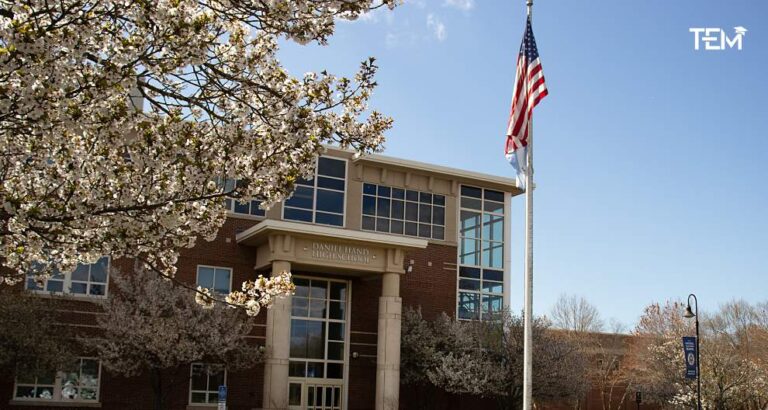
Public education has changed dramatically over the last decade. Schools are no longer judged only by test scores or graduation rates. Families now look for places that can prepare students for real conversations, real problems, and a world that rarely offers simple answers. In many communities, that shift has pushed schools to rethink not just what students learn, but how they learn it.
At Daniel Hand High School, that rethinking did not happen overnight. It grew through years of reflection, collaboration, and steady refinement. Located in a community that values both academic strength and personal growth, the school has shaped its identity around a simple but meaningful idea: students should leave high school ready to think clearly, act responsibly, and contribute with purpose.
That philosophy became even more defined in 2022, when the school revisited its mission and vision through conversations with faculty members and the wider community. The result was not a dramatic reinvention, but a clearer articulation of what had already been taking shape across classrooms and programs. Today, the school focuses on creating an environment where students build critical thinking skills alongside integrity and empathy. The goal is not simply academic achievement. It is resilience, curiosity, and the confidence to participate in a complex society.
Over the years, Daniel Hand High School has steadily adapted its instructional model to match the realities of modern education. One of the most significant shifts came through the development of its Profile of a Graduate framework. Originally rooted in a 2014 skills matrix centered on twenty-first-century learning, the model evolved into a more integrated system that now shapes every course across the school.
By 2021, the framework had become fully implemented across student learning. Graduation requirements such as Personal Finance and Independent Project brought practical experience into the academic journey, giving students opportunities to connect classroom knowledge with real-world decision-making. Around the same time, the school introduced “How Tigers Talk,” a discussion framework designed to help students navigate disagreement with respect and thoughtfulness. In an age where conversations can quickly become divided, the initiative reflected the school’s belief that communication itself is a skill worth teaching.
Curriculum development has also become a collaborative effort led by teachers and supported by the district’s Central Office. Rather than allowing programs to remain static, the school regularly revisits course content to ensure it reflects current needs, emerging ideas, and the changing expectations students will face after graduation.
What stands out most is the school’s willingness to evolve without losing its core identity. Daniel Hand High School has not chased trends for the sake of appearance. Instead, it has focused on building a learning culture that values adaptability, practical understanding, and human connection. The result is a school that continues to move forward while staying grounded in the needs of its students and community.
Turning Curiosity Into Capability
Walk into a science or technology classroom at Daniel Hand High School, and the atmosphere feels noticeably different from the traditional model many people remember. Students are not sitting quietly while information moves in one direction. Instead, they are building, testing, questioning, and solving problems in ways that make learning feel immediate and relevant.
That approach comes from a philosophy centered on active participation. The school believes students learn best when they investigate ideas for themselves using tools and experiences that reflect the modern world. Guided by the Next Generation Science Standards framework, classrooms emphasize inquiry, experimentation, and collaboration over memorization alone.
Technology plays a major role in making that possible. Through Performance-Based Assessments and real-time feedback systems, students track their own growth while applying concepts in practical settings. Spaces like the FabLab, Robotics Lab, Innovation Lab, and professional media studios turn ideas into tangible work. Interdisciplinary programs, including co-taught Marine Science and Humanities courses, further encourage students to connect knowledge across subjects and think beyond traditional academic boundaries.
Creating Pathways With Purpose
Many high schools offer STEM courses. What makes the experience here distinct is the way students move beyond introductory exposure and into meaningful specialization. The school has built academic pathways that allow students to explore interests deeply while gaining skills that translate directly into college programs and modern careers.
Programs in Marine Science, Biotechnology, Computer Science, and Engineering form the backbone of the STEM curriculum. Students are introduced not only to technical concepts but also to the language, problem-solving methods, and analytical thinking expected in professional environments. Learning becomes more tangible inside the school’s FabLab, where digital ideas take physical shape through prototyping and fabrication tools.
Career and Technical Education pathways further expand those opportunities. From Manufacturing and Design to Journalism, Business, and Food Services, students can explore a wide range of industries while developing practical experience. The school’s trimester schedule also creates room for advanced coursework, passion projects, AP classes, and Early College Experience programs. By graduation, many students leave with both academic confidence and a clearer vision for what comes next.
Expanding Access to Academic Opportunity
Conversations about academic excellence often focus on outcomes, but at Daniel Hand High School, equal attention is given to access. School leaders recognized that advanced learning opportunities only matter when students from different backgrounds and learning levels can realistically participate in them. That belief has shaped both the school’s enrollment structure and its broader academic culture.
Students can choose from a wide range of rigorous programs, including 18 Advanced Placement courses, 17 Early College Experience offerings, and several dual enrollment opportunities supported through state grant funding. What stands out, however, is the effort to reach students who may not traditionally see themselves in advanced classrooms.
One of the school’s most significant changes involved restructuring mathematics instruction.
Rather than separating students into lower academic tracks, the school introduced co-taught Algebra and Geometry courses with integrated special education support. Additional programs like Algebra Lab and Geometry Lab help students build confidence while working toward independence. Combined with flexible prerequisites and an open-override policy, the approach reflects a larger commitment: high expectations should belong to every student, not just a select group.
Learning Beyond the Classroom Walls
At Daniel Hand, engagement comes from participation, not observation. Students are encouraged to step into experiences that feel real, challenging, and connected to life beyond school. That mindset is visible in the state’s only nationally certified public school FabLab, where students design, prototype, and create using industry-level tools.
Hands-on learning also reaches beyond campus. Marine-focused programs allow students to build boats and earn boating licenses, while STEM field studies have taken students to places like Bermuda and the Galapagos. A long-standing exchange partnership with Freiburg, Germany, gives students international exposure and a cultural perspective.
Competitive programs further strengthen the learning environment. Students take part in VEX Robotics, Independent Projects, and audition-based music programs that demand preparation and discipline. Industry-connected clubs like GAINS add another layer of career exploration, helping students connect academic learning with professional opportunities.
Supporting Growth Without Lowering Expectations
Strong academic standards only work when students have the support needed to reach them. That balance is built into the structure of everyday learning at the school. The school’s trimester schedule gives students flexibility to explore different subjects while still pursuing rigorous coursework through AP and Early College Experience programs.
Inside the classroom, teachers use hands-on instruction and differentiated strategies to meet varying learning styles. A growth-focused redo and retake policy also encourages students to improve through reflection rather than fear of failure. With a student-to-teacher ratio of 10:1, educators are able to provide more individualized attention.
Support systems extend well beyond academics. The Student Support Team monitors student progress and coordinates interventions when needed. Programs such as TESOL, FASE, and Effective School Solutions provide targeted academic, life-skills, and emotional support, ensuring students from diverse backgrounds can succeed in demanding learning environments.
Redefining What Student Success Looks Like
Success here is not measured only through grades or test scores. The school places equal importance on how students think, collaborate, create, and respond to challenges. That philosophy is reflected in its Profile of a Graduate framework, which outlines ten core capacities across areas such as critical thinking, self-direction, creativity, and global awareness.
Rather than relying solely on traditional exams, teachers use Performance-Based Assessments woven into classroom learning from pre-K through high school. These assessments place students in real-world scenarios where they must solve problems, design solutions, and work collaboratively. Feedback focuses not just on outcomes, but also on the skills students demonstrate throughout the process.
Students continue building those abilities through Independent Projects, where they pursue self directed work tied to personal interests. The school’s partnership with the Mastery Transcript Consortium also allows students to showcase these strengths through digital portfolios and skill based achievement badges.
Leadership Built on Collaboration
Academic excellence at Daniel Hand High School is driven by a leadership culture that values collaboration over hierarchy. Administrators, program coordinators, and faculty members work closely together with a shared focus on student growth and community connection.
The school’s leadership team, including the principal, assistant principals, athletic director, and program coordinators, emphasizes accessibility and open communication. Even difficult conversations around discipline are approached with relationship-building in mind, helping students remain connected to the school community.
Program Coordinators also play an important role by mentoring teachers and supporting curriculum development within specific subject areas. School leaders encourage honest dialogue and continuous improvement, creating an environment where new ideas can be discussed openly.
That collaborative spirit extends to students through a 40-member Student Leadership group that regularly communicates student perspectives. Just as importantly, the administration places strong emphasis on supporting teachers, recognizing that innovation and consistency grow best in a workplace where educators feel trusted, respected, and valued.
Preparing Students for an Unpredictable Future
The leadership team at Daniel Hand High School believes education must prepare students for a world that continues to change rapidly. Rather than treating learning as a fixed path, the school encourages students to develop the flexibility and mindset needed to adapt to new challenges throughout life.
One message remains central across the school community: adaptability matters as much as technical knowledge. While academic skills open doors, school leaders believe resilience, curiosity, and the ability to grow through uncertainty are what help students succeed over time.
That philosophy shapes the culture students experience each day. The school aims to create what leaders describe as a “brave space,” where students feel encouraged to take thoughtful risks, ask difficult questions, and learn from mistakes without fear of judgment.
By promoting open-mindedness and continuous learning, Daniel Hand High School hopes to graduate students who are not only prepared for college or careers but also ready to contribute meaningfully in a constantly evolving world.
Recognition Across Academics, Leadership, and Student Life
Recent milestones of the school reflect both academic strength and a deeply active school culture. In 2024, the school earned recognition as a National Blue Ribbon School and was named a School of Distinction through the State Accountability Index. The same year, DHHS successfully completed its NEASC reaccreditation process, meeting all required standards and principles.
Student achievement has also expanded beyond traditional academics. Since launching Seal of Biliteracy testing in 2022, dozens of students each year have earned certification across multiple languages. Career and Technical Education programs have twice received national recognition from the International Technology and Engineering Educators Association.
Outside the classroom, students continue to excel in arts, athletics, and media. From the award winning VIBE show choir to 84 state athletic championships and statewide video competition victories, the school’s impact reaches well beyond academics alone.
Building Support Beyond the Classroom
Student support at Daniel Hand High School extends far beyond academics. The school has built a network of services designed to support emotional well-being, career planning, and personal growth throughout the high school journey.
Programs like the Helping Hallway provide students with direct access to psychologists and social workers, while the Advisory Program focuses on executive functioning, goal-setting, and social-emotional learning. Peer Advocates, developed in partnership with Madison Youth and Family Services, also help connect students with support resources when needed.
College and career preparation begins early through individualized counseling, Junior Meetings,
Common App workshops and financial aid events. Students also gain exposure to professional environments through visits to companies and medical centers, including Sikorsky and Electric Boat.
Career-focused programs further strengthen readiness through internships, work-study opportunities, and certifications such as OSHA 10, CPR, SolidWorks, and OnShape.
Looking Toward the Next Chapter
Daniel Hand High School continues to look ahead with a strong focus on adaptability and future readiness. School leaders recognize that education must evolve alongside changing industries, technologies, and student needs, and several new initiatives are shaping that direction.
One major development is the introduction of a Mastery-Based Transcript system designed to showcase student competencies, projects, and experiences alongside traditional grades. The school is also expanding recognition opportunities through the launch of its World Language Honors Society.
Career and Technical Education pathways are being further strengthened through Perkins enhancement grants, helping students build skills aligned with emerging workforce demands.
Technology integration remains another priority, particularly in the area of artificial intelligence literacy. Rather than treating AI as a separate subject, the school is weaving AI-related experiences into classroom learning to help students think critically, adapt responsibly, and prepare for careers that may not yet exist today.
Quote