In many rural parts of the United States, schools often begin as small, practical solutions to immediate needs. A handful of classrooms, a modest vision, and a community hoping to give its children something steady to build on. What happens next depends less on infrastructure and more on intent. That story fits the early days of Deane Bozeman School.
The school opened in 2000 as a K–8 school, serving a limited student base with a straightforward purpose. There was no sense yet of scale or long-term expansion. Just a functioning school doing its job. But within a few years, the direction began to shift. In 2003, the addition of the 9th grade marked the first step toward something larger. By 2007, the school graduated its first senior class, completing its transition into a full K–12 institution.
Growth did not arrive all at once. It came in phases, shaped by demand and the school’s own willingness to expand. Over time, enrollment climbed to around 1,700 students. What began as a quiet rural campus gradually turned into a more prominent academic presence in its region.
The mission and vision were never introduced with grand language. They revealed themselves through these choices. Expand when needed. Serve more students. Build continuity from early education through graduation. What stands today is not the result of a single defining moment, but a series of steady decisions that, together, changed the scale of what the school could offer.
A K–12 Model with Agriculture at Its Core
Across Northwest Florida, most public schools follow a familiar structure. Elementary, middle, and high schools exist as separate steps, often spread across different campuses. Only a handful attempt to bring that entire journey under one roof. Deane Bozeman chose to do exactly that, positioning itself as one of just two K–12 public schools in the region.
That structure shapes how students experience learning. A child can begin in kindergarten and move steadily toward graduation without resetting their environment every few years. Teachers build longer relationships. Expectations evolve with continuity instead of disruption.
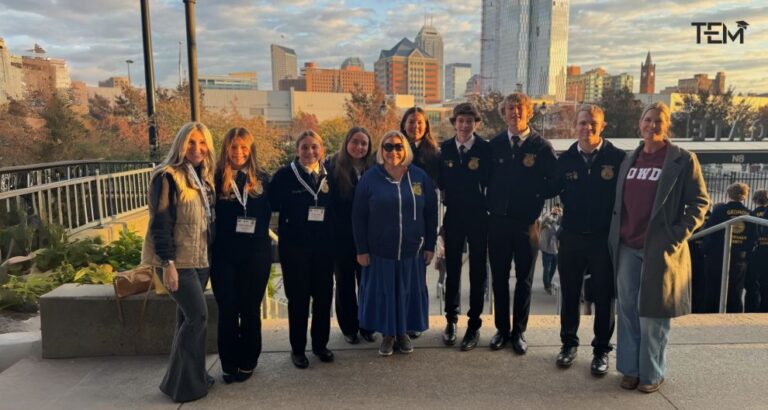
At the center of this model sits a defining academic focus: agriculture. The program is not treated as an elective add-on but as a core thread running through the school’s identity. Through its strong alignment with the National FFA Organization, students engage in hands-on learning that connects classroom concepts with real-world application. In a region where most schools lean toward standard academic tracks, this emphasis sets a different tone.
A Philosophy Built on Participation, Not Separation
A school’s philosophy often appears in slogans, but its real weight shows up in daily choices. At Deane Bozeman, that idea takes shape through a simple line: Dedicated to Building Success. It is not treated as a tagline. It works more like a standard the school holds itself to, from a student’s first day on campus to the moment they graduate and step beyond it.
One decision, in particular, defines how this philosophy plays out. The school follows a full inclusion model. Students with disabilities learn in the same classrooms as their peers, not in separate tracks. That choice reshapes the experience for everyone involved. It builds familiarity, removes barriers early, and sets a different expectation for what a classroom should look like.
The results are visible over time. Graduation outcomes for students with disabilities have improved, but just as important, participation stretches across academics, athletics, the arts, and extracurricular life. No single path stands apart from the rest.
Open Access with a Clear Academic Expectation
In many public schools, admissions rarely becomes a defining conversation. Zoning and capacity tend to settle that question. Here, the approach stays open by design. The program is available to any student willing to be part of it, without selective screening or layered entry barriers. What sets the tone is not who gets in, but what is expected after arrival.
At the high school level, students commit to taking one to two advanced or program-specific courses each year. It is a simple requirement on paper, yet it carries weight. It nudges students to step beyond the minimum, to engage with coursework that asks a bit more of them. Over time, that expectation shapes the academic culture of the school.
Access, in this sense, is not treated as a separate initiative tied only to income or background. The structure itself keeps the door open. At the same time, it places a steady responsibility on students to participate actively in their own progress.
A Perspective Shaped by Access
In a school built on steady growth and practical choices, the tone set at the top tends to follow the same pattern. Ivan Beach, Principal at Deane Bozeman School, keeps the message clear enough for students, parents, and educators to act on without much translation. “STEM is for everyone,” he says.
That belief does not stay limited to traditional definitions of science or technology. It shows up in how the school treats agriculture as a legitimate and accessible entry point. Through programs connected with the National FFA Organization, students encounter problem-solving in real settings, not just in theory.
The suggestion that follows is practical. Find a program nearby and get students involved early. When exposure comes first, hesitation tends to fade. Over time, what once felt out of reach starts to look like a natural next step.
Where STEM Becomes Tangible
For many students, STEM can feel distant, something confined to textbooks or labs. Here, the approach shifts that perception by placing it in a setting students already recognize. Agriculture becomes the bridge.
The common image of farming often lags behind reality. It brings to mind simple tools and manual effort. That version no longer reflects how the field operates. Today, agriculture leans heavily on math, data, and the scientific method. It asks questions about efficiency, sustainability, and scale, then expects students to work through real answers.
Classrooms extend beyond four walls because of this. Lessons connect directly to outcomes that students can see and measure. Teachers guide that process by tying concepts to application, making sure students understand not just what works, but why it works.
This approach builds a different kind of accountability. When students see the impact of their work, engagement follows more naturally. Learning stops feeling abstract and starts carrying a sense of purpose tied to real-world needs.
Meeting Students Where They Are
Walk into any classroom, and the differences show up quickly. Students learn at different speeds, respond to different methods, and carry different experiences with them. The challenge is not recognizing those differences. It is deciding what to do with them.
At Deane Bozeman, the response stays tied to the same inclusion model that shapes the broader school experience. Instead of expecting students to adjust to a fixed system, the school works to understand how each student learns best. That means paying attention early, identifying needs, and adjusting support before gaps begin to widen.
The goal is not to lower standards or create separate tracks. It is to give students the conditions they need to meet those standards. Some may need more structure, others more flexibility, and some simply more time.
When that alignment happens, progress becomes more consistent. Students are not asked to fit into one way of learning. They are given a fair chance to succeed within it.
Looking Beyond the Report Card
Grades still matter, but they do not tell the whole story. A student can perform well on paper and still miss out on skills that carry into the real world. That is why success here is measured through a wider lens.
One indicator is participation. How many students choose to enter the program, and how many continue as the coursework becomes more advanced? Progression through the sequence says as much about engagement as it does about ability. Another marker comes through industry certifications and program completion, where students demonstrate skills that hold value outside the classroom.
The most telling measure appears later. Students begin applying what they have learned in practical settings. Some move into roles as veterinary assistants, others pursue careers as veterinarians, and some take their understanding into fields like agricultural law. These outcomes reflect something more durable than grades. They show whether learning has translated into direction.
The People Behind the Program
Strong programs rarely grow on structure alone. They depend on individuals who shape them over time, often in ways that are not immediately visible from the outside.
At the center of the agriculture program is Becky Peltonen, who leads both in the classroom and in its broader direction. Her work has helped turn the program into a recognized program within the FFA community. That kind of recognition does not come from a single initiative. It builds through consistency, student outcomes, and sustained effort.
Alongside her, Christie West oversees the high school program with a focus on curriculum and growth. Her role connects planning with execution, ensuring that expansion does not come at the cost of quality.
Together, their work reflects a balance between vision and structure, where programs are not only maintained but steadily developed.
Markers of Growth in Recent Years
Progress at a school often becomes visible through moments that are hard to overlook. In recent years, several of those moments have come together to reflect how far the program has come.
The Class of 2026 offers one clear example. Students in that cohort earned more than 365 industry certifications, pointing to a level of preparation that extends beyond standard coursework. These certifications signal skills that carry value outside the classroom, not just within it.
Recognition has followed at a broader level as well. The school’s chapter within the National FFA Organization was named among the Top 10 in the nation, alongside multiple state and national titles earned over time.
Individual contributions have also stood out. Becky Peltonen received recognition as Florida FFA Advisor of the Year, reflecting the kind of leadership that often drives these outcomes behind the scenes.
Support That Extends Beyond the Classroom
Learning does not end with coursework, and preparation for what comes next rarely happens by accident. Students here have access to structured support that helps them think beyond graduation while they are still in school.
The school counseling department provides direct access to career guidance, helping students map out options based on their interests and progress. Alongside that, the agriculture program adds another layer of direction. Through its connection with the National FFA Organization, students gain exposure to training opportunities and networks that extend well beyond their immediate community.
Practical experience plays a central role. Students interested in veterinary pathways are placed in internships that allow them to observe and participate in real settings. For those completing industry certifications, a 100-hour internship at a local veterinary office is required.
These experiences shift career exploration from theory to practice, giving students a clearer sense of where their skills can take them.
Building for What Comes Next
Growth, in this case, is not being left to chance. Plans are already taking shape to support what the program could become over the next several years.
The school is working with local legislators to develop a dedicated agriculture facility designed to match the scale of its ambitions. The proposal includes a covered arena, veterinary spaces, and classrooms built specifically to support hands-on learning. Each element serves a purpose, not just as an upgrade in infrastructure, but as a way to deepen how students engage with the program.
The intent is straightforward. Create an environment where learning can expand without being limited by space or resources. With facilities designed around real-world applications, students would have more room to practice, experiment, and refine their skills.
If completed as planned, this addition would not mark a shift in direction. It would reinforce what the school has already been building, while opening the door for the next phase of growth.
Quote