Public education often reveals its character not in size or scale, but in how clearly a community understands why it exists. In a compact township along the Delaware River in Burlington County, one school district has spent the past century shaping that answer with care. Edgewater Park Township School District serves children from pre-kindergarten through eighth grade before they continue on to Burlington City High School. What appears at first to be a modest, two-school system reveals something more layered on a closer look.
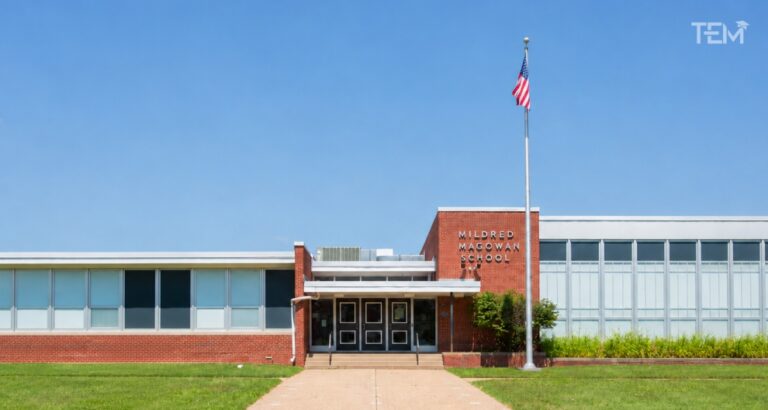
The district traces its roots to 1924, when Edgewater Park became an official township. Over time, its schools grew alongside the community, eventually forming a focused preK–8 system within a three-square-mile area. Today, Mildred Magowan Elementary School introduces young learners to full-day preschool and early academics, while Samuel M. Ridgway Middle School prepares older students for the transition to high school. Together, they serve close to 1,000 students in an environment often described by those who know it as a quiet standout.
At the center of this district sits a clear sense of purpose. Its formal mission speaks to maximizing each student’s potential and building a community of lifelong learners who respect diversity and face the future with confidence. That idea has recently been sharpened through a process the district calls “mission clarity.” Drawing inspiration from a story shared by Brené Brown about St. Jude Children’s Research Hospital, district leaders asked a simple question: Can every adult explain their purpose in the same clear way?
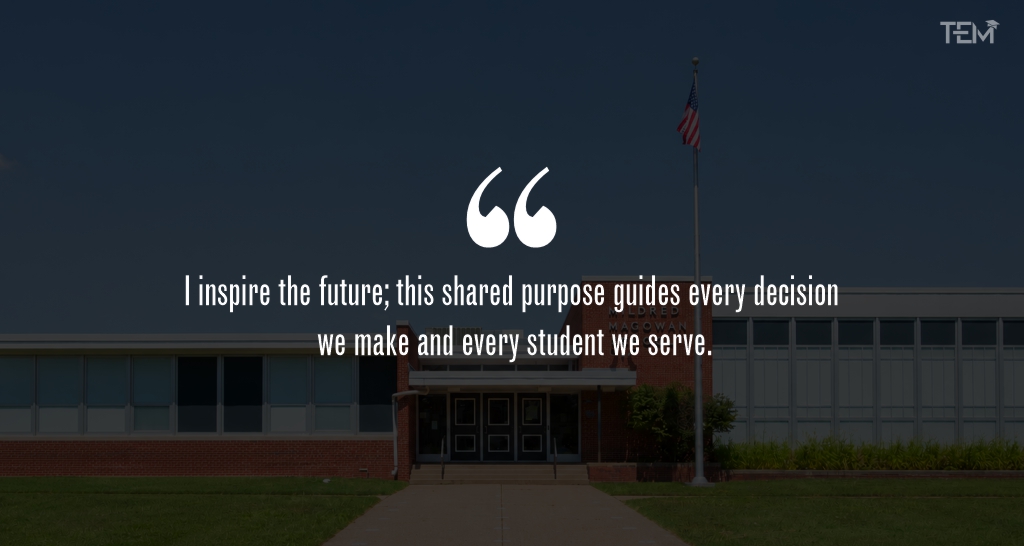
The answer took shape in a short, direct statement created with input from staff and students alike. “I inspire the future.” The phrase now guides how lessons are planned, how decisions are made, and how people across the district describe their work. It reflects a shift from having a mission on paper to living it in daily practice.
That clarity builds on years of steady evolution. What began as a small local system has grown into a standards-aligned district with full-day early childhood programs, updated curricula, and a careful eye on student progress. Data, community input, and strategic planning now shape how resources are used and how improvements are made. Even with these changes, the district has held on to something harder to measure but easy to feel: a close-knit culture where students are known, supported, and prepared for what comes next.
A Two-School System, One Connected Community
Within a compact stretch of Edgewater Park Township, the structure of the district is simple by design but intentional in execution. The district operates just two schools, each with a clearly defined role in a student’s early academic journey.
Mildred Magowan Elementary School serves children from pre-kindergarten through fourth grade, laying the groundwork in literacy, numeracy, and social development. From there, students move to Samuel M. Ridgway Middle School, where grades five through eight focus on deeper academic engagement and preparation for high school.
Across both schools, roughly 1,000 students reflect a diverse and evolving community. Many multilingual learners speak Spanish, Portuguese, and Turkish, and a transient population brings added complexity to instruction. Alongside this, a strong special education program ensures that varied learning needs are met with care, making the district both structured and responsive.
Academic Pathways That Build with Each Step
As a preK–8 system, Edgewater focuses its academic design on strong early and middle years, before students continue to Burlington City High School. The progression is steady and intentional.
At Magowan, students move through a balanced program that pairs core subjects with exposure to PE and health, art, music, STEAM, and technology. These early experiences are not treated as extras but as part of how students learn to think and explore.
By the time students reach Samuel M. Ridgway, the structure becomes more defined. Core courses in math, science, English language arts, and social studies anchor the day, with honors pathways in pre-algebra and algebra offered in grades seven and eight. Specials continue alongside, giving students both rigor and range as they prepare for high school.
Leadership That Connects Vision with Practice
Leadership across Edgewater works as a connected system rather than a hierarchy. At the center, Superintendent Dr. Pamela Nathan guides long-term direction, working with the Board of Education to align planning, resources, and district priorities.
Inside each school, principals Shelby Larison and Michael Melvin translate that direction into daily practice. They focus on instruction, staff development, and maintaining a steady school culture where expectations are clear and consistent.
The Edgewater Park Board of Education sits at the front edge of this work, providing the steady governance that keeps the district’s purpose clear and its efforts aligned. Led by President Lester Holley and Vice President Daryl Lloyd, the Board includes members Karen Daly, Raymond Rebilas, Shania Hosein, Randy Stephens, Karen McLaughlin, Colleen Torres, and Dalya Tucker. Together, they bring a mix of local insight and long-term perspective to each decision. Working in close partnership with Dr. Nathan and the leadership team, the Board ensures that policy, budgeting, and planning stay anchored to what matters most for students and families.
Board goals directly mirror the district’s wider direction. They emphasize high-quality instruction, student well-being, equitable access, and thoughtful stewardship of resources, echoing the priorities that guide school-level planning and classroom practice. The result is a unified system where goals at the board, district, and school levels represent a shared vision. When the Board approves a curriculum shift, supports a new program, or backs investments in early childhood and intervention, those choices connect immediately to the work unfolding in classrooms each day.
Across conversations and meetings, Board members highlight the district’s progress as a collaborative accomplishment. They recognize teachers, support staff, and administrators alongside the Edgewater Park Education Association as essential to creating student-centered, relationship-driven schools. They also view families and students as central partners, whose engagement through the PTO, advisory groups, and everyday communication breathes life into strategic plans. In a small district defined by a clear sense of purpose, the Board maintains focus on that overarching vision, helping ensure that everyone, from governance to the classroom, moves together under a single statement of intent: “I inspire the future.”
Support roles keep that work grounded. Assistant principal Michelle Latesta and dean Michael Radichel work closely with students and families, handling behavior and support with a restorative approach. Curriculum and learning are guided by Dr. Nicole Inverso Vogt, Director of Curriculum and Special Education, alongside Dr. Alexis Drummond and Florencia Girman, while Nancy Lane ensures operations run smoothly behind the scenes.
Defining Excellence, Planning with Purpose
Inside classrooms across the district, there is a quiet shift in how success is understood. It is not framed as finishing a syllabus or preparing for the next test. It shows up in how students ask questions, how they work through problems, and how comfortable they feel taking intellectual risks.
Excellence, here, rests on a few steady ideas. Strong relationships come first. Learning must feel relevant and engaging. Growth is expected from both students and adults. Teachers build lessons that connect disciplines and mirror the kind of thinking students will need outside school, with technology woven in where it adds value.
The district’s strategic plan keeps its focus tight. Priorities include high-quality instruction, student well-being, closing opportunity gaps, and building future-ready skills. Decisions are shaped with input from staff, students, and families. The shared purpose remains clear and present in that work.
Meeting Students Where They Are
In a district where no two classrooms look exactly the same, consistency comes from how needs are met, not from expecting students to fit a single mold. At Edgewater Park, support systems are built to stretch in both directions, helping students who need more time as well as those ready to move ahead.
Students with disabilities are served through a range of in-house special education programs designed to keep support close and responsive. Multilingual learners are guided through an ESL program, including a newcomer track that helps students settle into both language and school routines. For those below grade level, targeted intervention in English language arts and math runs across K–8.
At the same time, advanced learners are challenged through gifted and talented programming, accelerated math in middle school, and opportunities in the visual and performing arts. Teachers adapt curriculum daily, supported by ongoing professional development that keeps instruction flexible and current.
Partnerships That Carry the Work Further
No school system operates in isolation, and here, that idea is taken seriously. At Edgewater Park, relationships with families and community partners are built as part of the district’s core work, not added on later.
One of the clearest examples is the Community Advisory Council. Meeting several times a year, it brings together township leaders, police, faith representatives, business owners, and educators, along with voices from Burlington. The goal is simple but demanding: keep everyone aligned on what students need and how the community can respond together.
Families are part of that same structure. The PTO, regular surveys, and communication platforms keep conversations open and two-sided. Partnerships also extend outward to institutions like Rowan University, where collaboration brings new ideas into district planning.
Among the district’s integral partners is the Edgewater Park Education Association (EPEA). Under the leadership of President Joey Hanners and Vice President Kelly Evans, the union works side by side with the administration to nurture student-centered classrooms that prioritize meaningful relationships and the development of essential skills. This partnership reinforces a culture where educators, staff, and leaders are aligned around what matters most: students.
The result is a network that shares both responsibility and direction.
A School Day That Extends Beyond the Bell
Walk through any of the campuses after classes end, and the building feels anything but quiet. Student life carries on in gymnasiums, classrooms, and rehearsal spaces, where participation is less about obligation and more about belonging.
Athletics draw strong interest, with boys and girls competing in basketball, soccer, baseball, and softball, alongside intramural options like volleyball and soccer that keep things open to all skill levels. At the same time, the arts hold equal ground. Concert band, jazz band, choir, and the annual spring musical give students space to perform and collaborate.
Clubs add another layer. Students write for the Ridgway Register, gather in book and chess clubs, or join groups like STEM, National Junior Honor Society, and cheerleading. Others choose quieter paths through run and walk groups or mindfulness clubs. The range reflects a simple idea: every student should find a place to step in.
Building Access into Everyday Learning
Equity in the district is not treated as a separate initiative. It shows up in how decisions are made and how support is delivered across classrooms. A range of programs creates multiple entry points for students. Intervention services, special education, ESL support, and gifted and talented pathways are all guided by data, which helps the district identify needs early and respond with precision. That same data informs a developing Multi-Tiered System of Supports, where processes are being refined to better track progress and adjust instruction.
Teachers are trained to meet students where they are. Ongoing professional development focuses on differentiation, data use, and strategies like SIOP that support multilingual learners. Communication with families follows the same principle. Through ParentSquare, messages can be translated into home languages, keeping families connected. Technology adds another layer. Tools like Learning Ally and Mote help remove barriers, making content more accessible and learning more inclusive.
Support Systems That Reach Beyond the Classroom
Learning here does not stop when the last class ends. At Edgewater Park, support takes shape through a mix of academic help, enrichment, and guidance that follows students through different stages of growth.
After-school programs like Skills Club, TASK, Reader’s Theater, and STEM Club give students extra time and structure to strengthen core skills. Others find balance in clubs that focus on movement, creativity, or shared interests, from running and yoga to art, gardening, and board games. Music and performance remain active after hours as well, with band, chorus, and the annual musical bringing students together for public events.
Guidance is built into the system. School counselors, a social worker, and specialized teams support academic, social, and emotional needs. Events like Career Day and programs led by local police introduce students to future pathways, while family English classes and community nights keep support connected to home.
Looking Ahead with Clarity and Intent
Planning for what comes next has become a shared exercise across Edgewater Park Township School District. The district is in the middle of a strategic planning process that brings together administrators, teachers, staff, students, families, and community members, all working toward a common direction.
Part of that work has focused on how people think and collaborate. Staff engaged in the Kolbe Assessment to better understand problem-solving styles, while leadership teams participated in Fishbird experiences designed to push thinking beyond routine solutions. These efforts helped refine a shared purpose: “I inspire the future.”
That purpose now guides concrete steps forward. A new hands-on math program is set for elementary grades, while updated English language arts curricula continue to roll out across K–6, with a focus on vocabulary and knowledge building. Each move is tied back to a single question: how to better prepare students for what lies ahead.
Quote:
Also Read: Frontier International Academy (Empowering Futures: Outstanding U.S. School Districts of 2026)