By the Education Magazine | June 25, 2026
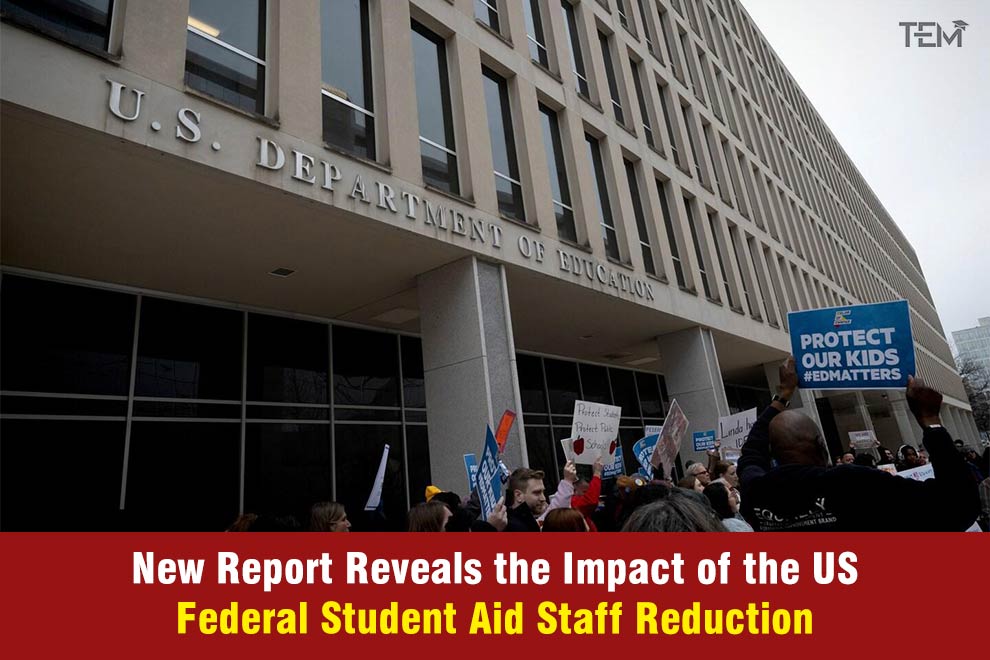
A new Inspector General report has found that recent staffing cuts at the U.S. Department of Education hindered several congressionally mandated activities, raising concerns about oversight of the federal student aid system.
The findings come after the Office of Federal Student Aid lost nearly half of its workforce, reducing staffing from 1,433 employees to 777.
The report warns that the Federal Student Aid staff reduction disrupted key monitoring programs, paused oversight activities, and weakened safeguards for a student loan portfolio worth nearly $1.7 trillion that serves more than 40 million borrowers.
The Crisis By the Numbers
To understand the speed of this education department workforce reduction, here are the core facts highlighted by watchdogs:
| Key Area | What Changed | The Impact |
| Total Headcount | Dropped from 4,200 to 2,300 workers | Total education department workforce reduction |
| Office of FSA Staff | Cut by 45% (down from 1,433 to 777) | Shrank the federal student aid administration |
| Canceled Plans | 129 active contracts terminated | $1.3 billion lost in data tracking and tools |
| Student Aid Distributed | More than $100 billion is sent out annually | Funding for federal grants, loans, and work-study |
| National Debt Pool | Valued at nearly $1.7 trillion | Outstanding student loan portfolio |
| Affected Group | Over 40 million student loan borrowers | Every day, people paying back loans |
Key Findings from the Inspector General Report
The core finding of the Inspector General report is that rapid staff losses left remaining employees unable to carry out several congressionally mandated responsibilities.
Federal Student Aid Staff Reduction directly blocked the department from performing its mandatory education program oversight duties:
- A multi-million-dollar evaluation tool used to review loan servicer performance was halted.
- Student loan servicer oversight activities were suspended because of staffing shortages.
- The Government Accountability Office confirmed that key monitoring activities stopped after workforce reductions.
- Before oversight paused, four out of five major servicers failed basic accuracy standards and incurred $850,000 in penalties.
Can Half the Workforce Oversee $1.7 Trillion in Student Debt?
The latest Federal Student Aid staff reduction has raised concerns about whether the Department of Education can maintain oversight of one of the world’s largest student loan systems.
In just one year, staffing at the Office of Federal Student Aid fell by 45%, reducing the agency’s capacity across contract management, compliance, and technology functions.
The Department of Education manages a student loan portfolio worth nearly $1.7 trillion and distributes more than $100 billion in aid annually.
With half the team gone, the agency has been forced to halt key tracking tools, raising concerns about oversight and administrative errors.
Why It Matters for Student Loan Borrowers
Although the staffing cuts occurred within federal agencies, the effects could extend to millions of student loan borrowers who depend on federal aid programs and student loan forgiveness options.
The report highlights several areas where reduced staffing may affect oversight and borrower protections:
- Reduced Monitoring: Watchdogs found a significant drop in active student loan servicer oversight.
- Undetected Mistakes: Borrowers face a greater risk of billing errors going undetected while tracking potential student loan interest rate reductions.
- Fewer Resources: The agency has fewer staff members available to oversee day-to-day borrower support systems.
- Security Gaps: Staff shortages create increased challenges in identifying fraud and compliance issues.
Rising Risks of Identity Theft and Fraud
The report also highlights growing concerns about fraud prevention as staffing levels continue to fall. Because fewer compliance officers are available to double-check applications, scammers have more opportunities to exploit the system.
The Inspector General’s office reported that it recently had to step in to stop a massive, multi-state fraud ring. Scammers attempted to steal $16 million in federal aid by submitting over 1,200 fake applications using stolen identities.
The case highlights the challenges of maintaining effective student aid fraud prevention efforts with fewer staff available to review applications and monitor suspicious activity.
What People Are Saying
The watchdog report has drawn fierce criticism from employee groups and consumer advocates who argue that staff cuts hurt families far more than they save money.
Rachel Gittleman, the president of the American Federation of Government Employees Local 252, issued a sharp statement:
“The Inspector General makes clear that the Department can no longer do its job. It cannot fulfill its duties, prevent waste, fraud, and abuse, or follow federal law. Nothing is fine, and this report proves it.“
On the other side, management and senior agency lawyers have pushed back.
They argue that the department has successfully continued its work by using new automated software tools, though the Inspector General report noted that the agency could not provide clear proof to back up those claims.
Final Note
The Inspector General report suggests that the Federal Student Aid staff reduction has created challenges that extend beyond internal staffing changes.
With oversight activities paused, monitoring reduced, and more than 40 million borrowers relying on federal systems, concerns continue to grow about accountability and program management.
As the Department of Education moves forward with its restructuring efforts, its ability to effectively oversee a $1.7 trillion student loan portfolio will remain under scrutiny.