Buffalo winters do not forgive hesitation. Neither does the school split across two campuses on the city’s east and south sides, where twelve-year-olds answer to the title Candidate, eighteen-year-olds answer to Cadet, and the gap between those two words is not measured in age so much as in what several years of relentless structure can do to a young person.
Walk the halls and a rhythm becomes obvious: uniforms pressed, shoulders squared, sentences that start with “yes” and end with a plan. It is the sound of an institution that decided, more than two decades ago, that discipline and opportunity were not opposites but partners.
What makes the place worth a longer look is not the uniforms themselves, but what they are asked to represent. A charter school built around a naval training model could easily lean on spectacle, on the visual drama of formation and salute. Instead, the school’s own account of itself keeps circling back to something quieter: a disciplined environment that supports growth rather than display, and leadership as a habit built one small decision at a time.
A Charter Built on Four Cornerstones
In 2004, the New York State Board of Regents chartered a public high school in Buffalo that would eventually grow into something broader than its founding paperwork suggested. Today, Western New York Maritime Charter School operates as a tuition-free program serving grades 5 through 12, its mission resting on four cornerstones: Academic Excellence, Character Development, Physical Development, and Leadership Development.
Underneath all four sits a whole-school Naval Junior Reserve Officers Training Corps model, deployed not to recruit sailors but to build graduates who leave with knowledge, discipline, confidence, and, just as important, a clear plan for what comes after graduation. The school’s vision, stated on paperwork and repeated in its hallways, is captured in three words: Leaders Made Here.
No student is required to pursue military service. What is required, in the school’s own telling, is that students learn to lead themselves before anyone asks them to lead others.
Two Campuses, One Chain of Command
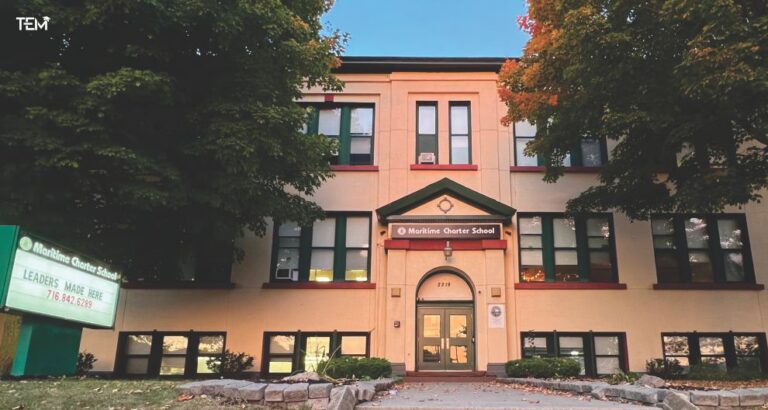
Despite its name, Maritime is not a sprawling district of separate schools. It is a single public charter school operating across two Buffalo addresses. The Middle School campus, home to grades 5 through 8, sits at 102 Buffum Street. The High School campus, serving grades 9 through 12, is located at 2219 South Park Avenue.
The school draws its enrollment from Buffalo and the surrounding Western New York communities, positioning itself for families searching for a structured, safe, mission-driven alternative. The naming convention is deliberate: middle schoolers are Candidates, high schoolers are Cadets, a distinction meant to track their progression through the school’s NJROTC leadership structure.
That vocabulary shift carries practical weight. A twelve-year-old arriving as a Candidate is introduced from day one to a culture that expects steady growth into leadership, reinforcing the progression the school intends throughout grades 5 through 12.
Academics Under Sail
Maritime offers no elementary program. In grades 5 through 8, Candidates receive standards-aligned instruction in English language arts, mathematics, science, social studies, physical education, the arts, and leadership development.
By high school, Cadets work through New York State Regents coursework alongside Naval Science I through IV, plus an additional Leadership in Action course centered on service learning, whether inside the school or the broader community. College and career preparation runs alongside credit recovery for students who need it, and targeted academic intervention for those falling behind.
The school also builds hands-on STEM and maritime experiences into its curriculum through partnerships that connect classroom lessons to boatbuilding, navigation, teamwork, and regional maritime history. Guidance programming, meanwhile, covers senior portfolios, resumes, financial-aid support, college applications, military exploration, workforce training, and other industry-connected options.
Defining Excellence by More Than a Score
Ask the school what educational excellence means, and the answer resists the shorthand of a standardized test. Excellence, in Maritime’s own framing, means measurable academic growth, graduation readiness, personal accountability, strong attendance, physical wellness, ethical leadership, and a viable plan for life after graduation.
Strategic planning follows what the school calls a Mastery Mindset: stabilize students first, re-engage them, then accelerate their achievement. The stated priorities are specific: improve Regents and middle school outcomes, maintain a graduation rate above 94 percent, strengthen teacher certification and instructional consistency, reduce chronic absenteeism, expand postsecondary pathways, and monitor performance through frequent data cycles rather than waiting on annual results.
Meeting Every Student Where They Stand
High expectations, on their own, do not account for how differently students arrive at a classroom door. Maritime pairs its expectations with differentiated support: small-group instruction, intervention blocks, academic review cycles, tutoring, study halls, and ongoing progress monitoring.
An Academic Review Board identifies students at risk, assigns interventions, and revisits the results, treating the process as a cycle rather than a single event. Special education, English as a New Language services, counseling, health, and family supports are coordinated rather than left to operate in isolation. Staff draws on culturally responsive materials, working from the understanding that many students arrive having faced interrupted learning, trauma, or significant credit deficits.
Structure, the school insists, is never meant as a substitute for support. Instead, it provides the consistency that allows individualized interventions to succeed.
A Web of Partners Beyond the Gate
Families hear from the school often, through conferences, digital platforms, events, recruitment activities, and direct outreach whenever attendance or academic concerns arise. That same instinct toward connection extends outward, into partnerships that include SUNY Erie, Niagara University, Canisius University, Say Yes Buffalo, Northland Workforce Training Center, the Buffalo Employment and Training Center, military branches, veterans’ organizations, employers, and civic partners.
These relationships contribute admissions access, financial-aid guidance, career exposure, mentorship, and service opportunities. Cadets, in turn, give something back to the region through ceremonies, parades, veteran recognition events, blood drives, and community projects, a reciprocal arrangement the school treats as central rather than incidental.
Drills, Diamonds, and Nearly Ten Thousand Hours of Service
Student life at Maritime is, by design, active and visible. Cadets compete in varsity and modified athletics, including football, basketball, track and field, girls flag football, and cheerleading. NJROTC activity fills out the rest of the calendar: drill, color guard, air rifle, orienteering, physical training, leadership academies, and ceremonial teams.
Student government, National Honor Society, arts, yearbook, college visits, and maritime STEM projects round out the experience. And then there is the number that anchors the whole picture: in the 2025-2026 school year, Cadets logged 9,444 hours of community service, evidence, the school notes, that service is not an occasional event on the calendar but part of its identity.
The Chain of Command
Running a school built on military structure requires its own clear hierarchy. The Commandant serves as Head of Schools and chief executive, aligning academics, operations, culture, compliance, and community strategy under one line of authority. Campus administrators oversee daily instruction and climate at each site.
Curriculum and Instruction supports teaching quality and assessment. Student Services coordinates special education, English as a New Language programming, and related services. Guidance leads academic and postsecondary planning. NJROTC instructors work specifically on leadership, citizenship, and military bearing. Operations, Finance, Human Resources, Technology, Safety, Health, Food Service, and Athletics sustain the daily systems students rely on without necessarily noticing. A Board of Trustees sits above it all, providing governance, fiscal oversight, and strategic accountability.
Equity as an Open Door
Equity at Maritime, as the school frames it, means access plus the support required to make use of that access. The school is tuition-free, offers an inclusive grades 5 through 12 pathway, and does not require prior military interest or experience of anyone who enrolls.
Students with disabilities, multilingual learners, economically disadvantaged students, and those entering behind grade level receive targeted services, but they are not separated from leadership opportunities as a result. Uniform standards, leadership positions, college access, career exploration, and extracurricular participation remain available across backgrounds. Data are reviewed by subgroup deliberately, so that apparent school-wide progress cannot quietly conceal gaps that persist underneath it.
Guidance Beyond Graduation
Support at Maritime does not end with academics. Students receive individualized academic and postsecondary planning, regular meetings with counselors, college fairs, instant-admission opportunities, FAFSA and TAP assistance, ASVAB preparation, access to military recruiters, workforce referrals, and help building a senior portfolio.
Partnerships with higher education institutions, Say Yes Buffalo, Northland, the Buffalo Employment and Training Center, and other community organizations expose students to college, skilled trades, certifications, military service, and employment, without funneling everyone toward the same destination. Mentorship also happens inside the cadet chain of command itself, where older students coach younger peers and learn to accept responsibility for how their team performs.
Scaling to Excellence
The school’s next phase carries its own name: Scaling to Excellence. It calls for deepening standards-aligned instruction, intervention and assessment cycles, attendance systems, leadership development, and Board-level performance monitoring, alongside an expansion of career-connected learning, maritime STEM, and credential and workforce pathways.
Success, going forward, will be measured through student growth, proficiency, credit accumulation, graduation, attendance, discipline, enrollment stability, teacher certification, postsecondary placement, and something harder to quantify: evidence that students are increasingly leading with competence and integrity.
The Woman at the Helm
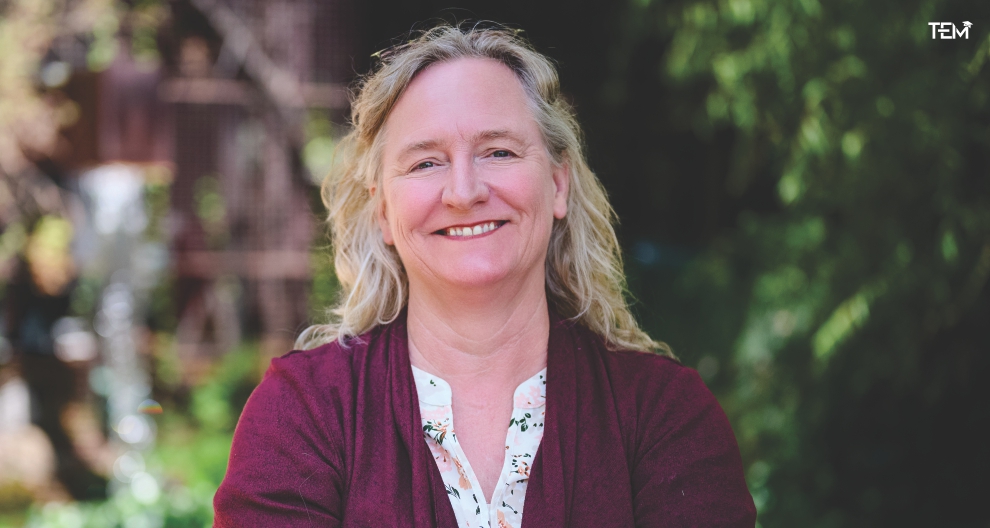
At the center of all of it stands Dr. Ami L. Alderman, Commandant and Superintendent, who brings more than 24 years in K-12 education to the role. Her own record includes military service in the United States Air Force Security Forces and the rank of Major and a Squadron Commander in the Civil Air Patrol, along with a Ph.D. in Curriculum and Instruction and Leadership. She is known for a direct, systems-focused approach rooted in service, qualities that closely reflect the school she leads.
Her message to current and prospective families is not soft, and it is not vague. It promises accountability, relentless support, and the kind of authentic opportunity that lets a student discover exactly what they are capable of, framed around a simple idea: the uniform is never the finished product. It is what happens to the person wearing it that matters.
It is a fitting note to end on, because it captures what makes Maritime harder to categorize than either “charter school” or “military program” suggests on their own. The Regents coursework, the Academic Review Board, the FAFSA workshops, the drill teams, the blood drives, the nearly ten thousand hours logged in a single year: none of it is separate from the mission. Together, these elements give tangible form to the school’s purpose, worked out in the particulars, one Candidate and one Cadet at a time.
“The uniform is not the outcome; the disciplined, capable, service-minded young adult inside it is.” – Dr. Ami L. Alderman, Commandant and Superintendent
Quotes
“We will hold students accountable, support them relentlessly, and give them authentic opportunities to discover their strength.” – Dr. Ami L. Alderman, Commandant and Superintendent, Western New York Maritime Charter School