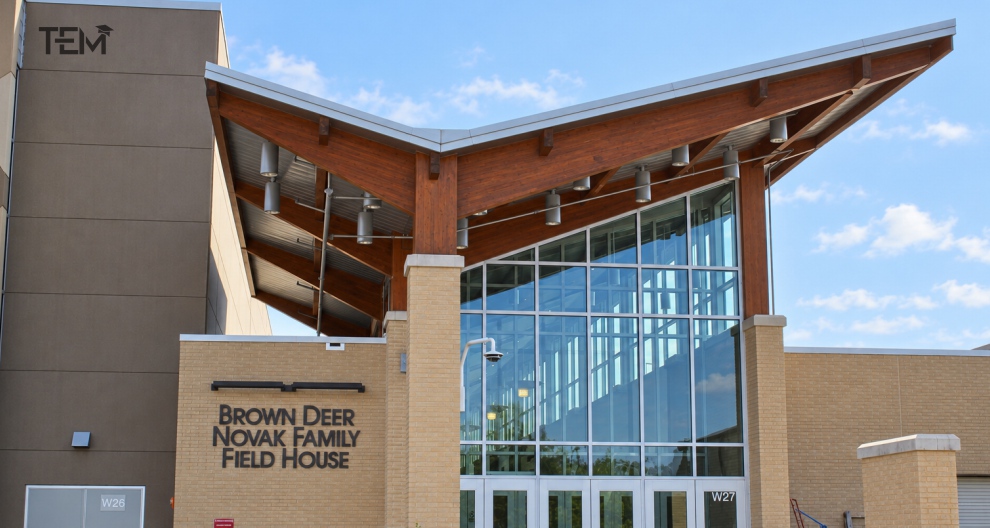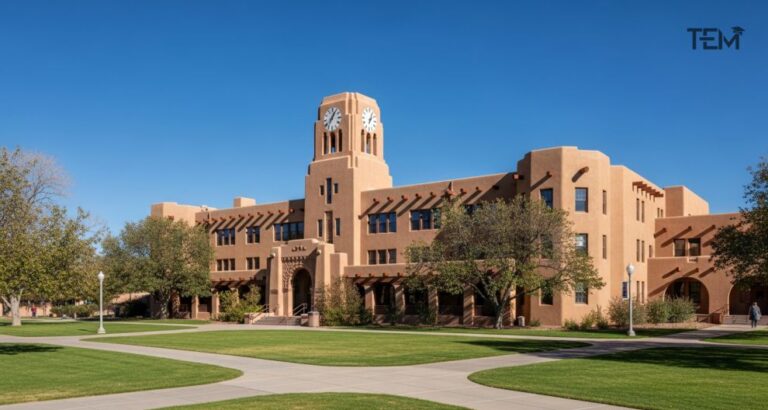
There is a plain, unglamorous sentence on the University of New Mexico College of Education & Human Sciences (COEHS) website that does more work than any slogan could: the college describes itself as New Mexico’s flagship college of education and emphasizes its role in serving the state’s diverse communities. As New Mexico’s flagship college of education, COEHS does not have the luxury of specializing narrowly. It has to prepare the people who will serve a state that is, by its own description, deeply multicultural and multilingual, and it has built its programs around that fact rather than around a one-size-fits-all model.
The college is organized into five departments, including Health, Exercise & Sports Sciences; Individual, Family & Community Education; Language, Literacy & Sociocultural Studies; Special Education; and Teacher Education, Educational Leadership & Policy, with its work spanning education, health, mental health, and community well-being.
A Dean Who Stayed
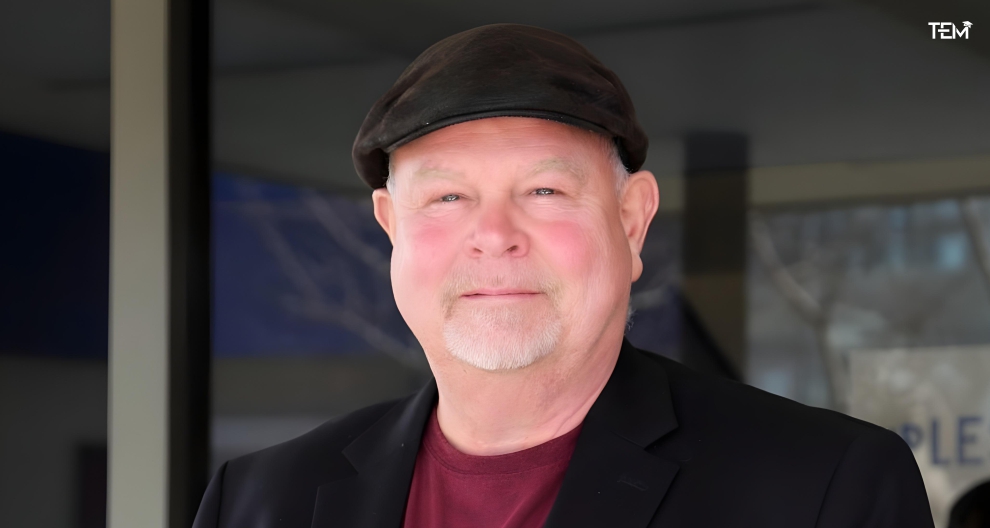
Dean Kristopher M. Goodrich, PhD, has been at UNM since 2010, when he arrived as an assistant professor in the Counselor Education program. He became an associate professor in 2015 and a full professor in 2019, later serving as associate dean for Research and Distance Education before becoming interim dean in December 2022. He became the college’s permanent dean on November 10, 2023.
“I feel honored to work with the faculty, staff, students and friends of the COEHS as the next Dean,” Goodrich said at the time, adding that he looked forward to “working with our amazing faculty, staff and students… as we work to respond to our state’s need for a diverse and robust educator and professional pipeline.” In April 2026, delivering the college’s first-ever State of the College address, ahead of its centennial in 2028, he described the moment plainly: “This is our first State of the College, and that’s intentional. Not because we haven’t had work to share before, but because we’ve reached a moment where we can step back and clearly see what we’ve been building and where it’s taking us.” He was equally direct about what matters to him: “The goal isn’t recognition. The goal is work that matters, and when it does, recognition follows.”
A Promise Twenty Years in the Making
No part of the college carries more institutional weight than the Institute for American Indian Education (IAIE), created in 2003 by Native education faculty within COEHS in response to New Mexico’s need to improve American Indian student retention and achievement and to strengthen the preparation of educators and administrators serving Native communities. In 2017, the institute expanded its collaboration with the university’s Department of Native American Studies. In December 2024, it marked its 20th anniversary with an event at the Indian Pueblo Cultural Center in Albuquerque.
The numbers behind that anniversary are worth sitting with: more than 80 American Indian students have graduated, or are on track to graduate, through the institute’s work, with a 90 percent retention rate and a 67 percent graduation rate. COEHS is also home to what UNM describes as the largest group of American Indian/First Nations faculty at any College of Education in the country. “The Institute for American Indian Education has been such a foundational center for our College,” Goodrich said at the anniversary event. “The faculty affiliated with IAIE have been wonderful collaborators with a strong grounding in community-engaged research and service.” The institute’s Native American Teacher Preparation Program (NATPP) supports Indigenous students preparing to become educators who will serve Indigenous Nations and communities across New Mexico.
Teaching, Now With a Salary Attached
The clearest sign of how seriously New Mexico takes its teacher shortage is the District Partner Teacher Residency (DPTR), a paid, year-long apprenticeship with an experienced co-teacher and funded through the New Mexico Legislature. Residents commit to remain in their partner district or charter school for a minimum of three years after completing the residency and receiving licensure. As of Fall 2026, under the state’s House Bill 30, undergraduate residents receive a stipend of $35,750; graduate residents receive $44,000. A parallel special education residency track pays a full teacher’s salary during the training year itself: $56,000 or more at Albuquerque Public Schools and Rio Rancho Public Schools, $62,050 at Los Lunas Schools, and $62,000 at Solare Collegiate Charter School.
The program traces its roots to the Albuquerque Teacher Residency Program, formed in 2017 as a three-way partnership between COEHS, Albuquerque Public Schools, and the Albuquerque Teachers Federation. In 2022, the Association of Teacher Educators awarded it the Billy G. Dixon Distinguished Program in Teacher Preparation in the United States, before it was expanded into the District Partner Teacher Residency model now connecting COEHS with 15 listed district and charter-school partners.
Leadership That Wants to Be Felt, Not Seen
Goodrich has spoken about the college’s recent evolution in terms that are more felt than announced. “Some of the most important changes are the ones you don’t see, but feel,” he said in that same 2026 address. “We’ve moved from reacting to working with intention.” In the address, he also emphasized the college’s responsibility to serve New Mexico, saying, “At the end of the day, we are here to serve New Mexico. We don’t just sit in this state. We are part of how New Mexico works.”
That belief, tested against the state’s multicultural, multilingual reality and against the specific, generational obligation of the Institute for American Indian Education, is what gives COEHS its particular character. It is a college deeply connected to New Mexico’s diverse communities, preparing educators and other professionals for the state’s needs while building pathways that help future teachers return to the communities they know.