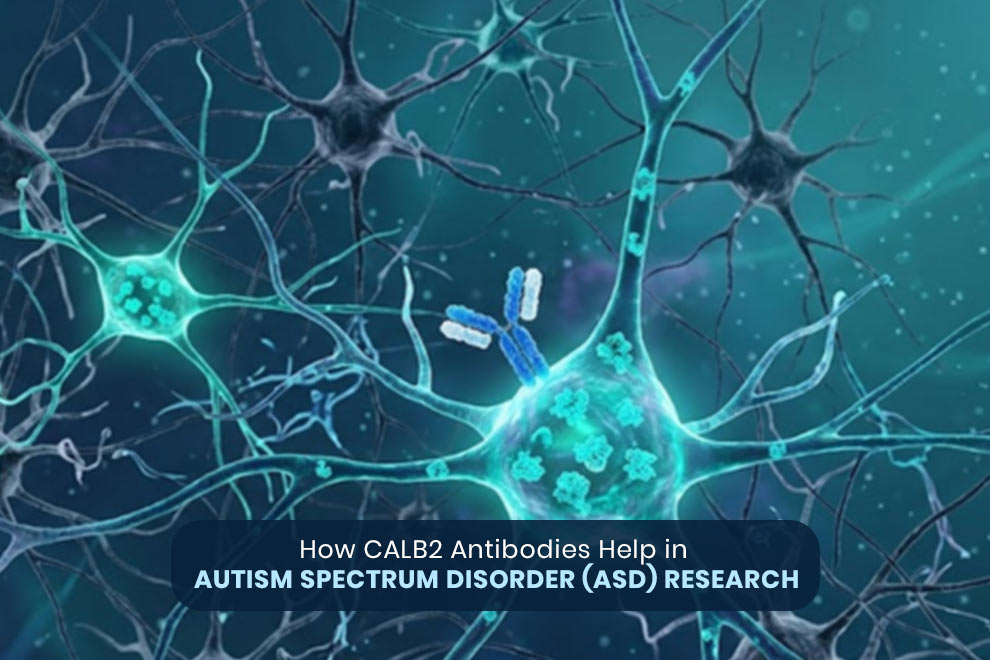
ASD is a neurodevelopmental condition that affects how a person communicates, interacts with others, processes sensory information, and experiences the world. There is no single known cause of autism. It may occur due to a combination of genetic and environmental factors that influence brain development.
In addition, prenatal and early developmental factors contribute to ASD. Researchers study how changes in brain development and neuronal communication may contribute to ASD. Here is where interneurons come into play.
What are Interneurons?
Interneurons are nerve cells that help connect and communicate with other neurons. They primarily work within the brain and spinal cord. They can either increase or decrease neuronal activity of neurons by providing excitatory and inhibitory signals. This helps neural circuits from becoming too active or inactive.
However, in ASD, some interneurons change their number or distribution. This affects the balance between excitatory and inhibitory signals. As a result, how certain brain circuits process information changes. That is why researchers study interneurons, such as calretinin-positive interneurons, in ASD research.
What are Calretinin-Positive Interneurons?
Calretinin-positive interneurons are a specific population of interneurons that express calretinin-2 (CALB2). Calretinin-2 is a calcium-binding protein that helps regulate calcium within cells.
Calcium plays an important role in neuronal activity and communication. Because calretinin-2 is expressed in particular neuronal populations, it can also serve as a useful cellular marker in neuroscience research.
So, researchers usually identify CALB2-positive cells using CALB2 antibodies. This further helps them examine where these interneurons are located and how they are distributed within different areas of the brain.
CALB2 antibodies are designed to recognize the calretinin-2 protein using IHC. When an antibody binds to CALB2 in a biological sample, it produces a signal, which is directly proportional to the amount of CALB2 protein in a sample. The signal is measured using a fluorescent detection system.
This allows researchers to identify calretinin-positive interneurons and investigate their characteristics.
Role of CALB2 Antibodies in ASD Research
Study Interneuron Distribution in ASD Models
Researchers use CALB2 antibodies to map calretinin-positive interneurons in experimental models of ASD. They compare brain tissue from control and ASD-related animal models to determine whether differences exist in the number, density, or spatial distribution of CALB2-positive cells. This helps them understand how inhibitory neuronal populations develop and organize.
In addition, they can also examine different brain regions because interneuron populations are not distributed uniformly throughout the nervous system. Regional analysis can therefore help identify whether potential changes are localized to particular neural circuits.
These observations do not, by themselves, establish that CALB2-positive interneurons cause ASD. Instead, they provide cellular evidence that can be combined with behavioral, molecular, electrophysiological, and genetic findings.
Combine CALB2 Staining With Other Markers
Researchers also use CALB2 antibodies along with other neuronal markers. They use multiplex immunofluorescence or co-staining to characterize CALB2-positive cells based on additional molecular features.
For instance, researchers investigate whether CALB2-positive neurons also express markers associated with particular neuronal subtypes or cellular processes. This can help them understand interneuron diversity in a better way.
Since ASD involves complex changes across multiple cell types and neural pathways rather than a single molecular mechanism, studying CALB2 antibodies along with other biomarkers can turn out to be an effective strategy for ASD research.
CALB2 antibodies help researchers investigate the cellular mechanisms underlying altered neural circuit function and provide a practical way to visualize calretinin-positive neurons in tissues. This can support research into neuronal development, circuit organization, and cellular changes associated with ASD models.
However, choosing a trusted CALB2 antibody provider is crucial. They can help you validate the antibody for your intended research application and provide important information about its specificity, species reactivity, recommended applications, and validation data.
When choosing an antibody for your experiment, make sure you consider factors like:
- Antibody specificity
- Application validation
- Species reactivity
- Antibody host and clonality
- Recommended dilution
- Validation and supporting data
- Batch-to-batch consistency
- Storage and stability
- Positive and negative controls
- Manufacturer support and documentation
The Bottom Line
Now that you know how CALB2 antibody helps in ASD research, what are you waiting for? Find a reliable supplier who can provide you with high-quality antibodies and ensure you always get accurate and reproducible results.