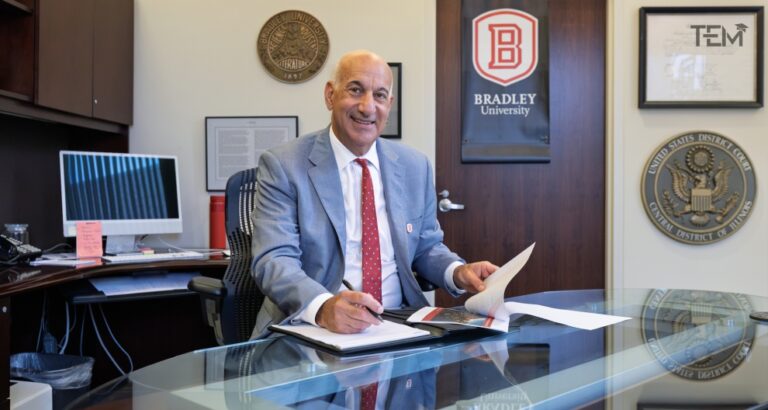
Some careers follow a straight line. Others come full circle. The latter is true for the leader who now guides Bradley University. Long before assuming the university’s highest office, the campus had already shaped his outlook through classrooms, athletics, and the relationships that would influence the rest of his professional life.
For James E. Shadid, Bradley was never just the place where he earned a degree. It became the foundation for lessons that stayed with him as he built a distinguished legal career. As a student and a member of the university’s baseball team, he discovered the value of leadership, teamwork, and perseverance. Those experiences remained with him while he practiced law, served as a state judge, and later as a United States District Judge.
Even while advancing through the legal profession, his connection to Bradley never faded. He remained closely involved with the university as a trustee and adjunct faculty member, contributing to its growth while staying invested in its future. Looking back on the path that led him to the presidency, he reflects, “Becoming the university’s 13th president felt less like changing careers and more like coming home to serve the institution that gave me so much.”
That sense of purpose continues to define his approach today. Rather than viewing the presidency as the next step in a career, he sees it as an opportunity to serve the institution that first opened doors for him and to help shape the experiences of future generations of students.
Building One Bradley
Guiding an institution involves far more than overseeing academics or managing day-to-day operations. It requires aligning people with a shared purpose while keeping students at the center of every decision. That philosophy has become a defining part of Shadid’s tenure.
He believes the institution moves forward when faculty, staff, administrators, and students work toward the same goal. At Bradley, that mindset is known as the “One Bradley” approach. It begins with a simple question: “Is this in the best interest of our students?” That principle guides decisions across the university, from academic planning to campus investments.
The results are already visible. A campus-wide focus on enrollment contributed to an increase of more than 30 percent in first-year student deposits over the past year. Alongside that achievement, the university has expanded student programs, upgraded facilities, and strengthened the overall student experience. Together, these efforts are laying the groundwork for the university’s continued growth and long-term success.
Honoring a Legacy While Preparing for the Future
Every institution carries a legacy, but its relevance depends on how well it responds to changing times. At Bradley, that balance begins with the vision of its founder, Lydia Moss Bradley, who believed education could transform lives and strengthen communities. Shadid sees that mission as just as meaningful today, even though the world students are entering looks very different.
His focus is not only on preserving Bradley’s traditions but also on preparing students for careers that continue to evolve. Some of those roles do not even exist yet. To meet that challenge, Bradley is expanding experiential learning opportunities, strengthening partnerships with industry and community organizations, and investing in technology and campus infrastructure. These efforts are designed to give students practical experience alongside academic knowledge. By combining a strong educational foundation with real-world exposure, the university is equipping graduates to adapt, excel, and make meaningful contributions wherever their careers take them.
Defining Success Through the Student Experience
A long-term vision becomes meaningful only when it shapes everyday decisions. His priorities for 2026 and beyond are centered on creating an experience that helps students thrive from the day they arrive until long after they graduate.
Its strategy focuses on attracting talented students, supporting them throughout their academic journey, and preparing them for success beyond the classroom. To achieve this, Bradley is investing in modern residence halls, upgraded campus spaces, new premier club sports, and continued academic innovation. Each initiative is intended to create an environment where students can learn, grow, build lasting connections, and develop the confidence to succeed in their careers and communities.
Success will be measured through outcomes that reflect both institutional progress and student achievement. Enrollment, student retention, graduation rates, and the accomplishments of Bradley graduates will serve as clear indicators of whether Bradley is delivering on its commitment to provide an exceptional educational experience.
Innovation That Strengthens Human Connection
Higher education continues to evolve as technology reshapes learning, employers seek new skills, and students expect more flexible and engaging experiences. Adapting to these changes does not mean leaving Bradley’s identity behind. Instead, it means finding better ways to deliver the values that have defined the institution for generations.
Shadid believes innovation is most effective when it improves the experience of the people it serves. “We can’t simply rely on the way things have always been done,” he says. Guided by that belief, the university is modernizing its technology infrastructure through a new enterprise resource planning system designed to improve both the student and employee experience. At the same time, Bradley continues to build on the qualities that set it apart, including personalized attention, meaningful faculty relationships, and hands-on learning. Rather than replacing those connections, technology is being used to support them, ensuring the university remains both forward-looking and rooted in meaningful human connection.
Looking Beyond the Degree
Higher education can provide excellent education, but the experiences surrounding it often leave the deepest impression. Shadid believes students should graduate with more than academic knowledge. They should leave with the confidence to guide others, the ability to solve real problems, and the relationships that support them throughout life.
That belief influences the priorities he has set for the university. He has encouraged greater access to faculty mentorship, expanded opportunities for internships and undergraduate research, and supported student leadership through campus organizations and community engagement. At the same time, he recognizes that a sense of belonging plays an important role in personal growth. This has led to continued investments in student housing, premier club sports, and campus spaces that encourage connection beyond the classroom.
For him, these efforts are all part of the same goal. A Bradley education should prepare students not only for their first job, but for the many challenges and opportunities that follow.
Leading Through Difficult Decisions
Every executive role brings moments when there is no easy answer. Years spent on the bench prepared Shadid for those situations long before he became president of Bradley University. His experience as a judge taught him that the quality of a decision often depends on the willingness to listen first, weigh every perspective, and act with conviction once the path becomes clear.
He has carried that approach into higher education, where challenges may be different but the responsibility to guide the community remains the same. Rather than rushing to solutions, he believes in building trust through open communication and a shared understanding of purpose. As he explains, “When people understand the ‘why’ behind a decision and know it is grounded in the university’s mission, they are much more willing to move forward together.”
That mindset has helped him navigate change while keeping students at the heart of every important decision, even during periods of uncertainty.
Investing in People and Possibilities
When asked what he would do with unlimited resources, Shadid does not begin with buildings or rankings. His attention goes first to the people who define an institution of higher learning. He believes the greatest investment any institution can make is in creating opportunities that help students reach their full potential.
That perspective shapes the future he envisions for Bradley University. He would expand access to undergraduate research, giving more students the chance to explore ideas beyond the classroom and work closely with faculty mentors. Experiential learning would continue to grow, allowing students to graduate with the confidence and real-world experience employers value. He also sees lasting value in strengthening partnerships with employers so students can make a smoother transition into the workforce.
Alongside these efforts, he would continue enhancing the campus environment, creating spaces that encourage learning, collaboration, and personal growth. For him, the university’s greatest impact begins by investing in the success of its students.
Staying Grounded Beyond the Office
A university presidency often demands long hours and constant decision-making, making it important to find moments that bring clarity. For Shadid, that balance comes from the people and experiences that have remained constant throughout his life. Time with his wife, Jane, their children, and grandchildren provides a welcome break from the responsibilities of leading the university and keeps him connected to what matters most.
His lifelong interest in sports also continues to play an important role. A former Bradley baseball player, he still enjoys following Bradley Athletics and values the lessons sports teach about discipline, teamwork, and resilience. Equally meaningful are the conversations he has with students, alumni, and members of the community. As he puts it, “Those conversations remind me why this work matters and why Bradley continues to be such a special place.” Together, these moments help him move forward with both vision and purpose.
Looking Toward the Next Chapter
Every leader eventually becomes part of an institution’s history, but the most lasting impact often comes from the culture they leave behind. As Shadid looks to the university’s future, his attention is focused less on individual milestones and more on building an institution that continues to grow long after his presidency.
He believes the university is entering its next phase of growth. Continued investments in students, academic innovation, and a stronger financial foundation are creating the conditions for long-term success. Rather than chasing short-term gains, his approach centers on strengthening Bradley’s ability to serve future generations while remaining true to the purpose that has guided the university for more than 125 years.
The legacy he hopes to leave reflects that same philosophy. Shadid envisions an institution where faculty, staff, students, and alumni work together with a shared sense of responsibility. The “One Bradley” approach is not simply a guiding principle but a culture built on collaboration and a common commitment to students. By fostering that spirit, he hopes to ensure every decision continues to support a premier student experience while carrying forward the vision first established by Lydia Moss Bradley. For him, success will not be defined by a single achievement but by leaving the university stronger, more united, and better prepared for the opportunities that lie ahead.
Impact Through Service
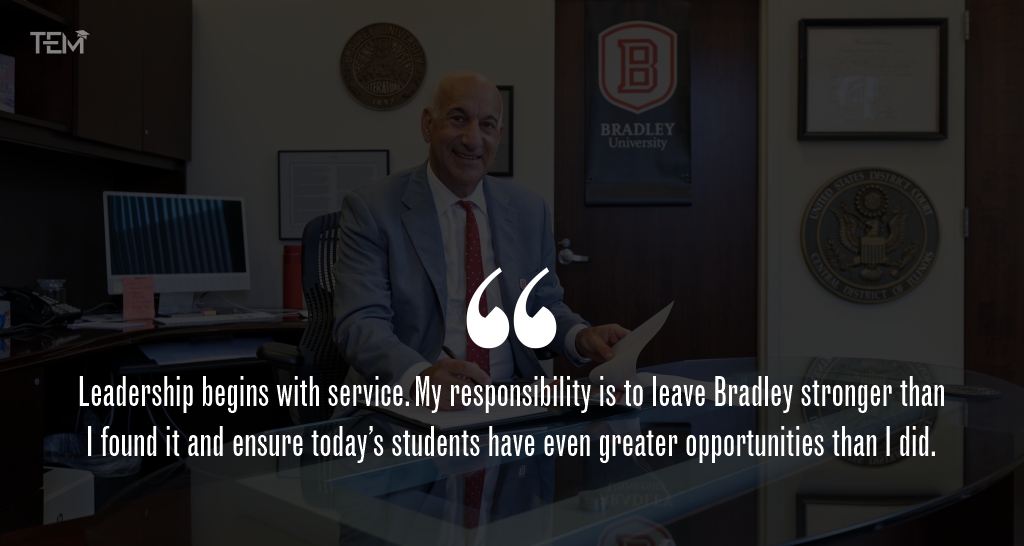
After decades in law, the judiciary, and higher education, Shadid has come to view leadership through a simple lens: service. Titles and responsibilities may change, but the purpose remains the same. A president’s job is to create opportunities that allow others to succeed.
That belief continues to guide his work at the helm of the university. Having experienced firsthand how the university shaped his own future, he is committed to leaving the institution better positioned for the future. His focus is on ensuring that today’s students have access to even greater opportunities through a supportive learning environment, meaningful experiences, and a campus culture designed to help every learner thrive.
Shadid also remains a firm believer in the transformative power of higher education. Each day, he sees students discover new possibilities, develop confidence, and prepare for lives of purpose. To him, those moments reaffirm why this work matters. He believes remarkable things happen when an entire campus community unites around its students. It is a philosophy rooted in service, strengthened by collaboration, and one that continues to shape the university for generations to come.
Quotes