The story begins, as so many great educators’ stories do, in a single classroom. In 1995, a young woman graduated from the University of Jordan with a bachelor’s degree in Elementary Education, and for the next seven years she stood in front of a chalkboard as a homeroom teacher, learning the quiet choreography of patience, repetition, and small daily victories that no lesson plan can fully capture.
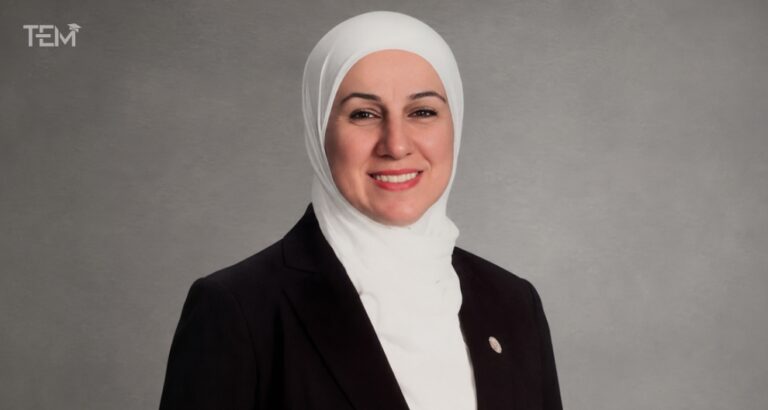
That teacher was Mona Hamawi, and today she is the Principal of Frontier International Academy Elementary, a position she assumed in 2025. But the distance between that first classroom and her office at Frontier was not a straight line. It wound through an ocean, a second bachelor’s degree in Elementary Education earned in the United States, endorsements in Bilingual Education and Arabic as a Foreign Language, and a string of roles – homeroom teacher, Arabic language teacher, Arabic curriculum developer, and instructional coach – that each added a new layer to her understanding of what a school actually needs from the person who leads it. In 2022, she completed her master’s degree in Elementary and Secondary Administration at Wayne State University, the final formal step before Frontier.
The Woman Behind the Title
Mona describes herself, without much prompting, as “a mother of four boys and a new grandmother.” It is a detail she offers not as a footnote but as something closer to a thesis statement. Her personal life, she says, has “shaped my commitment to education” just as much as her professional training has, and it is not hard to see why. A principal who has raised four sons and now dotes on grandchildren understands, in her bones, the particular exhaustion and joy of watching a child struggle and then succeed.
What the Job Actually Looks Like
Being a principal, Mona explains, is less a single job than a dozen overlapping ones. She oversees academic programs, supports instructional excellence, manages daily operations, and works alongside teachers, families, and the wider community to keep the building running as “a safe, engaging, and high-quality learning environment.”
Her first year as principal proved especially rewarding. Frontier was named a National ESEA Distinguished School for its commitment to serving multilingual learners, a recognition she attributes to “the dedication and teamwork of our entire school community” rather than to herself alone. The school also brought home six trophies, including its first-ever Girls Soccer Championship title, while students competed in the GEE-Wide Arabic Spelling Bee and the EMU Math Fact Challenge. Away from the trophy case, she spent the year reorganizing classrooms, improving lighting throughout the building, and expanding community events, the unglamorous work that quietly changes how a building feels to walk into every morning.
A Philosophy Borrowed and Made Her Own
There is a phrase that comes up more than once in conversation with Mona, one she credits to GEE’s guiding message to its principals and teachers: “Every student. Every day. No exceptions. No excuses.” She repeats it not like a slogan but like something she checks her own decisions against. Instruction, she says, must be guided by data and proven practice, but it must also meet “each student’s academic, social, and emotional needs,” three things she refuses to separate from one another.
The culture she has tried to build at Frontier rests on respect, kindness, teamwork, and strong relationships – values that guide every interaction across the school community.
Looking Toward 2026
Mona’s vision for the years ahead is grounded rather than lofty. She wants a research-based curriculum aligned with state standards, and she wants student data, classroom assessments, and teacher observations to actively steer instruction rather than simply document it after the fact. She is equally focused on the less visible responsibilities of leadership: “the long-term financial health of the school” so that Frontier can keep providing the programs, technology, and support its students need.
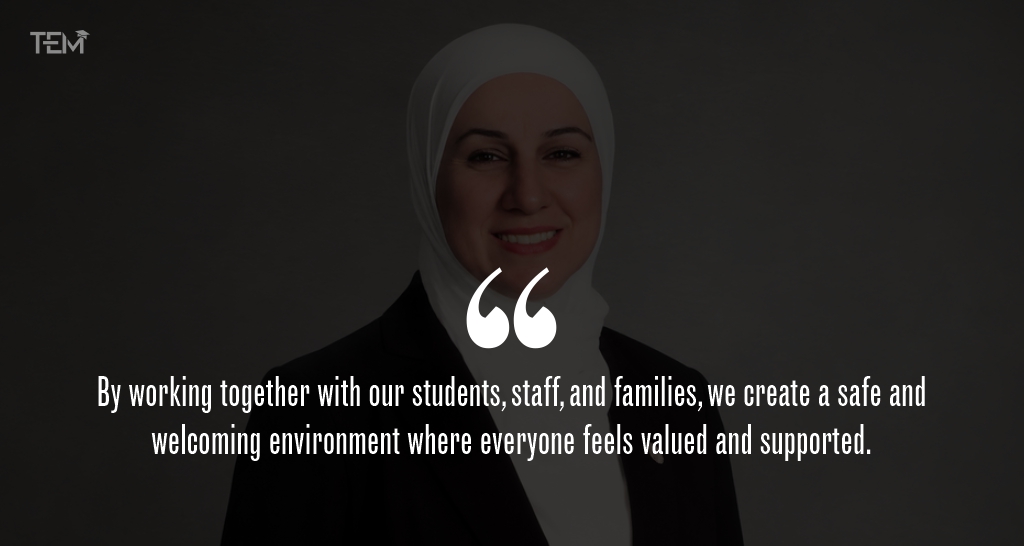
Success, in her framework, is not a single number. It is student growth, classroom quality, feedback from “students, staff, and families,” and the financial and operational stability that makes everything else possible.
Equity as a Daily Practice, Not a Slogan
Frontier serves a student body from many cultural, linguistic, and educational backgrounds, and Mona speaks about that diversity as “one of our greatest strengths.” The school’s Multilingual Learner Department provides both designated and integrated language instruction, while Reading and Math Intervention programs target support to each child’s specific needs. Families are treated as partners, not bystanders, kept informed through translated communication and invited into the life of the school through academic support initiatives, after-school programs, and extracurricular activities that celebrate the diversity of the school community.
Measuring What Matters
To track whether all of this is actually working, Mona and her staff meet regularly through PLCs, MTSS meetings, and data team discussions. The indicators she watches most closely are student achievement and growth, literacy and math performance, multilingual learner progress, attendance, behavior, and family engagement. “I value student growth,” she says, “because it reflects whether we are meeting each child where they are and helping them move forward.”
The Test of Real Leadership
Every leader has a moment that reveals what they are made of. For Mona, it was confronting significant learning gaps among a largely multilingual student population. She did not lower expectations. Instead, she and her teachers strengthened the school’s MTSS system, leaned into data-driven instruction, and built out targeted interventions, all while she worked to keep staff confident and focused during a period of real uncertainty. The payoff came in the form of improved student growth, stronger instructional practices, and the National ESEA Distinguished School recognition that followed.
If the Budget Had No Ceiling
Asked what she would build with unlimited resources, Mona’s answer reads like a wish list assembled from years of watching what students actually need. More intervention teachers and enrichment programs. STEM and innovation labs for robotics, coding, and hands-on science. Classroom libraries stocked with high-interest books. A fully equipped sensory room where children who need a quiet, calming space can regulate their emotions before returning to their lessons. Parent workshops. Continued professional development for teachers. None of it sounds extravagant. All of it sounds necessary.
Beyond the School Gates
Outside of work, Mona’s world narrows to the people and small pleasures she loves most. She spends time with her family, “especially my grandchildren,” she says, describing the joy they bring as a source of laughter and cherished memories. She gardens, indoors and outdoors, calling the practice “peaceful and rewarding,” and she takes early morning walks, drawing energy from “the fresh air, quiet surroundings, and beauty of a new day.”
A Philosophy of Service
If there is a single thread running through everything Mona has built at Frontier, it is her belief in servant leadership, grounded in “a belief in the potential of every person.” A leader’s role, in her telling, is to listen, to serve, to encourage, and to help others recognize strengths they may not yet see in themselves. It is a philosophy that asks more of the leader than of anyone else, and it is the one Mona has chosen to build a school around.
Quote