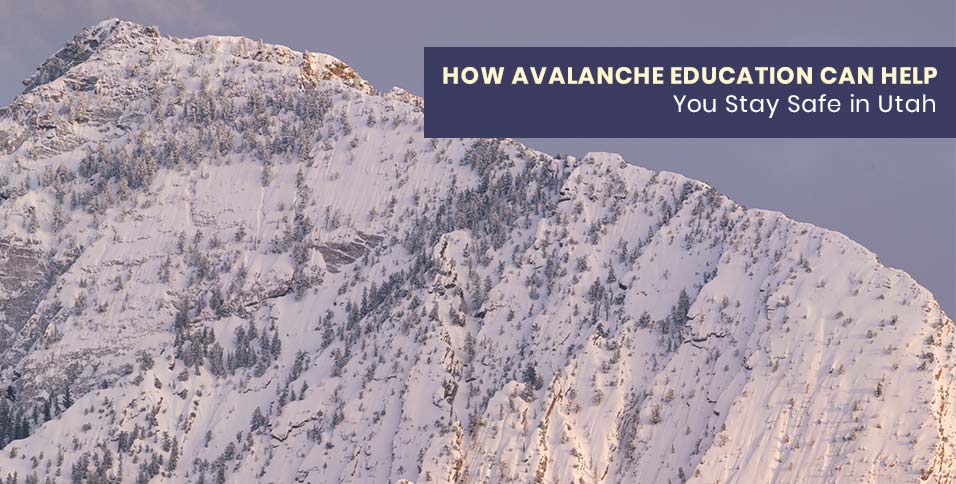
Avalanche education teaches you to read terrain, snow, and forecasts so you can avoid slides rather than survive them. It is the difference between guessing at a slope and understanding it. Learning these skills helps you recognize avalanche hazards and choose terrain you can manage rather than relying on guesswork when conditions change.
For beginners who want to build these skills, Utah avalanche education courses offer options ranging from free evening talks to multi-day field classes with hands-on rescue practice.
What a Course Actually Teaches
Classes emphasize decision-making rather than just risky skills. You learn to identify avalanche terrain, interpret the daily forecast, spot warning signs in the field, and run a companion rescue with a beacon, probe, and shovel.
Which Course Should You Start With?
Utah avalanche education has entry points at every budget and time commitment.
- Know Before You Go: a free awareness presentation built for newcomers
- Awareness classes: short sessions offered through the Utah Avalanche Center and local partners
- Rescue clinics: half-day or full-day beacon and shovel practice
- AIARE Level 1: a multi-day course combining classroom work with field days
Does Education Replace Experience?
No. Training gives you a framework, but judgment builds over seasons of watching conditions change.
Pair your first courses with conservative terrain choices. Many experienced riders stick to low-angle slopes during their first winters, and that habit is a feature of good decision-making rather than a sign of timidity.
Gear Only Works If You Practice
A transceiver, probe, and shovel are the standard rescue kit, and every person in the group needs all three. Burial survival odds drop sharply after the first fifteen minutes, so speed matters more than strength. Courses drill searches until they become automatic.
Reading the Daily Forecast
The Utah Avalanche Center posts forecast each winter morning using a five-level danger scale, from Low to Extreme.
- Check the forecast the morning of your trip
- Note the problem type, not just the danger rating
- Reassess in the field if conditions look different
Steps to Take Before Your First Backcountry Season
Getting trained takes planning, since field courses fill early. Following these steps in order can reduce stress and help you prepare with confidence.
- Attend a free Know Before You Go presentation to build vocabulary.
- Register for an AIARE Level 1 or equivalent field course by early fall.
- Buy or rent a transceiver, probe, and shovel before your first class.
- Practice beacon searches in a park until you can find a signal quickly.
- Follow the Utah Avalanche Center forecast daily through the season.
- Choose low-angle terrain and a partner with similar training for early trips.
Key Takeaways
- Avalanche training focuses on decisions and terrain choice, not stunts.
- Utah’s snowpack often holds persistent weak layers.
- Free awareness talks are a practical starting point.
- Field courses like AIARE Level 1 add hands-on rescue skills.
- Every group member needs a beacon, probe, and shovel.