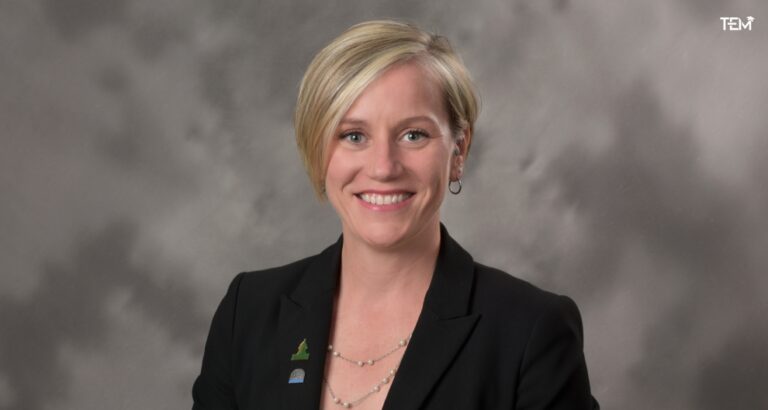
Dr. Laura Spenceley did not set out to become a dean of SUNY Oswego, which has been a leader in education since 1861. She set out, as a young woman, to work in the intersection of two callings that rarely share a hallway: medicine and the social sciences. She wanted, as she puts it, to balance “the social sciences and physical sciences with a healthy dose of philosophy and humanities.” It is the kind of sentence that sounds, on paper, like a course catalog. In practice, it became a life.
Today, as the Dean of SUNY Oswego’s College of Education, Health and Human Services (CEHHS), Spenceley leads more than 40 academic programs preparing future educators, healthcare professionals, counselors and technology leaders. Her journey to leadership, however, was anything but conventional.
That life took her first to Ball State University for a Master of Arts in Clinical Psychology, then to Syracuse University for a Ph.D. in School Psychology. Graduate school, for Spenceley, was less a single track than a sprawling apprenticeship. She moved between a K-12 laboratory school, a state psychiatric hospital, a concussion clinic, a hospital unit for children with cancer and blood disorders, and an accessibility resource center on a college campus – all while teaching undergraduate psychology courses and tutoring student-athletes on the side. At the time, her goal was clear: to provide psychological services to children and adolescents in a hospital setting.
A Detour Becomes a Destination
Plans, even good ones, have a way of rerouting themselves. As her doctoral training wound down, Spenceley realized that a faculty role, one that braided together teaching, research, and practice, was the path she actually wanted. In 2012, she joined SUNY Oswego as an Assistant Professor in Counseling and Psychological Services.
The next pivot arrived, fittingly, in her inbox. An internal call went out for an Associate Dean for Graduate Studies, and she answered it. From 2018 to 2021, working alongside Graduate Dean Kristen Eichhorn, she learned about institutional policy and decision-making, deepened her ties to a wider community of graduate leaders, and helped engineer changes that improved the experience of SUNY Oswego’s graduate students.
When the longtime dean of what was then known as the School of Education retired in summer 2021, Spenceley stepped in as Interim Dean. A national search followed, and in June 2022, the interim title fell away. She was, simply, the Dean.
Teaching and Leading
Today, Spenceley presides over a college serving roughly 1,500 students. The job, she explains, is less a single role than a constellation of them: personnel, academic programming, financial planning and budget management, stewardship of scholarships and philanthropic gifts, and partnerships that stretch across campus and into the wider professional community.
What energizes her most, though, is the chance to sit across the table from P-12 and industry leaders, shaping academic programming that keeps pace with a region in flux.
Spenceley leads a charge first ignited by Edward Austin Sheldon, who founded the university’s forerunner, the Oswego Primary Teachers’ Training School, in 1861. A revolutionary new leap forward, Sheldon’s institution was the first known example of combining the emerging object teaching method, a more active learning experience that would replace rote memorization, with in-school teacher training experience. The Oswego Method, as it would be called, influenced the establishment and organization of schools around the state, nation, and across the globe.
Driving Home Solutions
Some of the most consequential decisions in higher education are not made in boardrooms. They are made in response to a single, quiet complaint.
When Spenceley first arrived in the Dean’s Office, the Director of the Clinical Practice and Partnerships Office came to her with a problem that had been building for years. Student feedback suggested that about 20 percent of students could not transport themselves to their field placements, and public transportation in the region offered little relief.
Building on groundwork laid before the pandemic, Spenceley’s team expanded the college’s response: a van running daily routes to and from P-12 districts, vouchers for use with a common carrier, and tighter coordination with the Dean of Students and local community agencies. The result, since 2021, has been unambiguous: Not a single student in the college has failed to complete degree requirements because of transportation barriers.
A Semiconductor Plant Becomes a Curriculum
In 2023, news broke that a large semiconductor manufacturer, Micron Technology, was bringing a plant to the region that represented the largest economic development in the region’s history. Spenceley saw in it something larger than a story about business. She saw an opening.
Since then, she has helped lead efforts with P-12 partners to bring middle and high school students to campus, sharpen the curricular sequence linking high school, college and career, and to invest in contemporary instrumentation so that classrooms offer authentic learning experiences for future educators, technology leaders and engineers. The ripple effects, she notes, have reached well beyond the immediate partnerships strengthening ties between the college and the wider community.
What 2026 Looks Like
Looking ahead, Spenceley’s focus sharpens on access. The college has already launched microcredential pathways in work-based learning, supporting students with disabilities in academic settings, and in driver’s education. Degree programs in computer science education and workforce education are next.
The immediate goals, she says, are practical: build awareness, build enrollment, and build collaborative agreements with school districts across New York to recruit students and strengthen the pipeline into employment.
Measuring What Matters
Graduates leave CEHHS to become classroom teachers, educational leaders, mental and behavioral healthcare providers, and managers in wellness and technology. Each pathway, she says, demands its own set of relationships. Her team sits on program advisory groups, consults employers on curricular updates, and builds internships, practica, and student-teaching placements that connect classroom learning to the realities of the field.
To gauge whether the college is succeeding, she tracks a constellation of indicators: student credit-hour completion, progress toward degree, performance in core curriculum, dispositional readiness for field experiences, and graduation outcomes such as employment and certification or licensure attainment. None of it, she is careful to note, can be measured by a single metric. Student success, faculty development and institutional effectiveness each demand their own multi-method approach.
Radical Transparency, Rebuilt Agency
Every dean, eventually, faces a leadership milestone that tests the boundaries of their expertise. For Spenceley, that moment began with her tenure as Dean, as the campus began the process of developing a new strategic plan focused on student success and expanding access to college credentials.
The challenge was twofold: ensuring the college’s cornerstone, established programs in educator preparation and the helping professions, continued to thrive, while simultaneously launching agile new pathways, like targeted microcredentials, designed to serve the immediate needs of local and regional partners. Balancing this response to the changing demographics of both students and regional employers while protecting the visionary thinking embedded in the college’s DNA since 1861 demanded a bold new strategy.
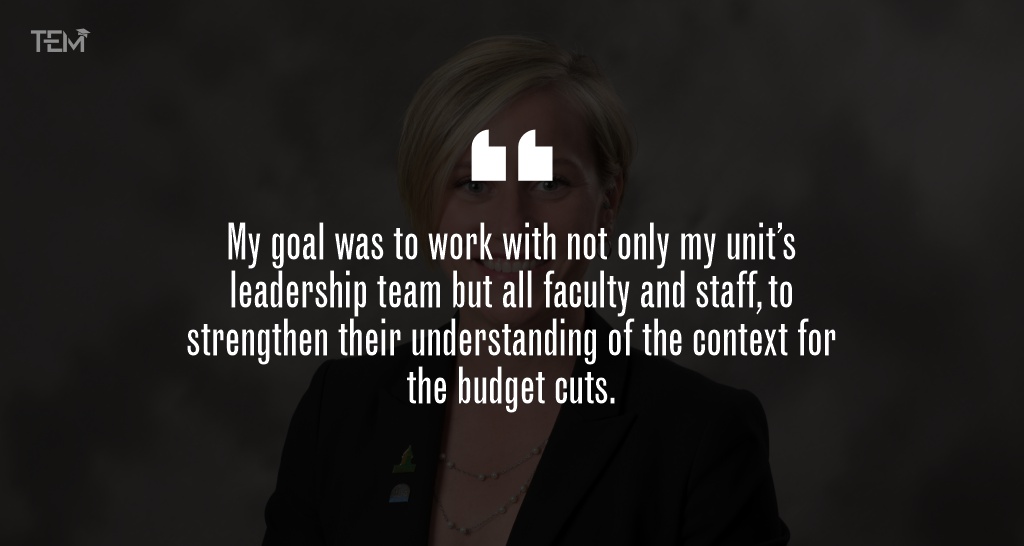
Her response rested on two principles: radical transparency and collective agency. Spenceley energized her faculty and staff around the shifting dynamics of the modern student marketplace, motivating them to find competitive opportunities through strategic differentiation. By expanding program reach and refining curriculum to align directly with regional employer needs, the college has ensured that both its flagship degrees and specialized pathways stand out as premier choices for prospective students.
The work continues; however, it has already produced a powerful model for market-responsive growth. By leveraging strategic grants and external funding to pilot curricular innovations, the college is proving that a collaborative, forward-thinking approach to recruitment can elevate legacy programs and future-focused pathways alike.
Forward to Better
Spenceley’s favorite mantra, “forward to better,” doubles as a kind of mission statement. As CEHHS moves in that direction, she hopes to keep building the college’s reputational excellence, both within SUNY Oswego and beyond it, so that the public recognizes a regional comprehensive college as a place where opportunity and access drive everything.
Life Outside the Office
Even high performers need ballast. Spenceley admits to a complicated relationship with work-life balance, caught between her identity as a driven professional and her devotion to the life she has built outside of work. She prioritizes time with her husband, travel with friends and family, and adventures with their two hound dogs. She is also an avid runner, logging miles with her crew, the Nottingham Runners of Syracuse, New York.
Quote