In the rolling farmland of southwest Iowa, where the horizon runs flat, and the towns are small enough that everyone knows the mail carrier’s name, there is a school district that has spent a century and a half quietly proving that size has very little to do with ambition. It began in the 1870s, in the earliest days of Shenandoah’s settlement, back when a school was often a single room and a single teacher and a promise that things would get better for the children who sat inside it. That promise, it turns out, has held.
A District Shaped by Growth
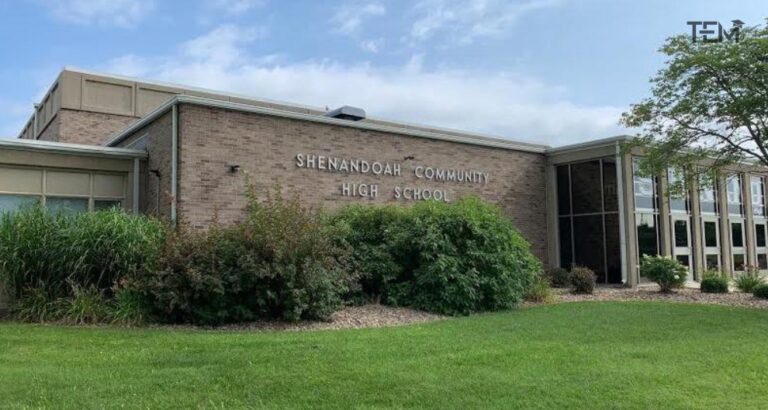
Shenandoah Community School District, known locally as SCSD, now serves a cluster of communities that stretch well beyond the town whose name it carries. In 2016, the district expanded its service area when portions of the former Nishnabotna Community School District were reorganized, bringing Farragut and Imogene into the communities served by the district, along with portions of Fremont, Page, Mills, and Montgomery Counties. (Northboro was already part of the district in 2016). Today, roughly 1,300 students move through five schools: an Early Childhood and Preschool program, Shenandoah Elementary, Shenandoah Middle School, Shenandoah High School, and a fifth school that does not have a building at all, at least not in the traditional sense, called IGNITE.
The grade spans are laid out with the tidiness of a district that has thought carefully about transitions: preschool for children ages three and four, elementary from kindergarten through fifth grade, middle school for sixth through eighth, high school for ninth through twelfth, and then IGNITE, which reaches K-12 students online, providing flexible learning opportunities for students statewide.
The district’s mission statement reads like something written by people who have sat in a lot of meetings and meant every word anyway:
“The Shenandoah Community School District, in partnership with families and the community, will provide each student an educational environment that maximizes his or her potential to become responsible, successful citizens and lifelong learners in an ever-changing world.”
And its motto, “Excellence In Every Endeavor,” is the kind of phrase that could sound like wallpaper in a lesser district. Here, it seems to actually function as a compass, showing up again and again in how the district describes itself, its goals, and its people.
What Happens Inside the Classroom
Ask the district about its academic programs, and you get an answer organized the way a good lesson plan is organized, building block by building block. At the elementary level, the foundation is literacy, mathematics, science, and social studies, layered with technology integration and social-emotional development. Music, art, and physical education are not treated as extras. They are, as the district puts it, “a formal part of the curriculum.” Students who need more support, or who are ready for more challenge, are met through intervention services and enrichment opportunities.
Middle school is where the curriculum starts to widen. Students experience what the district calls a balanced mix of academic growth, exploratory learning, and fine arts, all of it aimed at preparing them for what comes next.
High school, in turn, offers several roads forward: a college preparatory core curriculum, Career and Technical Education, fine arts programs, and concurrent enrollment paired with career exploration opportunities. And then there is IGNITE, the district’s online school, which offers personalized learning pathways while keeping students connected to accredited coursework and district support. It is, in a sense, the district’s answer to a question more and more families are asking: what if school could bend to fit the student, instead of the other way around?
The Four Pillars of Excellence
When asked how the district defines educational excellence, the answer circled back, unsurprisingly, to that same motto. For Shenandoah, excellence means maintaining high expectations for all students while supporting academic achievement and social development. It also extends to professional standards, collaboration, integrity, and a shared commitment to continuous improvement.
That philosophy is organized into four strategic priorities:
- Academic Achievement: measurable growth across all core content areas, with an eye toward college and career readiness.
- Mental Health and Well-Being: strengthening supports for the social, emotional, and behavioral needs of both students and staff.
- Financial Stewardship: maintaining a sustainable financial position that protects long-term stability.
- Communication and Community Engagement: using clear, consistent communication to deepen relationships with families and the broader community.
Four pillars, none of them flashy, all of them the sort of unglamorous groundwork that tends to be the actual difference between a district that talks about excellence and one that practices it.
Meeting Every Student Where They Are
Every school in the district has adopted the MTSS framework, a structured way of identifying and responding to student needs before they become problems. Around that framework, SCSD has built a wide constellation of supports: special education services, a therapeutic mental health classroom, English learner supports, academic intervention programs, accelerated learning plans, and social-emotional learning supports. There is a Talented and Gifted program, a Career and College Transitions Coordinator, a Peer Relations and Bullying Prevention Coordinator, and Home School Community Liaisons, whose job is essentially to make sure no family falls through the cracks.
The district also gives students flexibility in how they learn. Through IGNITE and other personalized learning opportunities, students may attend in person, in a hybrid arrangement, or fully online, depending on their goals, interests, and learning needs.
A Town That Shows Up
Ask any small-town superintendent about the secret to success, and most will eventually say some version of the same thing: it takes a village. Shenandoah’s version of that village is unusually well documented. M.A.Y. Mentoring provides mentors for at-risk students along with afterschool and summer programming. The Green Hills Area Education Association supports special education services. Midwest Mental Health delivers school-based mental health services directly on campus, in the setting where students need the support. The Shenandoah Iowa Education Foundation funds mini-grants for teachers, classroom projects, and student scholarships. Activity and Music Boosters provide financial support for activities. Vision Shenandoah connects the district to the local business community. Local banks and businesses provide ongoing financial support along with job shadowing and internship opportunities for students. The Shenandoah Police Department places a School Resource Officer in the buildings, and the Shenandoah Medical Center contributes a wellness plan for staff, an athletic trainer, and more job shadowing and internship placements for students.
The district keeps its community informed through a weekly digital newsletter called “The Weekly District Download,” along with social media and a platform called ParentSquare, helping families and community members receive accurate and timely information.
Life Beyond the Classroom Walls
The Mustangs, as SCSD’s teams are known, have long competed in the Hawkeye 10 conference and recently made the move to the Western Iowa Conference. The athletic roster is long and varied: football, volleyball, basketball, wrestling, cross country, track and field, golf, tennis, baseball, softball, bowling, and, notably, e-sports, reflecting the range of opportunities available to students.
Outside of sports, students have access to FFA, National Honor Society, Student Council, BPA, FCCLA, Skills competitions, fine arts programs, marching band, speech, plays, and musical productions, academic clubs, and Hope Squad. Together, these opportunities give students avenues to develop leadership, teamwork, creativity, and school pride.
The People Who Keep It Running
Behind every functioning school district is an org chart that rarely gets much attention, and Shenandoah’s is worth a moment’s pause. The Board of Education and the Superintendent lead the district in close partnership. Beneath that sits the academic division, made up of principals, special education administrators, instructional coaches, and mentor teachers, all of whom the district credits with driving improvements in academic performance, instructional technology, and the implementation of MTSS. The district places particular value on including instructional coaches and mentor teachers in decision-making, treating them not as support staff but as “an integral part of the process.”
Running parallel to the academic side is the management division, which oversees the Business Office, Maintenance and Operations, Transportation, Technology, and Nutrition Services. Together, these teams help ensure that district programs and services operate effectively and efficiently.
Every Student, Every Background
When it comes to equity and inclusion, the district’s philosophy is stated simply: help every student reach their full potential, through the same broad range of academic, social, and emotional services described throughout this profile. That approach includes supports such as special education, English learner services, academic interventions, mental health resources, accelerated learning opportunities, and family liaison support.
Support Services, Spelled Out
Beyond academics, students have access to school counseling, academic advising, career counseling, and college planning assistance. There are mentoring opportunities and Career and Technical Education pathways, along with academic intervention and acceleration for students who need either more support or more challenge. Mental health supports run alongside Special Education and Title 1 services. Home liaisons work specifically on attendance and homelessness. An alternative schools program exists for students who need a different path, and English Learner instruction rounds out a list that reads less like a checklist and more like a promise that no student’s circumstances will be the reason they are left behind.
Looking Toward What Comes Next
Ask the district about the future, and the answers sound less like a wish list and more like a continuation of work already in motion: continuing academic growth and achievement, expanding career and technical education opportunities, strengthening workforce and college readiness, and maintaining high-quality facilities. There is a plan to increase personalized learning opportunities through programs like IGNITE, and to develop accelerated pathways for advanced and high-ability learners across all core areas of instruction. The district also intends to continue building strong community partnerships that support student success.
Leading Shenandoah Forward
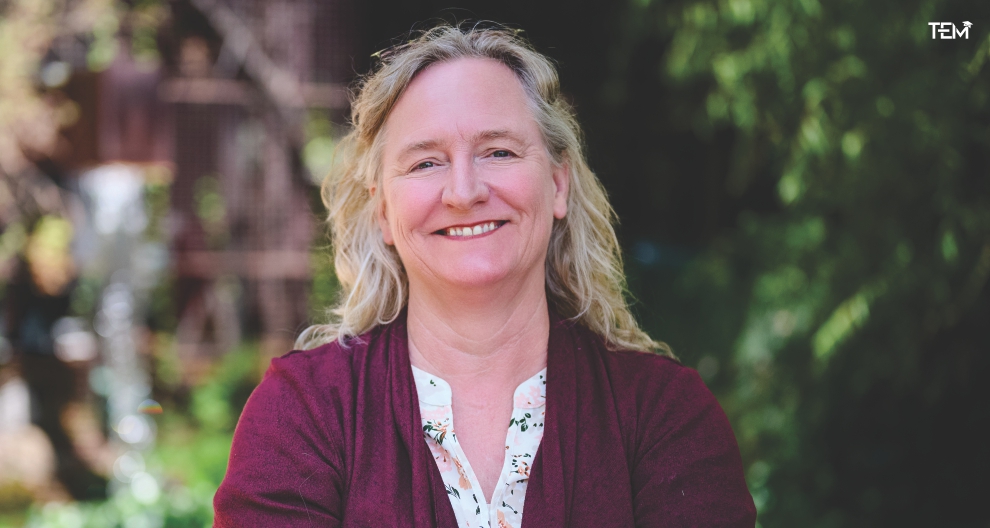
Dr. Kerri Nelson has served as Superintendent of Shenandoah Community School District since 2015, a tenure long enough to have shaped nearly everything described in this profile. Under her leadership, the district has achieved financial stability, completed facility upgrades, expanded its academic and CTE programming, developed a teacher leadership model, brought mental health services directly into the school setting, and launched IGNITE, the online school that has become one of the district’s defining features.
She attributes much of the district’s success to the people around her, describing the academic and management leadership team as high-functioning, collaborative, and committed to student success, a team whose longevity, she notes, has been part of what makes the whole system work.
Her message to current and prospective families is, in the end, the simplest thing in this entire profile, and perhaps the truest: “every student has value, is important, and has the potential to succeed.” That belief sits at the center of the district’s approach, supported by strong partnerships with families and the wider community, innovative learning opportunities, caring relationships, and a culture of excellence.
Quotes