If you spend any amount of time in Washington, D.C., you quickly realize that the city operates on the currency of international dialogue. It is a metropolis defined by its embassies, its visiting diplomats, and the constant, thrumming machinery of global policy. It makes perfect, poetic sense that this very city gave rise to the Washington International School (WIS). Founded in 1966 by Dr. Dorothy Bruchholz Goodman, WIS was created to meet the complex, demanding educational needs of the capital’s international community.
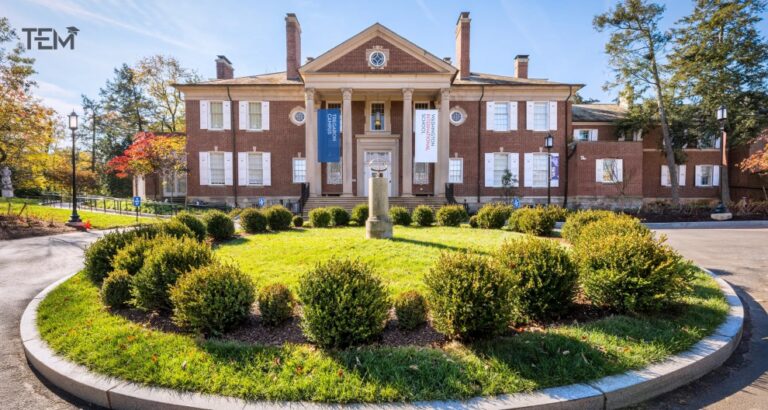
Today, the school operates across two distinct locations: the Primary School campus between Georgetown and Glover Park and the Middle and Upper Schools at the historic Tregaron Campus in Cleveland Park. To step onto either of these campuses is to step into a vibrant, youthful assembly of the United Nations.
The atmosphere here is charged with a specific kind of electricity. It is the palpable energy of young people who are being actively trained to inherit a highly complex, deeply interconnected world. The students do not merely learn about global affairs from a detached, academic distance. They live them, every single day, in the hallways and courtyards of their school.
The Vanguard of Inquiry
The WIS has always operated at the very frontier of modern educational thought. Decades before the phrase “global education” became a standard, expected buzzword in the glossy brochures of private academies, WIS was quietly doing the hard, revolutionary work of building an internationally focused curriculum. Notably, WIS was the 21st school authorized to offer the International Baccalaureate Diploma Programme, a distinction that places its IB history among the earliest in the United States.
This is not a curriculum for the faint of heart. The IB program demands a ferocious level of critical thinking. The academic rigor here is built around inquiry, designed not just to dispense facts, but to actively train students to be relentless, thoughtful questioners. They are taught to interrogate the material, consistently seeking out the historical, cultural, and scientific contexts behind everything they encounter.
Whether they are studying the nuances of twentieth-century European history or the complex mechanics of cellular biology, they are required to view knowledge not as a series of isolated, disconnected subjects, but as a deeply interwoven web of human understanding. The results of this pioneering spirit are undeniable. The students learn how to think, not just what to think.
A Hundred Nations in One Hallway
The sheer scale of the diversity at the WIS is enough to make anyone pause in sheer admiration. The school boasts a robust enrollment of approximately 900 students, spanning from Preschool through Grade 12. However, it is the demographic breakdown of these nine hundred individuals that is truly staggering. The school’s parent community represents 114 countries, while the broader school community represents more than 100 nationalities.
To stand in the center of the Tregaron campus is to hear the hum of the entire world passing by. Conversations drift effortlessly between English, Spanish, French, and dozens of other languages. It is a place where diplomacy, cross-cultural empathy, and mutual understanding are not just academic subjects meant for a textbook; they are the absolute baseline requirements for navigating the playground.
A history lesson about a global conflict or a debate regarding international climate policy becomes inherently richer, infinitely more nuanced, when the students in the room have personal, direct familial ties to the regions being discussed. The world is brought into the classroom in the most human way possible.
The Architecture of Accessibility
True internationalism cannot exist in a vacuum of privilege. A global dialogue loses its potency if it is restricted only to those who can afford the highest echelons of private tuition. The administration at the WIS understands this fundamentally. They hold a profound, ongoing commitment to accessibility and the diversity of thought.
To ensure that the student body remains a true, accurate reflection of the world, approximately 16 percent of current students receive financial aid. This commitment helps ensure that the brilliant, multicultural conversations happening within the classrooms are not stifled by economic barriers. It ensures that the school remains a community where students from a wide range of economic backgrounds can learn alongside one another, debate the same profound questions, and learn from one another’s distinct life experiences. It is an educational ecosystem that prizes the human mind above all else, regardless of its financial origins.
The Inquisitive Spirit of the Capital
The Tregaron campus itself is a historic marvel, a sweeping estate that provides a serene, almost collegiate backdrop to the intense academic rigor taking place within its walls. The six-acre campus was formerly a residential estate, and its historic buildings have been rehabilitated alongside newer learning spaces. The physical beauty of the grounds serves as a perfect counterbalance to the heavy, challenging intellectual lifting required by the IB program.
Students are given the physical space to breathe, to wander, and to let their thoughts percolate. Furthermore, the school offers rigorous language programs, ensuring that students develop true fluency. Students begin with French or Spanish immersion in the Early Years, continue in an English/French or English/Spanish dual-language program through Grade 5, and may add Mandarin Chinese from Grade 6 onward.
The commitment to language is absolute, because the school recognizes that to speak another person’s language is to possess the key to their culture. As the graduates of the Washington International School step out of the shaded groves of the Tregaron campus and into the wider world of 2026, they carry with them a rare, invaluable asset.
They possess a deeply ingrained habit of looking at the world through the eyes of others. They have been developing that perspective from their earliest years, learning through inquiry, language, and sustained exposure to different cultures. They leave the institution not just clutching a highly respected diploma, but fully equipped with the inquisitive spirit of the nation’s capital. They are ready to take their rightful place in the global conversation, serving as the empathetic, wildly intelligent leaders that our modern world so desperately requires.