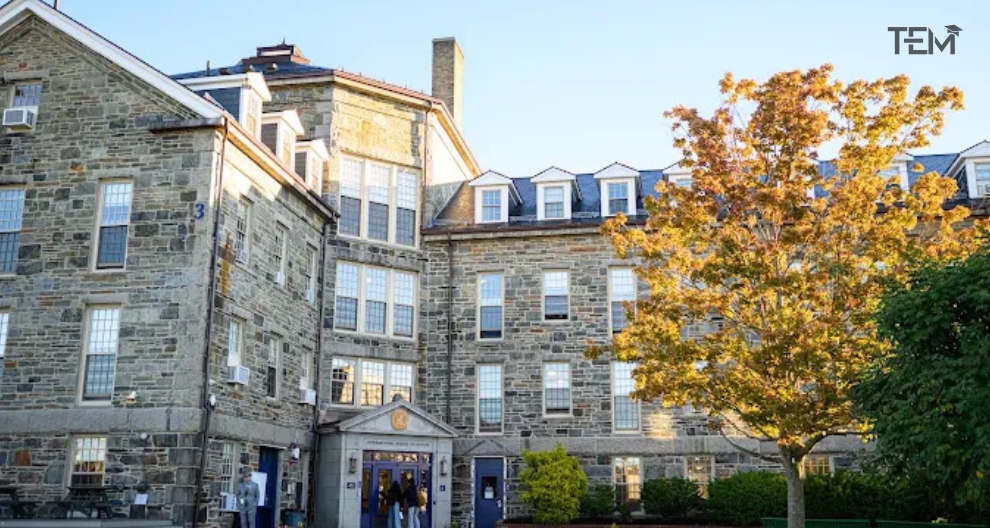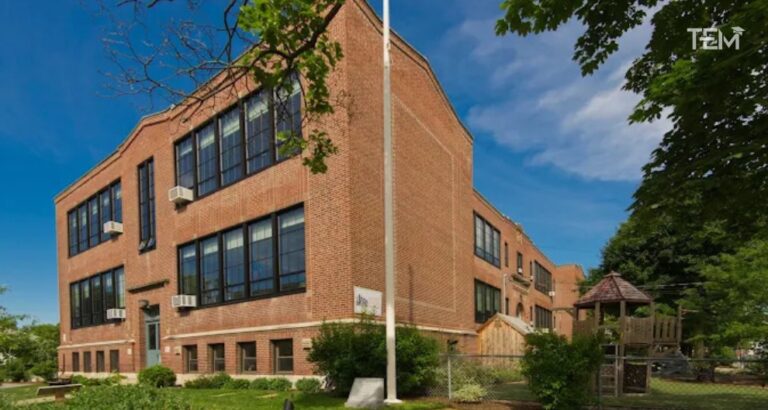
If you take a stroll down Holton Street in the vibrant, bustling neighborhood of Allston in Boston, you will find an institution that operates like a perfectly calibrated intellectual engine. The German International School Boston, affectionately known as GISB, is an independent, non-profit school founded in Boston in 2001.
While it may be younger than some of its historic New England counterparts, it has rapidly established itself as a profound force in the landscape of international education. The school operates across two beautiful spaces, with a Lower Campus situated on Belmont Street in Watertown and the Upper Campus at 57 Holton Street in Boston. To walk through the corridors of this school is to witness a magnificent, quiet revolution in how children are taught to think.
The educators here operate on a deeply held belief that multilingual education can strengthen cognitive flexibility and broaden the way students engage with the world. When you observe these students, you do not just see children memorizing vocabulary lists or conjugating verbs. You see young people being handed the ultimate, gleaming skeleton key to the world. They are learning to navigate the complexities of life with a profound sense of open-mindedness and a ferocious curiosity.
The Power of the Abitur
The German approach to education is famously holistic. It places an equal, harmonious emphasis on both the rigorous sciences and the nuanced humanities. The school is part of a prestigious global network of 136 officially recognized International German Schools. Because of this elite affiliation, GISB is authorized to award the German International Abitur. This honors-level diploma is recognized by European and American colleges and universities as a significant academic distinction. To earn the Abitur is to prove oneself capable of profound intellectual endurance. The curriculum is designed to assess three distinct levels of thinking, as established by the State Ministries of Education in Germany.
Students are not just tested on their ability to reproduce a text or a mathematical problem. They are pushed to analyze, explore, and interpret materials critically. Finally, they must demonstrate the rare ability to go beyond the immediate text, transferring their knowledge to entirely new, unseen contexts. The school does not rank its students, nor does it weigh grades, keeping the emphasis on academic development rather than class standing. For consistency, the College Board has authorized the use of the AP designation for its four-year German curriculum, allowing students to take the AP German Language and Culture exam as early as the tenth grade.
The Mathematics of the Microcosm
The physical size of the GISB is intentionally intimate, yet its demographic footprint is staggering. With just over 300 students in its most recently published school profile, the community is extraordinarily close-knit. Yet, within this small population, there are more than forty-five different nationalities represented. It is an absolute microcosm of the globalized world. An astonishing twenty-five different languages are spoken among the diverse student body and wider school community, proving that you do not need thousands of enrollees to create a truly global village. The faculty is just as worldly, with 84 percent of the teachers coming directly from Germany.
Furthermore, nearly one hundred percent of the high school faculty hold advanced degrees in their respective fields. They bring a level of expertise and cultural authenticity that simply cannot be replicated by textbooks alone.
Building a Global Village
What is perhaps most striking about the GISB is the profound warmth of its community. It is a common misconception that an international German school is exclusively for German expatriates. In reality, GISB actively throws its doors wide open to the world. Their innovative Fast Track program is designed specifically to welcome students who are completely new to the German language. They believe that German educational foundations can open global horizons for absolutely anyone, regardless of their native tongue.
The parents, faculty, and students here form a deeply invested, joyful community. They gather enthusiastically for traditional, beloved events like the annual Christkindlmarkt in December, sharing food, culture, and spirited conversation. Secondary students participate in a dizzying array of extracurriculars, from Ski and Snowboarding Week to Model United Nations, Futsal, and the Environmental Club. The school understands intuitively that to build a successful global citizen, you must first make them feel entirely safe and at home in their immediate surroundings.
A Launchpad for the Future
As we look at the educational landscape in 2026, the GISB stands out for its undeniable, verifiable results. The statistics speak for themselves with absolute clarity. Their published school profile reports that 100 percent of its graduates are fluent in both English and German and speak at least one additional language.
Furthermore, 100 percent of German International School Boston graduates pursue higher education. They have been accepted into a wide range of respected and competitive universities worldwide, from the University of Oxford and ETH Zurich in Europe, to Washington University in St. Louis and the Wentworth Institute of Technology in the United States.
With Philipp Kraft now serving as Head of School and college counselors such as Becky Roihl supporting students through the university process, the students leave the campus not just as scholars, but as well-informed, multilingual diplomats of the future, ready to tackle the most important questions of our times.