The Education Magazine
October 13, 2026
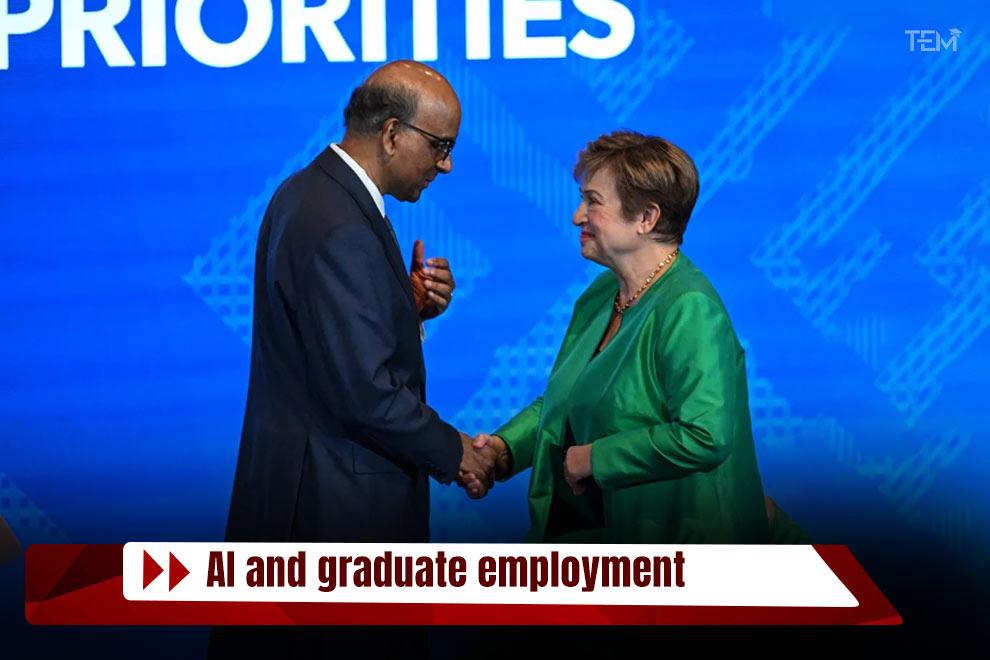
Artificial intelligence (AI) is raising concerns about AI and graduate employment as the World Bank Jobs Council calls for lasting employment support and IMF Managing Director Kristalina Georgieva warns of labour-market disruption.
At the IMF and World Bank Annual Meetings in Bangkok on October 12, Singapore President Tharman Shanmugaratnam highlighted falling entry-level hiring, particularly in AI-exposed sectors.
Georgieva warned that AI could reshape jobs, skills requirements, and education policies. The key concern is whether graduates will have enough opportunities to gain their first professional experience.
Why Are AI and Graduate Employment Becoming a Concern?
The impact of AI and graduate employment may vary by sector, particularly where businesses automate routine tasks previously assigned to junior employees. AI could change entry-level jobs by automating routine tasks that businesses have traditionally assigned to new employees. These roles help graduates apply classroom knowledge and learn from experienced colleagues.
The IMF’s 2026 Annual Report on AI deployment and disruption examines how AI could affect productivity, wages and labour markets.
AI exposure does not automatically mean a job will disappear. Some tasks may be automated, while other roles could change or become more productive.
What Is the World Bank Jobs Council Calling For?
The World Bank Jobs Council discussion on AI and graduate employment highlights the need to help businesses create opportunities for young people entering the workforce. The World Bank youth employment agenda focuses on expanding job opportunities and helping young people develop the skills needed to enter the workforce.
Shanmugaratnam has called on governments to address the falling demand for fresh graduates and consider longer-term employment support, not just temporary crisis measures. The discussion on World Bank graduate hiring highlights the need for lasting government and private-sector efforts to help young people secure their first jobs.
The World Bank’s official jobs initiative warns that more than 1 billion young people in developing countries will reach working age over the next 10 to 15 years. Creating enough jobs will require investment, business growth, and relevant skills. Even well-qualified graduates may struggle if economies do not generate enough jobs.
How Can Universities Improve Graduate Employability?
Universities can strengthen graduate employability by connecting academic learning with workplace experience. As AI changes job requirements, students need chances to apply knowledge and understand how businesses operate.
The World Bank’s Small AI: More and Better Jobs event explores how affordable AI could support productivity and jobs. There, President Shanmugaratnam called for education systems to offer students more opportunities to gain practical work experience while studying. This could include internships, workplace training, and programmes that combine classroom learning with paid or structured employment.
Universities can focus on four areas:
- Work-based learning: Expand internships, paid placements, and supervised projects before graduation.
- AI skills for students: Teach learners to use AI tools responsibly, verify outputs, and understand limitations.
- Industry partnerships: Work with employers on current workplace needs.
- Career preparation: Strengthen communication, critical thinking, and problem-solving alongside technical knowledge.
Could AI Make It Harder for Graduates to Get Their First Job?
A first job lets graduates apply academic knowledge and build experience that qualifies them for more advanced roles. If employers automate routine tasks or reduce entry-level recruitment, graduates may face a gap between finishing a degree and gaining the experience needed to progress.
What Does IMF Research Say About the Skills Workers Need?
In January 2026, IMF Managing Director Kristalina Georgieva explained how AI is changing the skills workers need to find and keep jobs. She stressed the importance of helping workers learn new skills and adapt to changing job requirements.
AI literacy, analytical thinking, and the ability to evaluate information can help workers adapt to these changes. However, the skills required vary by profession. The IMF AI labour warning also highlights the importance of helping workers adapt as technology changes job requirements.
How Can Employment Support Protect Graduate Career Pathways?
Governments, universities, and employers need to work together to address the challenges of AI and graduate employment. Hiring support, practical training, and work-based learning can help graduates build the skills and experience needed to enter the workforce.
However, the goal of employment should go beyond helping graduates secure their first jobs. Employment policies and education programmes must also prepare them for changing job requirements and long-term career growth. As AI reshapes the world of work, stronger links between education and employment will be essential to helping graduates build sustainable careers.