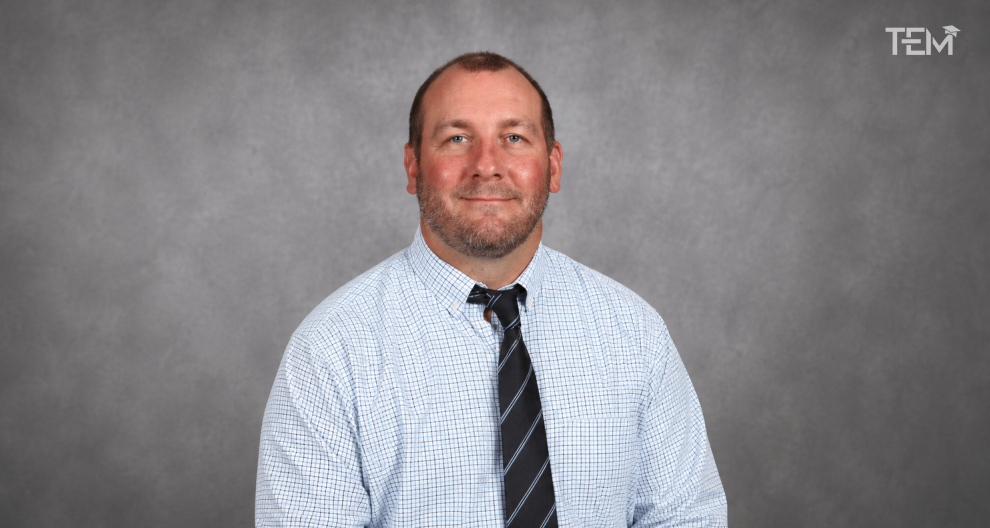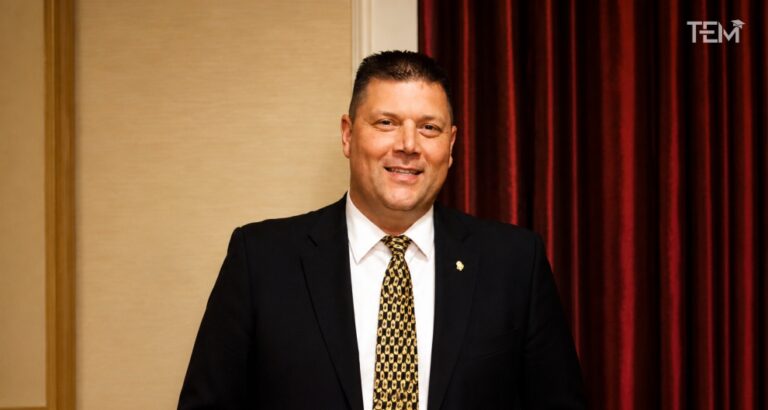
Whitehall, Wisconsin, is not a place most people could find on a map without help. It is small, rural, and, by most conventional measures, an unlikely setting for a story about the future of rural education. And yet it is precisely here, inside a school district that many outsiders might assume has limited resources and limited ambition, that something genuinely unusual has been taking shape for more than two decades. The person behind it, Mike Beighley, currently serving as Superintendent of the Whitehall School District, did not arrive at this work by accident. He built toward it, one year at a time, for nearly his entire adult life.
His path began with a background in elementary education and coaching from the University of Wisconsin-Eau Claire. What stands out immediately is the timeline. He was appointed to his first superintendent position at the age of just 27, a striking detail for anyone familiar with how slowly educational leadership careers typically unfold. He is now entering his 30th year as a rural Wisconsin superintendent, more than twenty of those years spent specifically leading Whitehall.
Over that long stretch of time, Mike’s perspective has been shaped less by theory and more by direct exposure: the students and communities he has served, along with deliberate study of workforce change, emerging technology, and school models beyond his own region. All of it distilled into a single, guiding conviction, one he returns to often. “Rural students deserve access to world-class opportunities without having to leave the strengths of their communities behind.”
The Work of Running a District
Ask Mike what a superintendent actually does, and the answer is less about titles and more about conditions. His responsibility, as he describes it, is to create the environment in which students and staff can succeed, spanning strategic direction, instructional leadership, personnel, finance, facilities, community relationships, and long-term planning. It is a wide net to hold, and yet what he circles back to with visible pride are the partnerships that let Whitehall think past the usual constraints of size and geography.
Three names come up repeatedly in his account of what he considers meaningful progress: the Whitehall Regional Emerging Technology Laboratory, Trempealeau Valley Cooperative 2.0, and LIFToFFS Learning. Each represents a different piece of the same larger idea: that a small district does not have to think small.
Future-Readiness as a Daily Habit, Not a Program
It would be easy to mistake future-ready learning for a single initiative bolted onto the school day. Mike is careful to correct that impression. The goal, in his words, is for it to be “part of the student experience, not a stand-alone initiative.”
The Emerging Technology Laboratory is where that idea becomes tangible. Students there get hands-on access to robotics, automation, advanced manufacturing, 3D design and fabrication, drones, autonomous systems, programming, and applied AI. Meanwhile, LIFToFFS Learning pushes the district further still, rethinking how time, instruction, technology, student voice, and personalized learning intersect. Structures within the school day are being redesigned, career-connected experiences expanded, and students are being given more room to explore their strengths before facing major decisions about their futures.
A Vision Built Around Two Words
If there is a single phrase that captures where Whitehall is heading, Mike offers it without hesitation: Future-Ready, Community-Strong. The idea is to preserve what already works about a small rural district, namely relationships, belonging, responsiveness, and community connection, while changing the structures that no longer serve students well.
His stated priorities are specific: strong academic growth, durable skills, personalized pathways, educator capacity, responsible AI integration, career-connected learning, and greater student ownership. Progress, he insists, cannot be measured by a single number. Instead, success will be tracked through academic growth, engagement, attendance, graduation, credentials, dual credit, career experiences, postsecondary transitions, student voice, and evidence that students can apply what they know.
Partnerships That Turn Ideas Into Reality
Mike is blunt about one thing: rural schools cannot do this work alone. Families and community members are pulled directly into conversations about what students will need, and partnerships are built to turn those conversations into something real. He points specifically to the district’s work with Ashley Furniture Industries, the Ronald and Joyce Wanek Foundation, the University of Wisconsin–Stout, regional districts, CESA, higher education, employers, and civic organizations. The strongest of these relationships, he notes, share one thing in common: a sense of shared responsibility for young people and for rural communities themselves.
Measuring What Matters
When it comes to accountability, Mike does not dismiss standardized assessments, but he also does not overstate their value. They remain one required measure, not a sufficient one on their own. Alongside them, the district tracks growth over time, course performance, attendance, engagement, graduation, postsecondary readiness, dual-credit participation, credentials, and work-based learning, along with direct student feedback.
There is a quieter, harder-to-measure question underneath all of it, one he asks often: are students becoming more independent, adaptable, collaborative, and capable of solving unfamiliar problems? “If we say those durable skills matter, we have to be willing to design for them and look for evidence that they are developing,” he says.
The Test That Reshaped His Leadership
Every leader has a defining test, and for Mike, it was the COVID-19 pandemic. In his rural region, he knew school was connected not only to student learning but also to families’ ability to work and the stability of their communities. Rather than face that alone, Whitehall leaned into the Trempealeau Valley Cooperative, working alongside neighboring districts to build new instructional models, use live video to connect classrooms, and share staff and courses.
What he took from that experience was less about certainty and more about trust. “Leadership during uncertainty is less about having every answer and more about building trust, using the expertise around you, and being willing to create a different model when the old one no longer works.”
Milestones Worth the Pride
Among the achievements Mike returns to, the Whitehall Regional Emerging Technology Laboratory stands out as both a physical and symbolic milestone. It is a 16,000-plus-square-foot regional learning environment, built from years of collaboration and earlier groundwork that included an approximately $3 million Mobile Skills Laboratory, an effort that opened access to hundreds of competency-based courses and certifications and demonstrated that advanced technology learning could thrive in a rural setting.
Today, students have repeated hands-on exposure to applied AI, robotics, mechatronics, fabrication, and autonomous systems. Just as meaningful to him is how LIFToFFS Learning has grown beyond a single district’s idea into a broader collaborative effort rethinking rural education at a systems level, with remarkable improvements already emerging in its pilot classrooms, on both the human and academic fronts.
What Comes Next
Looking forward, Mike wants Whitehall to keep serving as a proving ground for what a small rural public school district can become. The next step, as he sees it, is deeper integration, so that emerging technology, personalized learning, durable skills, student wellness, and career-connected experiences no longer live in separate silos. The larger ambition reaches beyond his own district. “It is to help show that rural schools can lead educational transformation.”
With unlimited resources, his first investments would be in people and time: individualized advising, mental-health support, expanded career and work-based learning, and sustained professional learning for educators. He would also remove transportation and access barriers, expand flexible learning spaces and emerging-technology labs, and ensure every student graduates with meaningful experiences, credentials, college credit, and a clear understanding of their strengths and next steps.
A Life Without Balance, and No Apparent Regret
Asked about work-life balance, Mike offers something refreshingly honest. He admits he is not sure he has ever truly achieved it, and suggests that when someone genuinely enjoys the challenge and importance of their work, the question becomes less pressing. He also confesses a particular fondness for being told something cannot be done.
A Closing Belief
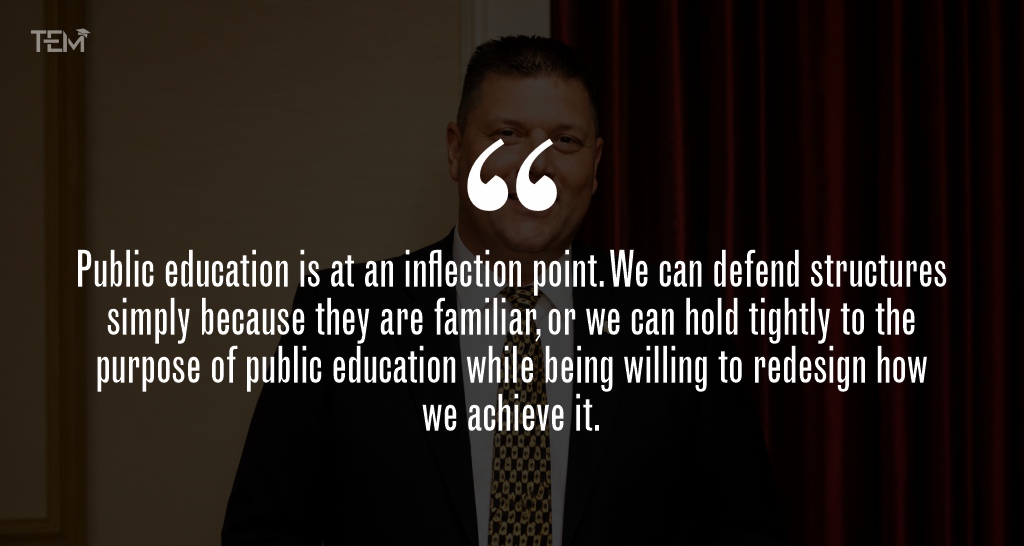
Mike sees public education standing at an inflection point, facing a choice between defending familiar structures or holding tightly to purpose while redesigning how that purpose gets carried out. His closing conviction is one that seems to explain everything that came before it in his career: rural communities already have the relationships, ingenuity, and shared sense of responsibility needed to do remarkable work, and when those strengths meet bold thinking and real partnerships, size does not have to be a limitation.
Quote