On a Friday night, an episode of CSI became, for a few minutes, a lesson in what adults owe the children in their care. The episode was ‘Still Life,’ and its themes were parental responsibility, nurturing environments, and the influence grown-ups have on the young. Among those watching was a foreign exchange student from Japan, a guest of the household, who asked a question that seemed simple: “Why did the man lie if he loved the child?”
The person he asked was Andrew Carroll, who today serves as the Principal of Buckeye Community School’s Springfield campus. The question made him reflect on how difficult it can be to understand not just language, but also culture, emotions, and human behavior.
A Path With Roots at Home
Andrew’s path into education has deep roots. Both of his parents were educators, and he watched, from close range, the positive impact that caring adults can have on young people’s lives. Their example shaped his belief in the power of education and in the importance of creating supportive environments for students.
The evening with the exchange student gave that belief a sharper edge. “That moment showed me that education is about more than sharing information. It’s about helping people make connections, build understanding, and grow,” Andrew reflects. Joined with what his parents had modeled, the experience inspired him to pursue a career in education.
Today he works to build the same kind of supportive, nurturing environment that shaped his own journey, one that helps students succeed and understand their value.
A Pathway Back to Graduation
Buckeye Community School’s Springfield campus is part of a network of seven brick-and-mortar dropout prevention and credit recovery schools across Ohio, managed by New Leaf Organization (NLO). Founded on the belief that every student deserves an opportunity to succeed, NLO has developed a personalized educational model that combines flexibility, accountability, and comprehensive student support to help students who have been overlooked or underserved by traditional educational systems.
As Principal of BCS-Springfield, Andrew Carroll plays an important role in advancing that mission. His primary responsibility is to ensure that students who have fallen behind academically have a clear pathway to graduation and future success. Through a supportive learning environment that meets students where they are while maintaining high expectations for achievement, Andrew and his team help students regain confidence, overcome barriers, and recognize their potential.
The daily work is both practical and personal. Andrew manages school operations, monitors student progress and graduation requirements, and uses data to identify students who need additional academic or social-emotional support.
Re-engagement, in his view, starts with a question: why did this student become disconnected from education in the first place? Many BCS students are balancing responsibilities and challenges outside the classroom, so the school aims to be a place where they feel supported, respected, and capable of succeeding. Strengthening relationships between students and staff has been one of his priorities, along with helping each student see a realistic path forward.
The tools are individualized learning plans (ILPs), credit-recovery opportunities, and consistent progress monitoring. Their purpose is to help students focus on “what they can accomplish next rather than how far behind they may have fallen.” Inclusion runs through the approach, particularly for English language learners and for students who may not have felt connected in traditional settings.
Flexibility, Andrew explains, opens the way back; relationships, accountability, and belonging are what keep students engaged once they return. The goal is to help students rebuild confidence, recognize their progress, and believe that graduation and a successful future are still within reach.
The Quiet Student
When Andrew talks about his proudest moments, he begins not with a statistic but with a student. Early in his career, he volunteered as a tutor for multilingual learners. One student, new to the United States, rarely participated in class. Others saw a quiet student. Andrew saw someone who seemed disconnected and uncertain about where she belonged.
Rather than focusing solely on academics, he spent time building trust through informal conversations and individualized support. Gradually, she began to share pieces of her story: her experiences before coming to the United States and the challenges of adapting to a new language and culture. As her confidence grew, so did her willingness to participate, express herself, and engage with learning.
Watching students regain confidence and reconnect with their goals remains, for Andrew, one of the most rewarding parts of his career. That transformation taught him something about himself: he was most energized when helping students overcome barriers and recognize their own potential. It also reinforced the importance of ensuring every student feels “valued, supported, and empowered to succeed.”
Meeting Students Where They Are
The challenges students bring with them can include work responsibilities, family obligations, housing instability, and mental health struggles. The school works to understand their circumstances and to connect them with the resources they need. Staff have helped students access services such as transportation, food assistance, and community support programs, building trust through consistent presence and advocacy.
The philosophy beneath this work is stated plainly. “Students do not need to be fixed; they need someone who believes in their potential and champions their success,” Andrew says.
Building on NLO’s student-centered philosophy, Andrew leads with authenticity and transparency, reinforcing a culture of trust, accountability, and belonging. Through his leadership and the collective commitment of the Springfield team, students are encouraged to take ownership of their education and work toward graduation.
Data as a Tool for Action
A cornerstone of NLO’s educational model is its commitment to individualized learning and real-time student progress monitoring. At BCS-Springfield, Andrew and his team use STAR data to gain immediate visibility into each student’s academic performance, attendance, and credit completion. Rather than waiting for benchmark assessments or end-of-term reports, educators can identify concerns as they emerge and respond quickly with targeted interventions.
Teachers, counselors, and administrators stay aligned around individual student needs and make decisions based on current data. Quarterly ILPs track graduation pathways. By reviewing progress regularly, the school can celebrate growth, address barriers early, and adjust support strategies before students fall further behind.
For Andrew, school effectiveness is measured not just by final outcomes but by the ability to continuously monitor, support, and accelerate student growth. “The real value comes from using data as a tool for action, ensuring that every student’s progress is actively guided rather than simply evaluated at the end of the process,” he says.
Many Perspectives, One Student
No single person or department, Andrew believes, can meet every need a student brings to school. Teachers, intervention specialists, career staff, family-engagement professionals, and support teams each see a different part of a student’s experience, which makes consistent communication essential.
He works to cultivate a culture in which information is shared, concerns are addressed early, and “student success is a collective responsibility.” Regular conversations about student progress, academic needs, attendance, personal challenges, and future goals allow the team to coordinate support rather than operate in separate areas.
Just as important, he encourages the team to listen to one another and to the students. Combining staff expertise with an understanding of each student’s circumstances lets the school respond more effectively and consistently, supporting the whole student while keeping graduation and preparation for life beyond high school at the center of the work.
What Comes After the Diploma
Through its Buckeye Community Schools, the NLO emphasizes that success depends on what happens after graduation, not simply on earning a diploma. The school therefore concentrates on helping students build the skills, experiences, and confidence they need for their next step, whether that is college or a career.
Programs are designed to be hands-on and real-world, connecting classroom instruction to future opportunities. BCS-Springfield’s Career-Tech options are construction, boutique services, law and public safety, and driver’s education. The campus also offers robust fine arts programming, with courses in visual arts, vocals, theatre, and script writing.
By giving students chances to apply their learning in meaningful ways, Andrew says, the school helps them see a clear connection between their education and their future.
A Test of Leadership
Andrew names one experience in particular as a test of his leadership. A student arrived at the school carrying a negative reputation and very little trust in adults. Andrew had been told the student probably wouldn’t make it to graduation. “I chose not to let that define him,” he says.
What followed was neither quick nor easy, and there were plenty of setbacks along the way. Andrew focused on building a relationship, staying consistent, and showing the student that someone believed in his potential. Over time, trust developed. The student re-engaged in school, completed his credits, and graduated.
The lesson has stayed with him and continues to shape how he leads. Sometimes, he has found, the most important thing a school leader can do is show up, listen, and stay committed to students even when progress is not immediately visible.
From 43 Students to 548
The numbers are the part of the story Andrew is quickest to put in perspective. In just two years since the opening of the BCS-Springfield campus, the school has celebrated the graduation of 148 students and grown from an initial enrollment of 43 students to 548 students.
Springfield’s achievements are part of a broader effort by New Leaf Organization to expand educational opportunities across Ohio. Through its seven-school Buckeye Community Schools network, NLO has helped more than 6,000 students earn their high school diplomas. Within that larger mission, Andrew and his team are demonstrating how personalized education, strong relationships, and high expectations can create meaningful opportunities for students seeking a different path to graduation.
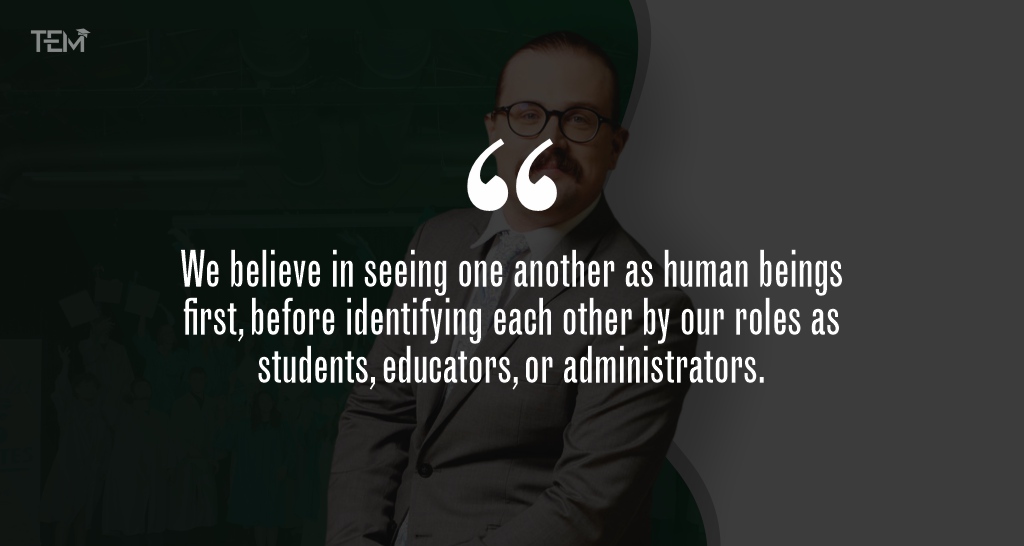
What makes him most proud, he says, is “the people and relationships behind them.” He credits the dedicated staff, the positive culture they have built, and the meaningful relationships formed with students, families, and the community. Rooted in empathy, authenticity, and a commitment to understanding each person’s circumstances, the school strives to see people as individuals first rather than define them by their roles as students, educators, or administrators.
The milestones, in his view, represent more than enrollment growth or graduation numbers. “They demonstrate what is possible when we prioritize people, build trust, and create a culture where everyone feels they belong.”
Looking Ahead to 2026 and Beyond
Andrew’s vision for the school in 2026 and beyond is to keep strengthening a student-centered environment in which every student has a clear pathway to graduation and is prepared for what comes next. That means building on the school’s personalized approach while deepening student engagement, academic progress, attendance, and connections to post-graduation opportunities.
He also wants to expand the sense of belonging within the school and keep its practices inclusive and responsive as the student population evolves. Success will be measured not only by graduation and academic outcomes but also by student growth, engagement, persistence, and readiness for life beyond high school. His hope is that students leave with a diploma, greater confidence in themselves, and a meaningful plan for their future.
Beyond the Springfield campus, Andrew hopes the work taking place across Buckeye Community Schools will help change how alternative education is viewed. He believes students who take a different path to graduation should be recognized for their strengths and potential rather than defined by past challenges. Guided by NLO’s mission and its commitment to personalized learning, Andrew is helping demonstrate that flexibility and accountability can coexist, and that meeting students where they are can lead them somewhere greater. Through his leadership, the dedication of his team, and the educational model established by NLO, the Springfield campus is contributing to a broader vision of education in which every student has an opportunity to succeed.
Beyond the Building
Andrew has become far more intentional about work-life balance over the course of his career. As a school leader, he knows he cannot be fully present for his students, staff, and community if he is not taking care of himself. That begins with excellent time management, consistency, and setting aside time for the people and activities that bring him joy.
Family is central. He enjoys cooking with his wife, Stephanie, and hiking and traveling with their dog, Sulley. He also reads the works of Kurt Vonnegut. “Work-life balance isn’t separating purpose from personal life. It’s about integrating joy, family, and enthusiasm into each day,” he says.
That perspective reflects the same belief that guides his work at Buckeye Community School: people thrive when they are understood, supported, and given the opportunity to move forward.
Quote