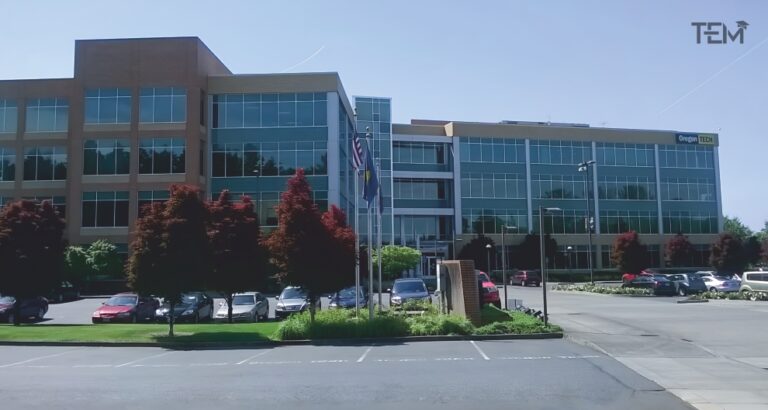
In the high desert of southern Oregon, where the winters are long and the sky feels impossibly wide, a group of returning soldiers once needed something practical: a place to learn a trade, rebuild a life, and put their hands back to work. That was 1947. Nearly eighty years later, the campus they built their futures on has become something far larger than anyone in that first classroom could have imagined, a polytechnic university that now trains people not just to fix machines, but to build the artificial minds behind them.
This is the story of the College of Engineering, Technology and Management at Oregon Institute of Technology, a place where the founding instinct, education tethered tightly to real work, has never really changed. What has changed is the scale of the ambition.
A Philosophy That Refuses to Stay in the Classroom
Ask anyone at Oregon Tech what makes the college different, and the answer arrives quickly: it is applied, and it is polytechnic, two words the college treats less as branding and more as a promise. Learning here is not meant to be done quietly in a lecture hall. It is meant to be active, relevant, and grounded in the kind of work students will actually do once they leave.
That philosophy shows up in the numbers, in labs, in applied projects, and in classrooms designed to mirror the professional world rather than imitate it from a distance. Many instructors bring firsthand industry experience into their teaching, and employers have a direct hand in shaping what gets taught. It is a loop, not a lecture.
Nowhere is that philosophy more visible than in the college’s newest and most ambitious offering, a Bachelor of Science in Artificial Intelligence, where students begin building, deploying, and managing AI systems from Day 1, filtered always through an ethical, human-centered lens. The goal, as the college describes it, is for graduates to leave already practicing their profession, not simply prepared to start learning it.
The New Frontier: Oregon’s First Applied AI Degree
The headline achievement, and the one that seems to animate nearly every conversation on campus these days, is the launch of Oregon’s first Bachelor of Science in Artificial Intelligence at a public university. The program received NWCCU approval in March 2026, and its first cohort will enroll in Fall 2026 across three settings: Klamath Falls, Portland-Metro, and online.
The degree lives within the college’s Applied Computing & Geomatics Department, alongside Cybersecurity, Information Technology, and Data Science. The AI curriculum itself unfolds in a deliberate arc, opening with an accessible course called AI for Everyone before advancing into applied machine learning, natural language processing, computer vision, large language models, agentic AI, and ethics, culminating in a two-term industry capstone.
Paired with the college’s other offerings — Cybersecurity, Information Technology, Computer Systems Engineering Technology, Construction Management, and the broader engineering and management programs — the AI degree is designed to feed directly into roles the market is already hungry for: AI engineer, machine learning engineer, data analyst, systems integration specialist, and automation engineer.
Opening the Door Wider
For a college built on the idea of access, the admissions process is designed to remove friction rather than add it. Direct admissions and a growing dual credit program allow high school students to earn Oregon Tech credit before they even arrive on campus, easing the leap into a full degree.
Articulation agreements with Klamath Community College and Rogue Community College create clear, well-marked transfer pathways, while need-based financial aid, scholarships, and advising continue well past the first day of enrollment. For first-generation and low-income students, that support is formalized through dedicated programming, and both in-person and online formats widen the door further for learners in rural and regional communities who might otherwise be shut out.
Where Learning Meets the Machine
Step into the Applied Computing Lab or the Applied Computing Learning Lab, and the abstraction of “technology integration” becomes something you can touch: cloud platforms, data and business intelligence tools, and live AI and machine learning systems that students work with directly rather than merely read about.
Perhaps the most distinctive space on campus is the Oregon Tech Cybersecurity Community Clinic, known as OTC³, Oregon’s first member of the national Consortium of Cybersecurity Clinics, an initiative born out of UC Berkeley and MIT with support from Google. The clinic is AI-infused, meaning students are not simply learning cybersecurity theory but applying AI tools to real security assessments for local organizations, working with actual stakes attached.
Behind the scenes, the college is also expanding its High-Performance Computing capacity for AI workloads. Through the NSF—supported NAIRR Pilot, faculty such as Dr. Guraja have gained access to national supercomputing and GPU resources typically reserved for far larger research institutions, a meaningful advantage for a college of this size.
From Classroom to Career, Without the Gap
The bridge between theory and the working world is not incidental here; it is engineered into the curriculum itself. Employers help shape what is taught, and students move through internships, project-based courses, cooperative learning, and capstones tied to problems that actually exist outside the classroom.
That bridge extends beyond current students, too. The college’s Applied Computing Workforce Readiness initiative, funded by a Future Ready Oregon Workforce Grant from the Higher Education Coordinating Commission, offers upskilling and reskilling to working professionals who need to catch up to where the technology has moved. Partnerships range from regional employers to federal agencies, along with collaborations with major cloud and hardware providers, and national competitions give students a chance to measure themselves against peers from across the country.
Measuring What Doesn’t Show Up on a Transcript
Grades tell only part of the story, and the college seems to know it. Innovation and problem-solving find their outlet each year at IDEAfest, the college’s undergraduate research symposium, and increasingly, on the national competition stage.
At the 2026 AITCC National Conference, students mentored by Dr. Guraja and Professor Nalluri brought home six awards, including first and third place in the Analyze IT challenge, a fourth-place national finish in PC troubleshooting, and recognition in the Cyber Sentinel Challenge. In a separate but telling data point, a Coursera micro-credentials pilot found students logging learning time 195 percent above the benchmark, a statistic that suggests something beyond compliance is driving them.
Portfolio development, internship placement, and direct employer feedback round out the picture, alongside the more traditional markers of retention, graduation, and career outcomes.
The People Behind the Progress
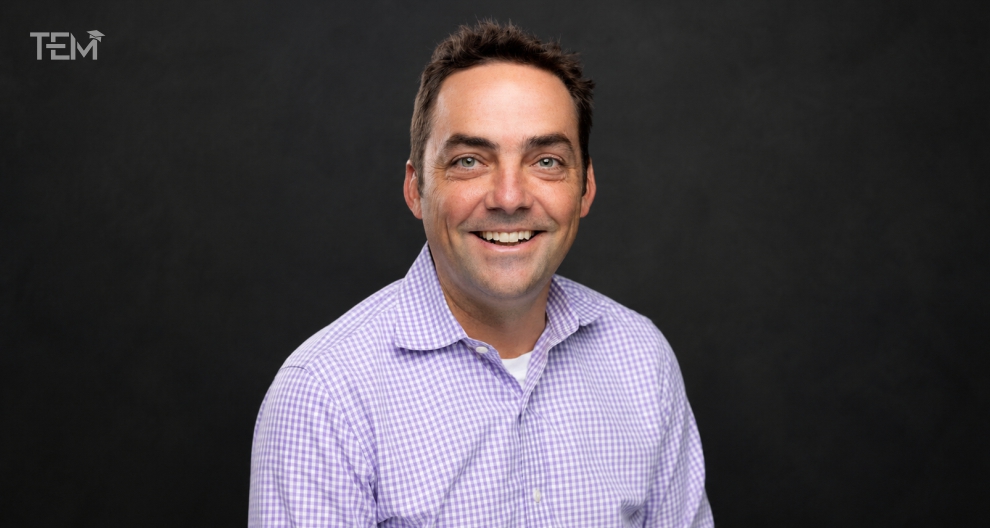
Every strong institution eventually comes down to its people, and Oregon Tech’s engineering college is no exception. At the top sits Dean Neslihan Alp, P.E., an ASME Fellow whose leadership style is described, notably, as people-first, with an emphasis on student success, faculty development, and industry partnership.
One name comes up repeatedly in conversations about the new AI program: Dr. Praveen Kumar Guraja, who helped develop the B.S. in Artificial Intelligence and directs OTC³. His credentials are substantial: recipient of the AAAI/ACM SIGAI Innovative AI Education Award, IEEE Senior Member status, recognition as a Google Gemini Certified Educator, and more than $3.1 million in funded and pending grants. Alongside colleague Professor Manish Nalluri, he has represented Oregon Tech on the national stage in AI education, a partnership visible again in the students they have mentored to award-winning results.
A Year Worth Marking
Even set against nearly eight decades of history, this has been a standout stretch for the college. The launch of the AI degree anchors the list, but it is joined by the six AITCC awards, a new collaboration with Google Public Sector on AI research and skills development, and Oregon Tech’s largest freshman class in more than forty years.
External funding has followed the momentum: the Future Ready Oregon workforce grant, federal digital-connectivity funding, and a pending NSF scholarship proposal worth nearly $2 million, with faculty actively engaged in the national NAIRR AI Pilot throughout.
More Than a Classroom
Academics are only one layer of what the college offers. From their first term, students have access to academic advising, tutoring through the Applied Computing Learning Lab, counseling and health services, and a college-wide Freshman Seminar meant to ease the transition into college life.
Career services help with resumes, internship placement, and job searches, backed by employer relationships built over years, while student organizations like the AI Club and TechSec Club offer space for competition, research, and leadership outside formal coursework. IDEAfest, stackable micro-credentials, dedicated TRiO support for first-generation and low-income students, and a course specifically built around AI prototyping and entrepreneurship round out a support system designed to help students not just survive college, but build something while they are there.
Looking Toward the Horizon
What comes next, understandably, centers on the AI program’s first cohort arriving in Fall 2026, alongside continued expansion of High-Performance Computing and NAIRR resources that make advanced AI learning possible.
The college is also deepening interdisciplinary pathways, pairing AI and cybersecurity with fields like healthcare, including new work on telehealth and digital-health systems aimed at expanding rural care. Underneath all of it sits a consistent thread: widening access to emerging technologies for students in rural and regional communities, and for first-generation and low-income learners who might not otherwise get the chance.
A Dean’s Closing Word
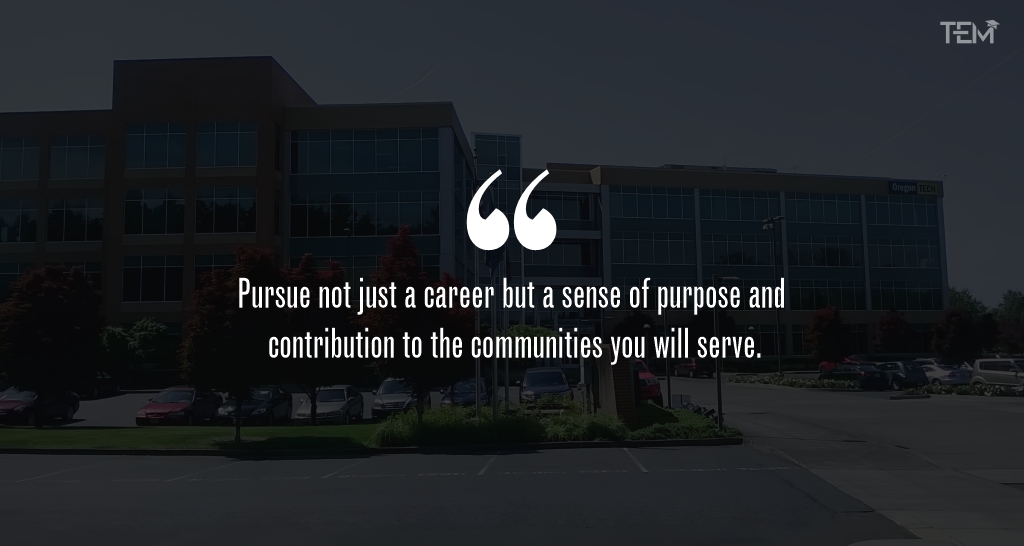
For Dean Neslihan Alp, the mission comes back, always, to people. Her approach to leadership is built less on certainty and more on listening, on the belief that people do their best work when they feel supported rather than simply managed. Her message to the next generation of engineers is less about mastering a syllabus and more about ownership, using every resource and mentor available, and remembering that a career, done well, is also a form of service to the communities it touches.
Nearly eighty years after a group of veterans first walked onto that Klamath Falls campus looking for a practical education, the instinct hasn’t changed. What has changed is the scale of the tools now in students’ hands and the size of the future they are being asked to help build.
Quote