Public education often changes because one person decides that routine is not good enough. Communities grow when leaders treat schools as living places rather than office charts. In many cities, families have learned to expect promises that fade after a few years. East Cleveland needed something steadier, a plan that could outlast any single administrator.
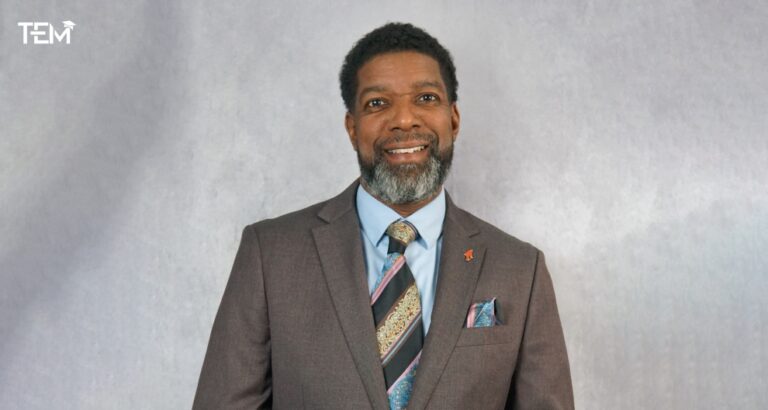
Dr. Henry Pettiegrew II arrived with that mindset. He began his career in classrooms, learning the daily rhythm of students and teachers before stepping into leadership roles at schools and districts. He carried one clear belief with him: systems should guarantee meaningful, grade-level learning for every child. Early mentors shaped that belief. They showed him how to pair high expectations with team-based problem solving, and he kept that approach as he moved into larger challenges.
His work in turnaround efforts, including Maple Heights, tested those ideas in real conditions. In 2018, he accepted the appointment as CEO and Superintendent of East Cleveland City Schools. The district needed quick action, but it also needed a structure that could last. Dr. Pettiegrew focused on marrying urgency with systems design so improvements were durable and measurable. He often says, “Change only counts if families can feel it in the classroom.” That practical view continues to guide how he leads today.
Leading with Purpose
At the center of East Cleveland City Schools, Dr. Henry Pettiegrew II wears many hats. As Superintendent and CEO, he sets the district’s overarching strategy, known internally as the Flight Path. He aligns leadership through Empowerment Zones, ensuring every administrator understands their role in translating goals into classroom results. Beyond guiding strategy, he protects the district’s fiscal health and serves as its public advocate, representing the schools to families, government officials, and the broader community.
Dr. Pettiegrew’s tenure has been marked by tangible accomplishments. He led the Revitalization Plan and Flight Path, which produced system-level gains, meeting sixteen of the twenty key performance metrics by the third year. Recognizing that data drives decisions, he built transparent reporting systems and introduced a Turnaround Scorecard to track progress openly. He also expanded opportunities for students, launching virtual academies and credit-recovery pathways to keep learners on track.
Equally important, he shifted the district’s approach to discipline, favoring restorative practices that preserve connections between students and adults. “Growth isn’t just numbers on a page,” he observes. “It’s the relationships, routines, and opportunities we build that make a difference.” Under his guidance, these initiatives have delivered measurable improvements across academics, engagement, and student support, reflecting a leadership style grounded in accountability and vision.
Driving Change through Focused Reforms
When Dr. Pettiegrew stepped into leadership, he knew lasting improvement required more than quick fixes. He launched three simultaneous reforms to strengthen both outcomes and engagement across East Cleveland City Schools. First, he reorganized the district’s structure, creating Empowerment Zones and establishing a clear leadership cadence that made accountability tangible at every level.
Second, he focused on instructional coherence. Early literacy in pre-kindergarten through third grade became a top priority, paired with a rigorous, grade-level math agenda. Classrooms now operate with explicit routines designed to support consistent learning, ensuring students encounter clear expectations day after day.
Third, he embedded a culture of continuous improvement. Data rooms, coaching cycles, and fidelity checks now guide teaching and leadership decisions, making progress visible and actionable. These initiatives are not abstract; they are anchored to a 20-metric Turnaround Scorecard, which measures and governs implementation at every level.
Beyond these core reforms, Dr. Pettiegrew scaled virtual academies, expanded credit-recovery pathways, introduced career and technical education programs, and emphasized restorative discipline practices. Each change reflects his belief that measurable systems, when combined with human connection, can transform both student achievement and school culture.
Academic Progress and a New Chapter
Under Dr. Pettiegrew’s leadership, the district recorded clear systemwide gains. By Year 3 of the Revitalization Plan, East Cleveland met sixteen of twenty metrics, raised its Performance Index by more than twelve points, and earned a three-star overall state rating with a four-star Progress rating, up from two stars the year before.
Early literacy also surged, with third-grade proficiency climbing roughly ten points. Reflecting on the milestone, he notes, “Being released from state oversight shows our work is not temporary, it’s real growth that families can see.”
A Test of Leadership and the Path Forward
When Dr. Pettiegrew was appointed under the Academic Distress Commission in 2018, the district faced skepticism and high stakes. He met the challenge with clear plans, early operational wins, and relentless transparency, turning doubt into collaboration and laying the groundwork for lasting improvement. Reflecting on that period, he says, “Credibility is earned not through words, but through visible action that families and staff can trust.”
Looking ahead, his focus is on embedding systems that ensure progress continues beyond any single leader, creating a resilient district where gains are sustainable, and students remain at the center of every decision.
Equity in Action
For Dr. Pettiegrew, equity is not a concept but a daily practice. Resources and staffing are deliberately directed to schools facing the greatest gaps, ensuring every student has access to support where it matters most.
Progress is tracked through interim benchmarks, MAP growth, state growth percentiles, proficiency, graduation and credit accumulation, chronic absenteeism, and discipline trends. School-level fidelity measures, including professional development completion, walkthrough evidence, and intervention cycles, provide insight into classroom implementation.
All of these metrics feed into the Turnaround Scorecard, offering a transparent, public-facing snapshot of progress. He notes, “Equity isn’t about equal treatment, it’s about targeted action that meets every student where they are.”
Grounded in Family, Driven by Impact
For Dr. Pettiegrew, family is the anchor that keeps him grounded. Time with his spouse and five children, reading, and brief creative escapes provide balance amid the demands of leading a district. He believes that leadership that matters changes systems so they change lives.
Reflecting on East Cleveland’s journey, he notes, “Being released from state oversight shows that disciplined systems, combined with genuine community partnership, can lift student outcomes at scale.”
This philosophy continues to guide his work, ensuring that every decision, whether it is strategic or daily, serves students, strengthens staff, and builds a lasting foundation for the community he serves.
A Vision beyond the Nest
Dr. Pettiegrew’s vision for 2026 and beyond, called Beyond the Nest, charts a PK–12 path designed to launch every student toward post-secondary success. Four guiding goals shape this journey: accelerate early literacy, ensure grade-level math mastery, boost graduation and career readiness, and foster a restorative culture where every student feels a sense of belonging.
Progress is tracked rigorously using state report card indicators, graduation and credit accumulation rates, chronic absenteeism, and discipline and climate metrics. Fidelity of implementation is monitored through coaching, professional learning communities, and MTSS practices, all aggregated on the Turnaround Scorecard. He emphasizes, “Vision without measurement is hope; measurement without vision is directionless.”
Quote
“Vision without measurement is hope; measurement without vision is directionless.”
Also Read: The 10 Leaders Transforming Education, 2026