Southfield, Michigan, sits on the edge of Detroit, a geographic epicenter that understands industrial revolutions intimately. For a century, this region was defined by the tangible power of the assembly line. Today, the defining machinery of our age is invisible. It is driven by complex algorithms, vast data networks, and artificial intelligence. It is here, in this historical nexus of American industry, that Lawrence Technological University is writing its next chapter.
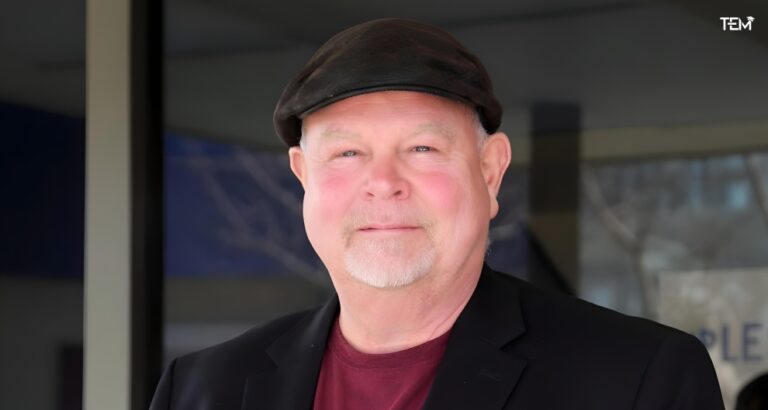
In the quiet, methodical halls of this institution, there is a palpable hum of acceleration. The university is not merely bracing for the future. It is actively drawing the blueprints for it. At the center of this profound transformation is Dr. Patrick Nelson. Currently serving as Dean of the College of Arts and Sciences and Dean of Graduate Studies, he represents a rare breed of academic visionary. Yet, beneath the administrative titles, he is fundamentally a mathematician who speaks the fluent language of biology. He is a seasoned leader who views institutional change through the lens of dynamic, living systems, holding a deep, abiding passion for creating an environment that supports the growth and success of students, faculty, and staff alike.
The Architecture of a Mathematician’s Mind
To understand his approach to leadership, one must look at his foundational years. Long before shaping the innovators of tomorrow, he was a young student at Arizona State University earning his Bachelor of Science in Mathematics. It was there he met his wife, Dr. Trachette Jackson, who is now a distinguished mathematician and Associate Vice President for Research-Strategic Partnerships and Inclusive Excellence at the University of Michigan.
Dr. Nelson’s intellectual curiosity pulled him toward the intersection of numbers and life itself. He later earned his Ph.D. in Applied Mathematics in 1998 at the University of Washington under the mentorship of Professor James D. Murray. Following postdoctoral appointments at the University of Minnesota and Duke University, he joined the University of Michigan in 2000 and later became a tenure-track assistant professor in mathematics. His pioneering mathematical modeling of HIV dynamics earned him the highly competitive Burroughs Wellcome Career Award at the Scientific Interface.
He boasts over fifty peer-reviewed publications with more than 6,000 citations worldwide, and has served as Principal Investigator or co-Principal Investigator on National Institutes of Health and National Science Foundation grants totaling more than $2.5 million. When you spend your formative academic years mapping the invisible trajectory of infectious diseases and diabetes, you develop a profound respect for exponential change. You learn that complex systems do not wait for you to catch up. They simply evolve. This background heavily informs his approach to interdisciplinary research, proving that a single shifting variable can alter an entire ecosystem.
Riding the Digital Locomotive
Artificial intelligence is no longer a fringe concept relegated to dimly lit computer science laboratories. It is an immediate, vibrating reality that touches every facet of human existence. For Dr. Nelson, this rapid technological evolution is not a cause for alarm, but rather a thrilling intellectual frontier.
He notes that the world has spent the past decade discussing the Fourth Industrial Revolution, even as artificial intelligence now reshapes society at breakneck speed.
He marvels at the severe compression of time, pointing out that what once changed by the decade or century can now shift by the year, sometimes even by the month. In his view, the future has arrived not as a slow dawn, but as a bullet train roaring into the depot. It pauses just long enough for passengers to board before rocketing away.
Institutions are faced with a stark choice, he argues. They can either adapt to this accelerating pace or remain on the sidelines, moving at a crawl in their own vehicles while the rest of the world speeds out of sight. This is the unvarnished truth of modern academia, demanding a conscious decision from educators about how to navigate the road ahead. Dr. Nelson acknowledges that such rapid transformation naturally brings a sense of unease, and it can even be deeply intimidating for those accustomed to traditional methods. Yet, he views this friction as a chance to redefine what “normal” looks like.
He frequently draws inspiration from other academic pioneers who share this forward-looking mindset. He often directs his peers to a recent, insightful address on artificial intelligence delivered by Michael Crow, President of Arizona State University. He urges anyone invested in education to seek out the recorded presentation online, pointing them toward Crow’s discussion of the future of academia and AI.
Building the University of Today
At Lawrence Technological University, Dr. Nelson fosters an environment that refuses to be a passive bystander. He points to the changes that have taken place at the university over the past five years as having put the college in a strong position to train and mentor the next generation of students. Having served as Chair of the Department of Mathematics and Computer Science from 2016 to 2024, and becoming the College’s first Associate Dean for Research in 2022, he has leaned into the friction of progress to build a modern academic framework.
A striking aspect of his tenure is an unyielding commitment to diversity, equity, and inclusion. Innovation cannot thrive in an echo chamber. To build the future, you need a chorus of distinct, diverse voices. Dr. Nelson has lived this philosophy outside the university gates, having served as President of the Board of Directors for Cornerstone Jefferson-Douglas Academy in Detroit and, through his work with Cornerstone Schools, supported innovative approaches to mathematics instruction. Inside the university, his leadership historically bridges the gap between disparate fields. As the Principal Investigator of a $945,000 National Science Foundation Undergraduate Biology and Mathematics award, he successfully integrated biology and mathematics through curriculum innovation. The program provided undergraduate students with mathematics and biology education, research, and mentoring opportunities, with participants going on to advanced programs at institutions including Harvard and MIT.
The true mark of a transformative dean is not just found in the prestigious grants won or the thousands of citations earned. It is found in the cultural resilience left behind. Dr. Nelson views leadership as an act of profound human connection. He believes that true administrative success requires a delicate balance of data-driven strategy and empathetic mentorship. As we look toward the shifting horizon of 2026, he knows exactly where his institution stands.
His ultimate goal is to lead by example, cultivating a culture of trust and accountability. By continuously communicating their vision, he and his team are actively defining what a modern university should look like. For Dr. Nelson, the high-speed train is no longer just idling at the station. He has already punched the tickets, gathered his diverse team, and taken his place at the front, ready to chart a bold, brilliant course into the uncharted territory of tomorrow.