In the towns that line Pennsylvania’s Mon Valley, the story of public education often follows the rise and fall of industry. Steel once shaped daily life here. When that foundation weakened, schools felt the shift just as deeply as families did. Districts had to make hard choices, not just about budgets, but about what kind of future they could still offer their students.
Within that setting, the Duquesne City School District has had to rethink its role more than once. It began as a full K–12 system, serving generations of students in a tight-knit community. In 2007, after years of economic strain, the state assumed responsibility for high school students in grades 9–12, shifting the district to a K–8 model. The transition continued in 2012, when grades 7 and 8 were also moved out, further narrowing the district’s scope.
Nearly a decade later, a gradual rebuilding began. Seventh grade returned in 2021, followed by eighth grade in 2022, restoring a more complete middle school experience. This phased approach helped minimize disruption for students and families, ensuring that no one was forced to make a sudden transition at a critical stage in their education.
Change did not stop there. In 2021, middle school grades returned, reopening pathways that had once been limited. That move signaled more than expansion. It reflected a district finding its footing again, choosing to invest in continuity for its students.
Today, its mission centers on strong, student-focused teaching paired with attention to social and emotional growth. Classrooms aim to challenge students while also supporting them as individuals. The vision looks ahead, with an emphasis on equity, new ideas, and preparing students for life beyond school through personalized learning and ties to the community.
Over time, the district has not simply adjusted to change. It has learned how to work within it. What stands now is a system shaped by its past, but not held back by it, focused on giving its students a clearer path forward.
Building Strong Foundations and Early Pathways
Inside the district, academic programming reflects both necessity and intent. With all grades housed under one roof, the district has shaped a K–8 model that feels connected rather than segmented. Younger and older students share the same environment, which creates a steady sense of progression as children move through each stage of learning.
At the elementary level, the focus stays on getting the basics right. Literacy and mathematics take center stage, supported by close tracking of student progress and timely interventions when gaps appear, reducing learning gaps. Teachers adjust their approach based on what students need in real time, rather than waiting for problems to grow. Social-emotional learning is not treated as a separate subject. It is woven into daily instruction, helping students build confidence alongside academic skills.
Career awareness begins earlier than one might expect. Even in kindergarten, students start exploring interests through simple, structured exposure to different fields. As they move into middle school, those early ideas take clearer shape. Students gain access to STEM-based electives such as coding, robotics, drone technology, and podcasting. Project-based learning becomes more common, encouraging them to apply knowledge in practical ways.
Beyond the classroom, arts programs, clubs, and athletics add another layer, keeping students engaged while broadening their sense of what is possible.
A Single-School System with a Close-Knit Reach
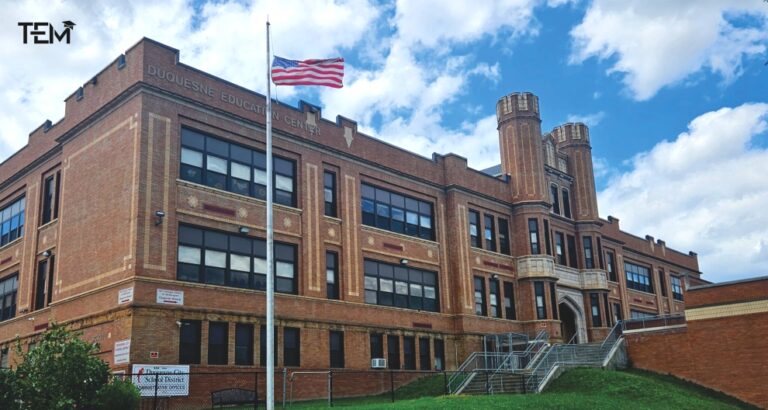
What sets Duquesne City apart begins with its scale. The entire district operates within a single school building, serving roughly 475 students from kindergarten through eighth grade. In a community that spans just about two square miles, that structure creates a setting where familiarity is hard to avoid. Students grow up in the same space, often with the same peers and many of the same adults guiding them along the way.
The district sits in the city of Duquesne, a place that carries the traits of a small urban system. Many families face economic challenges, which shape how the district approaches its work. Academic instruction does not stand alone. Equal weight is given to social and emotional support, with staff paying close attention to what students need beyond textbooks and tests.
Early learning begins even before kindergarten. Programs like Head Start and preschool, supported by the Allegheny Intermediate Unit, operate within the same building. This brings younger children into the system early and helps ease the transition into formal schooling.
After eighth grade, students move on to nearby districts for high school, choosing the path that fits them best. Throughout it all, partnerships within the community help extend learning beyond the classroom, keeping support consistent as students prepare for what comes next.
Leadership That Stays Close to the Work
The district is guided by Superintendent Dr. Sue A. Mariani, Principal Erica Slobodnik, and Director of Curriculum Ryan Matsook, who together bring a clear and steady approach to leadership. They maintain high expectations while staying equally focused on how students are supported along the way. Their work depends on collaboration that feels active rather than symbolic, involving teachers, support staff, families, and students in meaningful ways.
While the district does have a Board of School Directors, its authority is limited to specific functions such as reorganization, setting the tax levy, and approving new debt. Broader decisions are overseen by the Court Appointed Receiver, Dr. William Kerr, under state control. This structure keeps the district grounded in what is actually happening inside the building, ensuring that planning and decision-making remain closely tied to student needs. When challenges arise, the response tends to be direct and collective.
There is also a consistent effort to build an environment that feels safe and respectful without losing academic focus. Students are expected to take their work seriously, but they are also encouraged to speak up, ask questions, and stay engaged in their own progress.
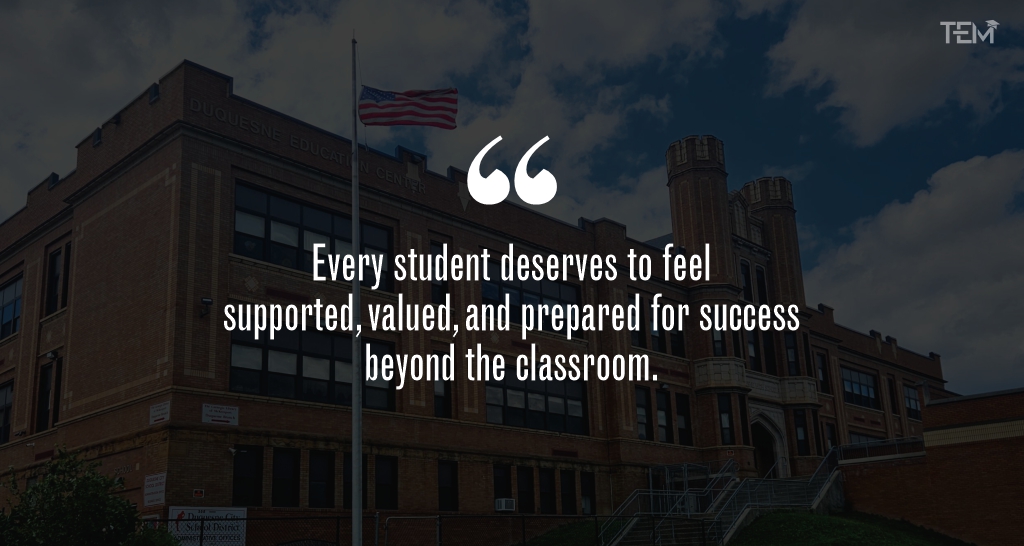
The message to families is straightforward and consistent. Every student is capable of growth and deserves real opportunity. The district’s role is to provide both structure and support so that potential does not remain theoretical, but turns into something visible over time.
Defining Excellence Beyond Test Scores
At Duquesne City, educational excellence is not reduced to a single number or ranking. It is understood through a broader lens, one that looks at how students grow as learners and as individuals. Academic progress matters, but it sits alongside social-emotional well-being and a student’s readiness for life after school.
Classrooms are expected to deliver strong, standards-aligned instruction, supported by regular use of data to guide teaching decisions. At the same time, learning is shaped around the student, not the system. Adjustments are made to match pace, interest, and need, allowing students to stay engaged without being left behind.
Relationships carry equal weight. A consistent effort is made to ensure students feel safe, known, and supported within the school environment. That sense of belonging often becomes the foundation for stronger academic outcomes.
Strategic priorities reflect this balance. Improving achievement, closing learning gaps, strengthening attendance, and expanding STEM and career exposure all move in tandem. Partnerships with families and the wider community help reinforce these efforts, keeping progress steady and shared.
Meeting Students Where They Are
Walk into a classroom at the district, and it becomes clear that students are not expected to learn in the same way or at the same pace. Instruction is shaped around that reality. Teachers adjust their methods through small group work, differentiated lessons, and targeted interventions, allowing each student to engage with material in a way that fits.
Support extends beyond academics. Social-emotional learning is built into daily routines, helping students manage challenges, build confidence, and stay connected to their learning. This is further strengthened through Tier I support, with the school counselor providing weekly engagement to reinforce these skills. At the same time, lessons reflect the backgrounds and experiences students bring with them. Culturally responsive teaching ensures that what happens in the classroom feels relevant and familiar, not distant.
Systems like the Multi-Tiered System of Supports provide structure, offering additional help when needed without delay. Families and community partners remain part of that support network, reinforcing progress outside school walls.
The result is a learning environment that feels both structured and flexible, where students are recognized as individuals and given room to succeed on their own terms.
Building a Network Around Each Student
In a district such as Duquesne City, progress depends on more than what happens inside the building. The district treats relationships with families, community groups, and local partners as part of its daily work, not as an added effort.
Parents are kept close to the process. Communication is steady and clear, whether through school events, direct outreach, or opportunities to share feedback. Families are not only informed but included, which helps build a sense of shared responsibility for student growth.
Partnerships across the community bring added depth to student experiences. Local organizations and businesses support programs tied to STEM learning, career awareness, and enrichment. These connections give students a clearer sense of how classroom lessons translate into real-world settings. Civic partners also contribute by helping address social and emotional needs that can affect learning.
Over time, these relationships form a reliable network. Trust builds through consistency, and that trust allows the district to extend its reach. Students benefit from a system where support comes from many directions, all working toward the same goal.
A School Day That Extends Beyond the Classroom
Life inside the district does not end when lessons are over. The school day carries into a range of activities that keep students involved, active, and connected to one another.
Athletics play a steady role, with sports such as basketball, volleyball, and football giving students a chance to build teamwork and school spirit. For others, clubs offer a different kind of engagement. Robotics, Lego League, drone soccer, podcasting, and student leadership groups allow students to explore interests that often stretch beyond traditional subjects.
Creative outlets are part of the mix as well. Music and arts programs give students space to express themselves and develop confidence in quieter ways.
These experiences do more than fill time. They help students form friendships, discover new strengths, and feel a stronger sense of belonging within the school community.
A Structure That Keeps the System Moving
Behind the day-to-day rhythm of Duquesne City is a leadership structure designed to stay coordinated and practical. Each role carries a clear responsibility, but the work remains closely connected.
The superintendent sets direction and long-term priorities, while the principal manages daily operations and guides instruction inside the building. Around them, key departments handle focused areas of support. Special Education and Student Support Services address individual student needs, while Curriculum and Instruction keep teaching aligned and consistent.
Operations run alongside academics. Business and operations teams manage finances, facilities, and transportation, ensuring the system functions smoothly with a focus on cost-effective operations. Technology staff support digital tools that have become part of everyday learning.
Teachers and support staff bring these efforts to life in classrooms and hallways. Working together, this structure helps maintain a school environment that stays organized, responsive, and centered on students.
Creating Fair Access, Not Just Equal Access
Equity inside the district is approached with a clear understanding that students do not all begin at the same point. Support is shaped accordingly, with resources directed where they are needed most rather than spread evenly without context.
Targeted academic help, social-emotional support, and access to technology form the base of that effort. Frameworks such as the Multi-Tiered System of Supports guide how interventions are delivered, ensuring students receive help early and consistently. Teaching practices also reflect the backgrounds students bring, making learning feel more relevant and inclusive.
Relationships play a central role. Staff work to create an environment where students feel secure and recognized. Opportunities in STEM, career awareness, and enrichment are kept open to all, not limited by circumstance.
Ongoing data review and community partnerships help identify barriers and address them, keeping progress steady and grounded in real student needs.
Support That Extends Beyond Academics
At Duquesne City, student support is built as a network rather than a single service. Academic learning is paired with systems that address emotional well-being, behavior, and future planning.
School counselors and psychological services provide consistent guidance, while access to mental health support helps students manage challenges that can affect learning. Career awareness begins early and continues through eighth grade, with students introduced to different paths through guest speakers and real-world exposure.
Mentorship and community partnerships add another layer, giving students role models and connections outside the classroom. Behavioral support is structured through frameworks like Multi-Tiered System of Supports and PBIS, helping students stay on track in a positive way. The district also uses the House System, inspired by the Ron Clark Academy, to build belonging and accountability.
Strengthening Outcomes and Expanding Opportunity
The next phase for Duquesne City School District builds on steady progress while sharpening its academic focus. Strengthening core instruction remains a priority, supported by closer use of data and timely interventions that address gaps before they widen.
Improvement in English language arts, mathematics, and science outcomes sits at the center of these efforts. At the same time, learning is becoming more personalized, giving students clearer pathways based on their pace and interests. Career awareness will continue to grow from kindergarten through eighth grade, helping students connect classroom learning to future possibilities.
New initiatives include expanding STEM programs, integrating updated technologies, and creating more real-world learning experiences through community partnerships. Attendance, family engagement, and social-emotional support will also remain key areas of attention.
For staff, ongoing professional development ensures teaching practices stay current and effective, keeping the district aligned with the demands students will face beyond school.
Quote: