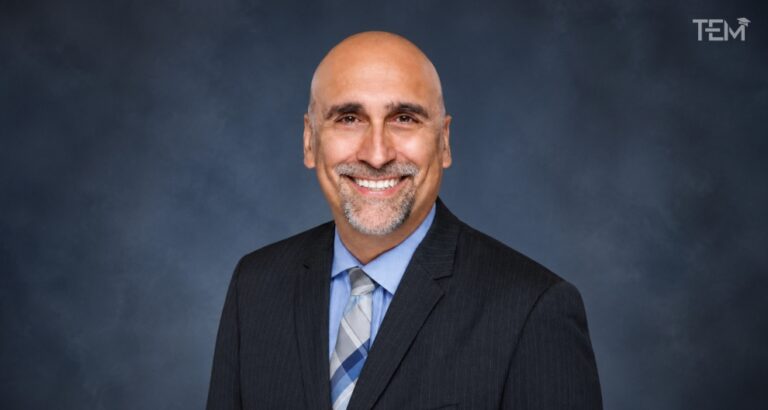
On any given day in the Selma Unified School District, a teacher may move between English and Spanish without pause. Students translate for their parents at home, help in family businesses after school, and return each morning carrying both responsibility and ambition. Selma reflects the Central Valley itself: agricultural roots, immigrant stories, and first-generation dreams. Its challenges are visible. So is its promise. Edward Gomes understands that landscape because he once navigated it as a student.
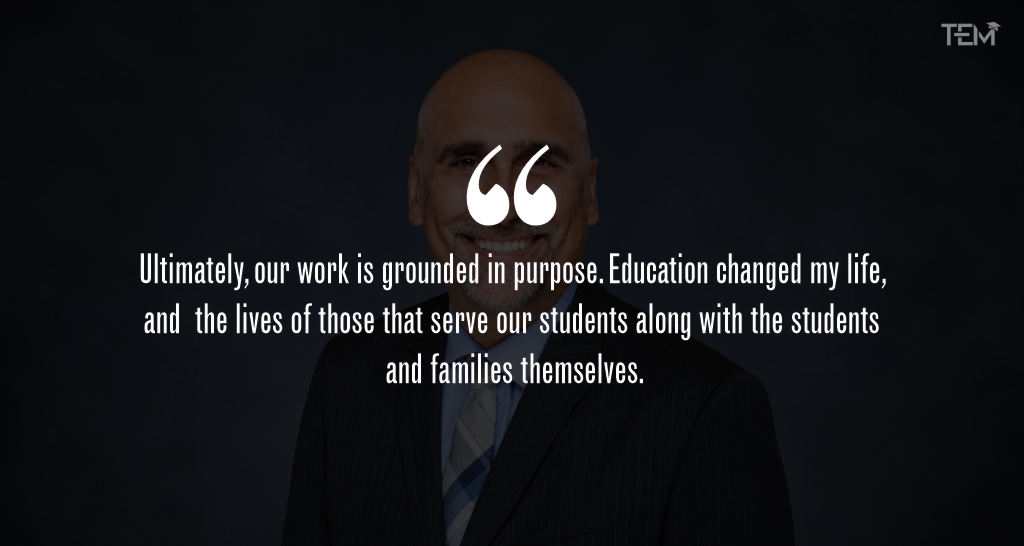
Before he became superintendent, Mr. Gomes sat in classrooms as an English learner, working to master a new language while keeping pace academically. He remembers translating lessons in real time and the teachers who insisted he aim higher. “My journey in education began with a deep belief that schools are the most powerful vehicles for opportunity and social mobility,” he says.
He began as a classroom teacher and later served as an ESL instructor and bilingual coordinator. He gravitated toward schools with visible gaps and worked to strengthen instruction and campus culture. As a principal at both elementary and secondary levels, he aligned staff around clear standards and steady improvement. District leadership followed, expanding his reach across dozens of schools. He now leads with the perspective of someone who understands both the struggle and the possibility inside every classroom.
Turning Vision into Measurable Results
For Mr. Gomes, the superintendent’s role begins with a simple test: Does this serve students? If the answer is unclear, the proposal is not ready. He sets direction, aligns leadership around instructional priorities, oversees budgets, and ensures systems function intentionally rather than by habit.
Earlier in his leadership career, he helped guide schools out of program improvement status by tightening instructional focus and using data with discipline. Suspension rates declined under his leadership, not because standards softened, but because campus culture strengthened. Academic gains followed.
Recognition arrived, though he rarely foregrounds it. Schools under his leadership earned Distinguished School and Schools to Watch honors. He was named Teacher of the Year, later Administrator of the Year, and received Fresno County Administrator of the Year for Excellence in Education.
Most recently, Selma Unified achieved its highest recorded graduation rates. Heartland Continuation High School earned the designation as a California Distinguished Model School. For Mr. Gomes, those milestones represent durability. Students leave with credentials that carry weight beyond the ceremony.
Strengthening Systems, Expanding Opportunity
Upon assuming the superintendency, Mr. Gomes avoided slogans. He began with structure. The district’s Strategic Plan centers on three priorities: academic growth, student well-being, and preparation for college and career.
Career Technical Education pathways expanded, giving students clearer routes into high-demand fields. Dual enrollment opportunities grew, allowing students to earn college credit while still in high school. Structured summer and winter intersessions now provide targeted intervention and enrichment, ensuring learning does not stall.
Wellness also received sustained attention. The district expanded its Therapy Dog Program, an initiative that has reduced anxiety and improved attendance. The presence of trained therapy dogs has made conversations around mental health more approachable, particularly for students hesitant to seek support.
Mr. Gomes further strengthened the Newcomers Program, which supports newly arrived students through language development and family engagement. The program has received statewide recognition, reflecting a district that views belonging as foundational to achievement.
A District Measured by Growth and Readiness
Looking toward 2026 and beyond, Mr. Gomes speaks less about rankings and more about readiness. He wants Selma Unified to be known for producing graduates who leave prepared and confident about what comes next.
Early literacy and mathematics remain central priorities. At the secondary level, he continues expanding industry-aligned pathways so students understand the connection between coursework and opportunity. Biliteracy and dual enrollment participation will grow, enabling students to graduate with credentials that extend beyond a diploma.
Each senior, he believes, should leave with a defined postsecondary plan. Whether that plan includes a university, community college, certification program, military service, or direct employment, clarity matters.
The district measures success through multiple indicators: academic growth, graduation rates, engagement data, school climate surveys, and postsecondary outcomes. “Continuous improvement, not compliance, guides our work,” Mr. Gomes says. Progress, in his view, is sustained through disciplined review and adjustment.
Equity as a Daily Practice
Equity, for Mr. Gomes, is operational. It shapes staffing models, funding priorities, and program design. Resources follow need, even when doing so disrupts tradition.
Selma Unified prioritizes services for English learners, students with disabilities, newcomers, and students facing economic hardship. Staffing allocations reflect enrollment patterns. Intervention funding targets identified gaps.
Multiple pathways support completion. Independent study, continuation programs, and alternative education offer structured options for students whose circumstances require flexibility. Adult education extends opportunity beyond traditional timelines.
Equity also means investing in educators. Teachers, counselors, and administrators receive ongoing professional development to refine instruction and student support. “We have to meet students where they are,” Mr. Gomes says. “That requires giving our staff the tools to do it well.” Fair access, in his framework, is intentional, evidence-based, and accountable.
Measuring What Matters
Mr. Gomes treats data as feedback, not paperwork. In Selma Unified, results are examined carefully and discussed openly.
Student growth is tracked through state assessments, district benchmarks, formative classroom data, graduation rates, and attendance trends. School climate indicators carry equal weight. The district monitors whether students feel safe, whether families feel heard, and whether staff feel supported. “Data tells part of the story,” he says. “People tell the rest.”
Professional Learning Communities translate numbers into action. Teachers meet regularly to analyze trends, identify barriers, and adjust instruction. If attendance declines, leaders investigate causes. If literacy stalls, strategies shift.
Institutional effectiveness rests on two questions: Are outcomes improving year over year? And does the culture remain positive and inclusive? Mr. Gomes works to ensure that both advance together.
Building beyond the Present
Mr. Gomes speaks about the future in terms of durability. He wants systems that outlast any single leader. Selma Unified, in his view, should cultivate its own pipeline of principals and district leaders rooted in community knowledge.
He aims for the district to become a destination in the Central Valley, known for steady growth and disciplined innovation. Beyond Selma, he hopes to contribute to statewide conversations around equity, alternative education, leadership development, and data-informed improvement.
Quote
Also Read: The 10 Inspiring Education Leaders