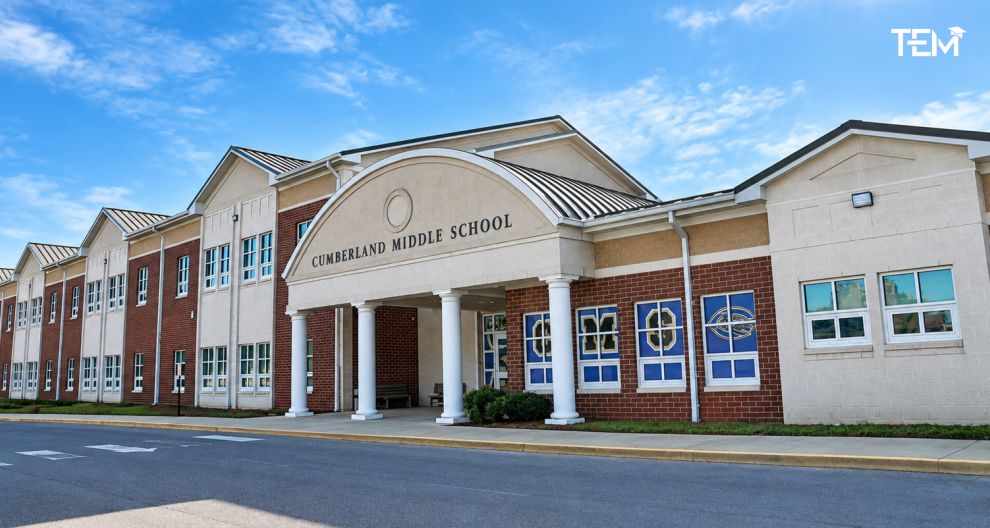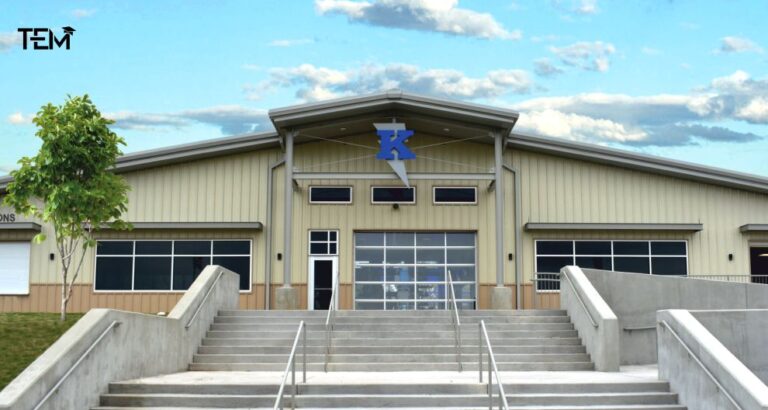
There are no school buses in Keene, Texas. In a state where school districts routinely span hundreds of square miles, where morning buses are as expected as the sunrise, that single fact about the Keene Independent School District has a way of stopping you mid-thought. The district occupies just 4.2 square miles of Johnson County, earning it the distinction of being the third-smallest school district in Texas by land mass.
Its students do not board buses in the early dark. They walk. They are driven by parents who, more often than not, know the teachers waiting at the door by name. They arrive every morning, as members of a community compact enough to know itself. In most places, the absence of buses would be a logistical footnote. In Keene, it is an opening sentence, and it tells you nearly everything you need to know about the kind of place this is.
It tells you that this is a district where proximity is a value, not a coincidence. Where the school does not sit apart from the life of the community, but lives directly inside it. And once you understand that, the rest of Keene ISD begins to make a particular kind of sense.
A Legacy Built Slowly, on Purpose
Keene was not always the district it is today. For many decades, it operated as a K-8 institution, a quiet, focused enterprise serving the children of a close-knit Johnson County community through the foundational years. Then came the late 1980s, and with them, a pivotal decision: the district added a high school.
It was not a flashy move. It was a committed one. Adding a high school was a structural declaration, Keene’s way of saying, in the most binding terms available, that it intended to see its students all the way through.
Growth has come steadily in the years since. While neighboring Johnson County districts have expanded with suburban speed, Keene has grown at a pace that feels measured and intentional. Approximately 300 students have joined the district over the last decade alone. With new residential developments already on the horizon, the district is now preparing to welcome roughly 240 additional students in the coming years.
This is a district with a multi-decade mission of growth guiding its every decision, moving forward at its own considered pace, in its own particular way.
Two Campuses, One Heartbeat
Stand on the grounds of Keene ISD, and what strikes you immediately is the nearness of everything. Two campuses are spread across roughly 30 acres, positioned within 50 yards of one another. It is less like a conventional school system and more like a compact, purposeful village, where everything is close enough to matter.
The first campus houses the Elementary and Summit Leadership Academy, where PreK through 2nd-grade students share a building with the 3rd through 5th-grade Summit Leadership Academy. The second, the Secondary Campus, brings together the Junior High (grades 6 through 8) and the High School, the two connected physically by a shared cafeteria. Every school day, the older and younger students of Keene converge in that same room. They eat together. They talk. They see one another.
This is architecture as philosophy. In Keene, even the floor plan carries an argument, and the argument is always the same: no one here is invisible.
The Measure of a Graduate
Ask most American school districts to define “excellence,” and they will reach for numbers almost immediately. Test scores. Percentile rankings. State accountability ratings. It is the common grammar of education today, and most districts have organized themselves, with varying degrees of comfort, around speaking it fluently.
Keene ISD has made a different choice. Here, “educational excellence” is measured by the quality of character, not the outcome of any state-mandated test. The district uses diagnostic testing as a practical, necessary tool. But it firmly, and deliberately, rejects what it calls the “forensic” use of high-stakes testing, the practice of treating data as the final, binding verdict on a student’s worth or a school’s value.
Its focus, instead, rests on the development of the “whole learner,” an individual cultivated toward critical thinking, genuine confidence, and empathy for the world and the people around them.
In the daily life of the school, it looks specific and concrete. It is a student pausing to hold a door open for a peer without being asked. It is a young person looking an adult in the eyes and offering a warm greeting without prompting. It is a group of teenagers who can sit across from an idea they find wrong or uncomfortable and engage with it using intelligence rather than anger.
The goal, stated without apology, is to produce good humans.
“At Keene ISD, we don’t pretend to be perfect, just different. Different in our walk, different in our talk, and different in our ability to impact the world, one Keene Charger graduate at a time.”
It is not a modest declaration. It is not meant to be. And in a national conversation about schools so often dominated by what they lack, it is something rarer than it should be: a statement of conviction.
Big School Opportunities in a Small School Environment
There is a persistent assumption in conversations about small school districts that small means limited. Fewer programs. Fewer opportunities. A narrower horizon for the students inside. Keene ISD has spent years dismantling that assumption, methodically and program by program.
The district proudly offers what it calls “Big School Opportunities in a Small School Environment,” and the evidence is specific. Its Career and Technical Education (CTE) programs are actively expanding, anchored by a growing agriculture department and the introduction of wildlife management classes at the junior high level. These are not electives tacked on as afterthoughts. They are deliberate investments in real-world, practical learning that connects students to professional pathways and to the land they inhabit.
The fine arts tell a story of genuine transformation. Three years ago, the marching band had just 12 members. Today, it stands at 53. That is not incremental change. That is a cultural shift in what students believe is possible for them within these 4.2 square miles. The choir travels to perform annually at the Myerson in Fort Worth, one of the region’s most celebrated concert venues, a stage that demands and rewards excellence. The One-Act Play program reached a new milestone recently, advancing three rounds deep into statewide competition.
In athletics, the district fields standard 3A sports alongside a deliberate emphasis on what it calls “lifetime sports,” among them cross country, golf, and tennis. The thinking here is long-range and patient. These are not just activities for a high school resume. They are skills a student will carry for decades, long after the competitive seasons have ended and the team jersey has been folded away.
To call this a “small school experience” would be technically accurate and spiritually misleading.
The Community Is the School
Keene ISD does not see itself as a separate institution that happens to share a zip code with its community. It sees itself as the community’s living room, its most active and visible expression. The guiding philosophy here is captured plainly and without ceremony in four words: “our stuff is your stuff.”
In practice, this means an open-door policy that welcomes the broader city, a local university, homeschool organizations, and community groups onto campus throughout the year. It means events like “Starfest,” the city’s warmly regarded Halloween alternative, that pull families and neighbors together in something more lasting than a single school program. It means community-wide hotdog suppers that have nothing to do with curriculum and everything to do with connection.
In 2018, the district introduced what may be its most quietly powerful initiative: the House System. Students are placed into Houses that become a core part of their identity within the school. These Houses are built with real care to transcend race, gender, socio-economic status, and academic performance. Within their House, students are encouraged to find success models who look like them and come from where they come from, people whose paths make a future feel genuinely attainable.
The House System is designed to answer a question that every student carries, often silently, through every school hallway they walk: Is there a place here for someone like me? In Keene, the answer is built into the structure of the school itself.
A Support System That Means It
Keene ISD is honest about the realities its students carry through the door each morning, and it has built a support network that takes that honesty seriously.
A dedicated mental health counselor serves the student community, alongside a part-time counselor specifically for seniors, an acknowledgment that the final year of high school carries its own distinct emotional weight and requires its own kind of attention. A formal mentorship program connects students with community mentors, creating sustained relationships that extend well beyond the school building and the school day.
And then there is STAC, the Student Advisory Council, open to students in grades 3 through 12. STAC meets with the Superintendent four times a year to discuss district growth and student needs. Consider what that means in practice: a third grader at Keene ISD has a guaranteed, structured opportunity to speak directly with the district’s top leader about what is and is not working.
This is not ceremonial. It is functional. It is a binding commitment to the idea that the students most directly shaped by a school’s decisions deserve a voice in making them. That commitment is not common. In Keene, it has been kept.
The Core Four and the Vision They Carry
Leadership at Keene ISD moves through what the district calls the “Core Four,” the group of campus principals who come together every single week to keep the district’s vision unified and alive across every campus, every classroom, and every grade.
The vision itself is six words: every child, every need, every day.
Six words with no exceptions written in. No “most children.” No “when resources allow.” No “average days.” Every. It is a standard the district holds itself to, week after week, through the discipline of those weekly meetings.
The district draws a consistent and meaningful distinction between “makers of learning” and “takers of learning,” between students who are active architects of their own education and those who receive it passively. Every program, every initiative, and every structural choice at Keene ISD points deliberately in the same direction: toward producing makers.
Underlying it all is a unique third-party technology partnership and a curriculum department that drives professional development entirely in-house, ensuring that the teachers and staff carrying this vision into their classrooms are continuously growing alongside the students they serve.
Different, By Design and By Choice
What Keene Independent School District has built, across its 4.2 square miles and its decades of deliberate work, is not easily reduced to a category. It is a school district, yes. It is also something rarer: a community that has chosen, consciously and with full conviction, to be different.
Different in what it measures. Different in what it values. Different in the depth of belonging it constructs for every student who walks through its doors.
It does not claim perfection. It claims intention. And in that intention, it makes a case, quietly and persistently, that character is not a detour from academic rigor. It is, for Keene ISD, the destination. Rooted in Johnson County, reaching well beyond it, one Charger at a time.
Quote:
Also Read: The 10 Most Admired School Districts of 2026