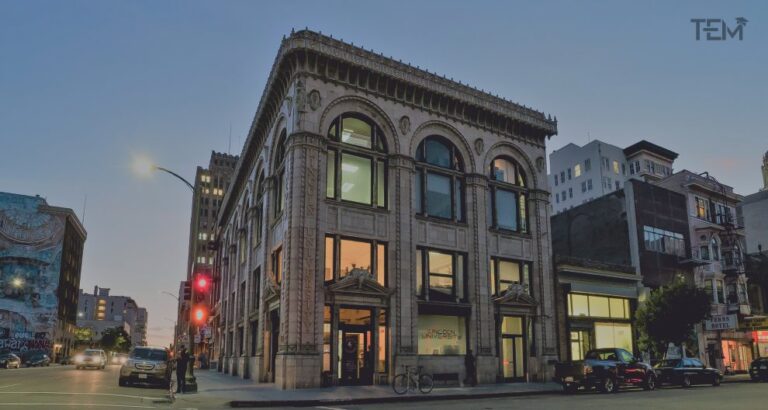
Just three minutes from the nearest subway station in the heart of downtown Oakland stands a university that has quietly demonstrated for more than a century that academic excellence and affordability can go hand in hand.
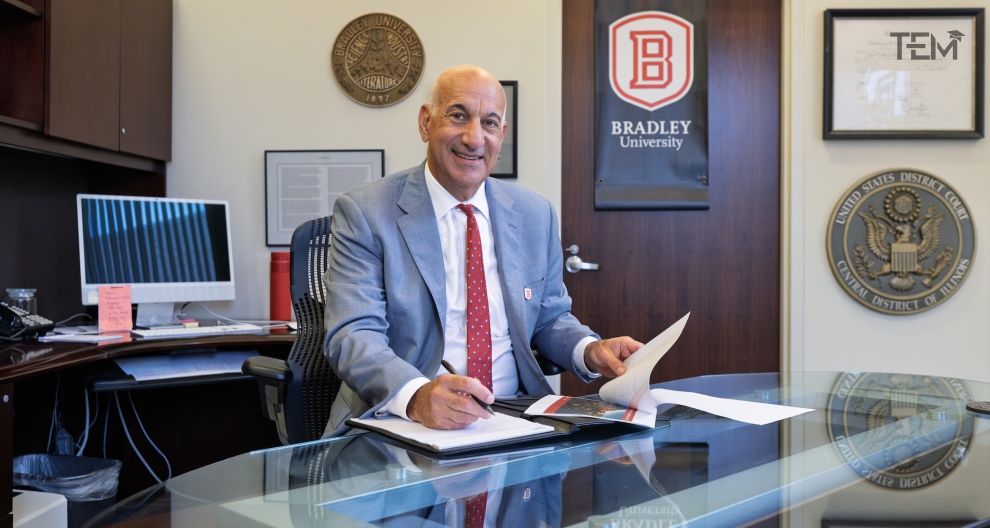
Lincoln University does not have a sprawling campus or the fame associated with many household names. Instead, it offers something distinctive: a century-old educational mission, a cooperative model inspired by Renaissance universities, and a 74-year-old president who still plays soccer on weekends and maintains an open-door policy, welcoming every student who wishes to meet with him. That accessibility reflects the university’s culture and defines much of its identity.
The Idea That Would Not Stay the Same
Lincoln University was founded in 1919, in the uneasy months following the First World War. Its earliest purpose was a straightforward act of civic generosity: to give education to American soldiers returning from the front, men who had survived something incomprehensible and needed somewhere to begin again. It was a specific idea for a specific moment. But ideas, as anyone at Lincoln will tell you, do not stay the way they begin.
Over time, Lincoln evolved alongside the city that first welcomed it. As San Francisco emerged as a gateway between the United States and Asia, the university expanded beyond its original mission of educating returning veterans to serve working professionals and an increasingly diverse international student community seeking new opportunities. By 2017, the university had enrolled about 850 students from 62 countries and had cultivated a faculty that was equally international. What had started as a postwar American project had quietly become something far more global, far more layered, and far more interesting.
A Renaissance Model, Reimagined for Today
To understand Lincoln University, you have to understand the structure it calls the Global Entrepreneurial Cooperative, a governance model inspired by the earliest European universities. During the Renaissance, universities were largely governed by professors, with administrators serving in support roles. Over time, that balance shifted. Administrative structures grew; faculty became employees instead of owners; decision-making became increasingly centralized; and the original spirit of shared ownership dissolved into hierarchy.
Lincoln has spent decades reversing that arrangement. Quality at Lincoln is not managed from the top down. Faculty maintain governance roles while teaching. Administrators continue to engage with students in the classroom. Students participate directly in university operations, gaining practical exposure to institutional management and collaborative problem-solving. Alumni return as staff and mentors, feeding what the university describes as multiple streams of value from every dollar invested. The result is an institution that runs leaner than almost any comparable educational program without sacrificing what matters.
This cooperative structure is, practically speaking, why Lincoln can charge what it charges. Rather than pouring funds into expansive facilities or oversized administrations, the university invests in people and relationships. Administrators teach. Faculty advise beyond their courses. Students contribute to the institution that educates them. Every stakeholder plays an important role in maintaining and improving the university experience.
Quantitative Business and Why the Difference Matters
Lincoln University’s emphasis on measurable results reflects the background of its president. Before joining Lincoln, Dr. Mikhail Brodsky spent a decade as a research professor in the Department of Statistics at UC Berkeley after arriving in the United States in 1989 with two doctoral degrees earned in the former Soviet Union. His mathematical training continues to shape the university’s philosophy of business education.
He is fond of quoting Lord Kelvin, the British physicist, who argued that nothing can be measured unless it is defined, and nothing can be improved unless it is measured. “Business is not just about doing something,” the president says. “Business is about getting results, positive or negative, that always have to be measured.”
This philosophy distinguishes Lincoln’s approach to business education. While others often focus on theory, Lincoln emphasizes practical application: managing organizations, marketing products, making informed decisions, analyzing data, and creating value in the marketplace. “You need to know how to sell,” the president explains. “Business is about creating something people need and bringing it successfully to the market.”
His own family reflects a lifelong commitment to higher education. A third-generation professor, he comes from a lineage of academics that includes both his son and grandson. He recalls his father, a professor of chemistry at the University of Washington who never really understood the economics of his own profession, once asking a deceptively naive question: “If you’re the president paying everybody, who is paying you?” Answering the question illustrates the practical business thinking that Lincoln encourages its students to develop. The university’s academic offerings reflect that philosophy. Lincoln offers a Bachelor of Arts in Business Administration with five concentrations, an MBA with ten concentrations, two Master of Science programs in business disciplines, and a Doctor of Business Administration with three concentrations.
Affordable by Design, Not by Accident
Between 2014 and 2018, Lincoln University maintained one of the largest MBA enrollments in Northern California outside UC Berkeley and Stanford. Yet its tuition was dramatically lower. During that period, a Stanford MBA cost approximately $120,000, while Lincoln’s MBA cost about $20,000. The difference was not a reflection of lower ambitions or lower quality. It was the result of Lincoln’s cooperative model, lean administration, and a deliberate commitment to making graduate business education affordable.
Today, Lincoln’s alumni network includes approximately 1,500 graduates working throughout Silicon Valley. Many hold leadership positions as executives, managers, entrepreneurs, and business owners.
The university measures success differently from many institutions. “If somebody starts a restaurant and hires four people, that’s a success,” the president says. For Lincoln, success is measured not only by graduates’ salaries but also by the businesses they create, the jobs they generate, and the value they bring to their communities. The university primarily serves students pursuing business careers rather than simply earning credentials. Flexible schedules allow students to attend classes one or two days each week while balancing professional and personal responsibilities. Most courses are offered in person, with the option to take some courses online.
Located in downtown Oakland, just a three-minute walk from the BART station and connected by buses and rail throughout the Bay Area, the campus is accessible to students commuting from across the region, including Silicon Valley.
The People at the Front of the Room
Lincoln’s cooperative philosophy comes to life through its faculty. The university intentionally recruits experienced scholars and professionals, many of whom have held distinguished careers at major universities before joining Lincoln. With a lighter teaching load than at many larger institutions, faculty members can devote more time to mentoring students and delivering highly interactive classes.
Most instructors hold doctoral degrees and combine academic scholarship with significant industry experience. The faculty reflects the university’s international character, with professors from the United States, China, Russia, Greece, Latin America, and many other regions. Their diverse backgrounds enrich classroom discussions. Some bring strong quantitative training rooted in the Soviet academic tradition, while others contribute decades of executive leadership and professional practice. Students learn not only from scholars but also from professionals who have successfully applied business principles in the real world, and that makes the classroom feel less like a seminar and more like a conversation with someone who walks the walk.
When the World Stopped Moving
Before the pandemic, Lincoln had never offered online education. The president was, by his own admission, opposed to it. Lincoln was a traditional school, one that attracted students specifically because of its lectures, its direct faculty engagement, and its structured academic rigor. “I would never do online because Lincoln was not online.”
Then COVID-19 closed everything, and Lincoln adapted. Today, the university teaches through synchronous online learning: live sessions where students can see their instructors, ask questions in real time, and engage meaningfully with faculty and peers through the internet. It is not identical to sitting in a room together, the president acknowledges, but it has opened Lincoln to cohort groups across Asia, the Middle East, and Africa, coordinated carefully across time zones.
The pandemic, however, imposed costs that Lincoln is still working through. Enrollment dropped sharply. Today, Lincoln enrolls approximately 400 students. The university identifies immigration and visa-processing challenges as one of its primary enrollment obstacles. The university still receives roughly 900 international applications per semester, approximately 2,000 across the full academic year, but ultimately enrolls only around 150 of these students. The barrier is not academic qualification. It is visa access. Students from countries like Nigeria, where English is widely spoken and academic preparation is strong, cannot get through consulate lines. In Spain, the president notes, the wait for an interview alone stretched to nearly a year.
To strengthen campus life and attract more domestic students, Lincoln has also expanded its athletic offerings. The university now fields men’s and women’s soccer and basketball teams, creating new opportunities for student engagement and broadening its appeal within the local community.
The Open Door
Lincoln University’s campus occupies two buildings in the heart of downtown Oakland, a city known for its mild climate and central location within the San Francisco Bay Area. Student housing is located about ten minutes away in Alameda, where the university leases furnished two-bedroom apartments shared by four students. The accommodations are practical, affordable, and designed to support students throughout their studies.
Yet Lincoln’s unique feature is not its campus or tuition. It is its accessibility. The president maintains regular office hours and encourages every student to meet with him personally. “I don’t believe there is another university in the United States where the president is available to every student,” he says.
The institutional vision for Lincoln’s future is equally distinctive. Rather than pursuing unlimited growth, the president believes the university’s greatest strength lies in retaining its close-knit collegial culture. His goal is to rebuild enrollment to approximately 800 to 900 carefully selected students, large enough to sustain a vibrant academic community, yet small enough to preserve close relationships between students, faculty, and university leadership.
He hopes future improvements in immigration and visa processing will once again allow qualified international students to study in the United States. His advice to prospective students is straightforward: pursue higher education because you believe in learning and creating value, not just because you want a degree. For international students, his message is equally clear. “American business education is distinguished by its focus on innovation, entrepreneurship, and the practical skills needed to transform ideas into successful enterprises.”
For more than a century, Lincoln University has pursued that mission. From educating veterans after World War I to preparing students from around the world, the university continues to demonstrate that academic quality, affordability, and personal attention can coexist.
Quote
Also Read: The 10 Most Admired MBA Colleges of 2026