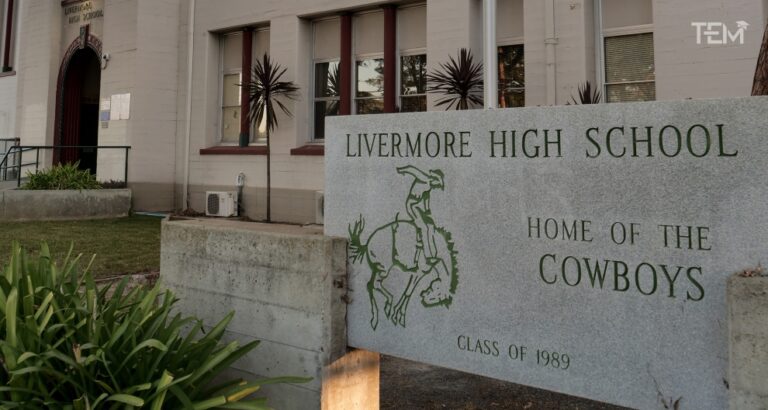
In the Livermore Valley, orchards give way to office parks, and agriculture, science, technology, and innovation exist side by side in a landscape built on contrast: agricultural roots stretching back generations, layered over newer ambitions in science and technology. Somewhere inside that overlap sits a campus that has been shaping the valley’s young minds since long before anyone thought to call this “innovation.”
Roots Deep Enough to Build On
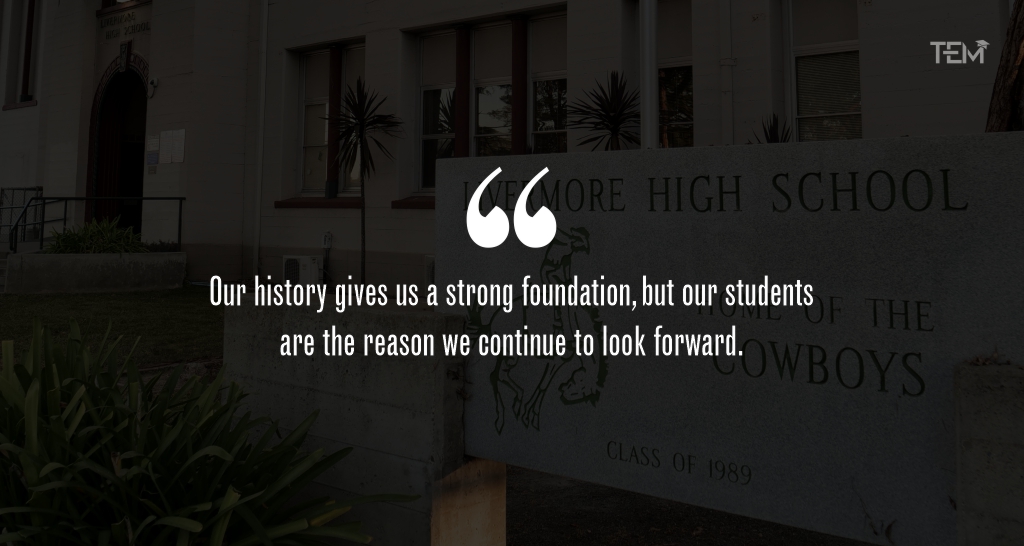
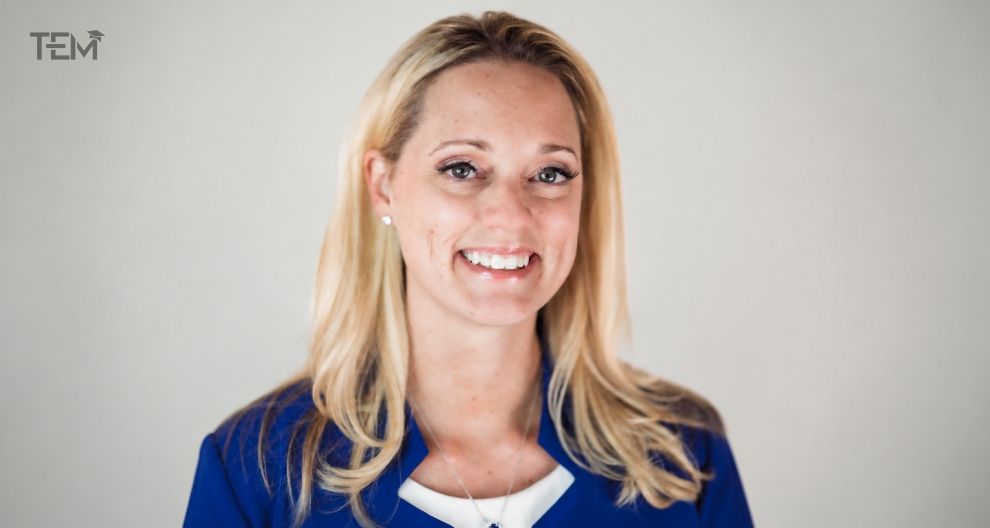
Livermore High School opened its doors in 1891, the first high school in the valley, and today it enrolls approximately 1,800 students. Principal Roxana Mohammed describes a community where “agriculture, science, technology, and innovation exist side by side,” a description that doubles as the school’s own origin story. The mission is straightforward: a rigorous, well-rounded education delivered inside a safe and supportive environment, one that nurtures a student’s intellectual, physical, social, and emotional growth. The vision follows naturally from it: graduates ready for college or a career, armed with the knowledge, skills, character, and confidence to succeed.
That vision now runs through four touchstones the school calls its LIFE outcomes: Literacy and Critical Thinking, Innovation, Fitness, and Ethics. They are less a slogan than a filter, one the school uses to ask whether students are learning not just to use technology, but to think critically about it, create with it, and adapt as it keeps changing shape.
Teaching Students How to Think
Ask Mohammed about the philosophy behind the school’s approach to science, technology, engineering, and mathematics, and she does not begin with equipment or test scores. She begins with curiosity. Students, she says, learn best when they can see the purpose behind what they are learning, so classrooms are built around questions worth asking, ideas worth testing, and failures worth learning from. Engineering, robotics, science, mathematics, and technology become the vehicles for that kind of thinking, but the habits it builds – collaboration, persistence, creativity, ethical decision-making – are meant to travel into every other subject on campus.
Many Roads Through One Campus
That philosophy shows up most visibly in the school’s academic pathways. Livermore offers a wide range of Advanced Placement and Honors courses alongside Career Technical Education tracks, but its signature program is the Green Engineering Academy, a California Partnership Academy that blends college preparatory coursework with engineering and technical education, business partnerships, mentoring, hands-on projects, and internships.
The academy does not stand alone. A strong agricultural program runs alongside it, along with offerings in the arts, music, drama, robotics, information and communications technology, and automotive technology. Mohammed is careful to note that the school resists a single definition of success. Its pathways point toward four-year universities, community colleges, technical programs, apprenticeships, military service, and careers, whichever direction a student is actually headed.
Meeting Students Before They Arrive
Opportunity, in Mohammed’s telling, does not begin at the front gate. Counselors and teachers reach into the district’s feeder middle schools well before graduation, introducing incoming students and their families to Livermore’s programs and course pathways. Once students arrive, the school tracks their progress and uses that data to identify who might need additional support and who might be ready for more challenge. Advanced Placement, Honors, CTE, and English Language Development pathways run alongside tutoring and targeted interventions.
“Equity means that we do not simply open the door and hope students walk through it,” she says. The school’s task, as she frames it, is to actively encourage students from every background to see themselves as capable of rigorous work, then build the support that lets them prove it.
Hands In the Work
Livermore’s students, Mohammed says, thrive when they can do something with what they have learned. Green Engineering Academy students apply classroom learning through engineering projects and connections with mentors and industry partners, while robotics students design, build, program, and compete. Agricultural students take on projects tied to sustainability, while the arts, athletics, CTE programs, internships, and community partnerships round out a campus where learning rarely stays confined to a desk.
That instinct extends into how teachers frame their lessons. Rather than asking only what the answer is, instructors are encouraged to ask what problem we are trying to solve and how we might approach this differently. Whether a student is designing an engineering solution, running a scientific investigation, or analyzing a piece of literature, the goal is the same: authentic thinking, revision, and the understanding that mistakes are simply part of how learning works.
Beyond What a Transcript Can Say
Mohammed resists measuring a student’s success by transcript alone. Academic achievement still matters: A-G completion, graduation readiness, college and career readiness, attendance, but so do school connectedness, student voice, leadership, behavior, and wellness. The LIFE outcomes exist precisely to widen that lens. Innovation, resilience, ethical decision-making, collaboration: these, she argues, are the qualities students will carry long after their last final exam.
The People Behind the Progress
Ask Mohammed what drives the school’s culture of innovation, and she points, without hesitation, to its teachers. “Innovation does not happen because a school purchases new technology,” she says. It happens because educators keep reflecting on how students learn and stay willing to change their own practice. That reflection runs through the Instructional Leadership Team, professional learning communities, counselors, administrators, and support staff, all of them examining student data and sharing what works. The school’s WASC process, along with ongoing professional learning in English Learner instruction and standards-based grading, has reinforced that same habit of continuous improvement.
A Year of Milestones
Recent recognitions bear that culture out. In 2025, Livermore received a PBIS Gold Implementation Award, honoring the work staff and students have done to build a more positive, inclusive school culture. The Wellness Center and the student-led Culture Keepers program extend that same commitment toward mental health awareness and peer connection. Academically, the school continues to strengthen Tier 2 interventions, English Learner supports, and its A-G completion and college and career readiness rates, while programs like the Green Engineering Academy and GravitechX Robotics continue to grow and earn recognition.
Behind those individual milestones sits a larger picture: a diverse campus supported by a broad mix of academic, career, and enrichment pathways, reinforced by systems built around students.
A Net Beneath Every Student
None of that works, Mohammed suggests, unless students feel known first. The school’s network of student services works in tandem to provide that support. Outside the classroom, students find athletics, clubs, performing arts, leadership opportunities, community service, and internships, with the Culture Keepers adding a layer of peer-led wellness support. Families, alumni, businesses, and higher education partners round out a community she describes as one that simply believes in its students.
What Comes Next
Looking forward, Mohammed wants to expand authentic learning experiences, strengthen CTE and college pathways, and deepen the school’s partnerships with industry and higher education, work already underway through the school’s WASC and SPSA processes, with particular attention to equity, engagement, and belonging.
Her closing message to students, parents, and educators is less about predicting the future than preparing for it. Preparing the next generation of innovators, she says, means giving students the skills and character to navigate whatever comes, so that they leave Livermore not just with a diploma, but as thinkers, creators, collaborators, and people of integrity.
Quote