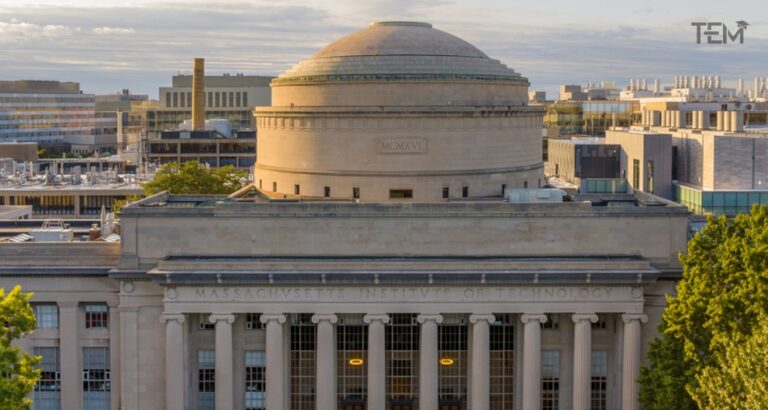
There is a particular kind of quiet that settles over 77 Massachusetts Avenue in Cambridge, the address that anchors the MIT School of Engineering, a quiet that has nothing to do with the absence of activity and everything to do with its concentration. Inside, something is always being built, tested, dismantled, and built again. The School is organized into eight academic departments and one interdisciplinary division, a structure that looks tidy on an organizational chart and feels, on the ground, like eight separate rivers feeding one very determined ocean. Roughly 5,900 students and more than 370 faculty members move through that ocean, and by the Institute’s own accounting, roughly half of MIT students are enrolled in engineering programs.
Numbers like that can feel abstract until you notice what they produce. During the 2023–2024 academic year, the School awarded 802 bachelor’s degrees, 850 master’s degrees, and 381 doctoral degrees. Its undergraduate engineering population included 2,467 students, among them 1,199 women and 254 international students, while its graduate community totaled 3,435 students, including 1,298 women and 1,167 international students. The figures reflect not only scale but also the breadth and global reach of one of the world’s largest engineering communities.
The Dean Who Starts With Conversations
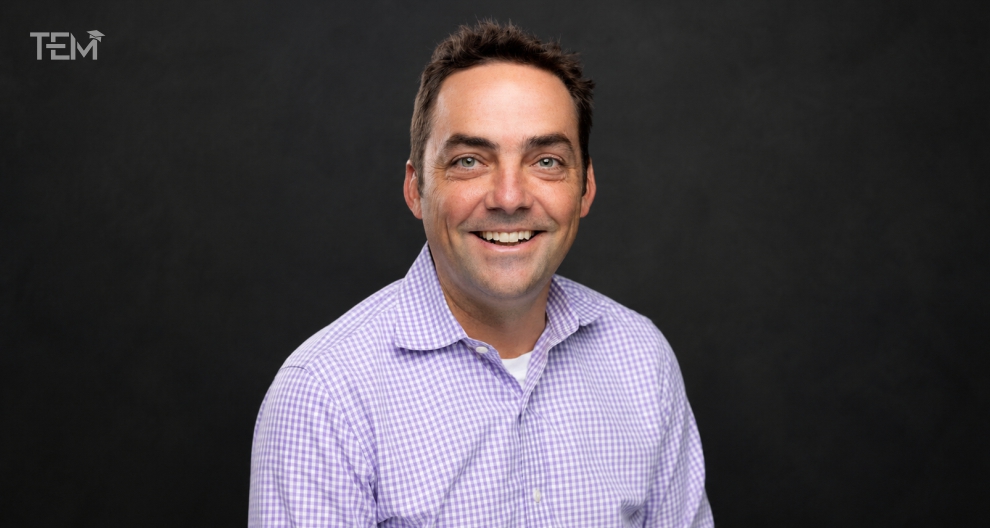
Every institution has a season of transition, and MIT’s School of Engineering is in the middle of one. Paula T. Hammond, SB ‘84, PhD ‘93, Institute Professor and former Executive Vice Provost, became dean of the School of Engineering on January 16, 2024, succeeding Anantha Chandrakasan, who became MIT’s provost.
Hammond is the first woman to serve as dean of the School in its history, and she has been direct about how she intends to lead. “I like to start with conversations,” she has said, describing her plan to visit every department and understand what faculty members need most. Before assuming the deanship, Hammond led MIT’s Department of Chemical Engineering from 2015 to 2023, an experience that shaped one of her central priorities: breaking down disciplinary barriers by encouraging faculty to co-teach, collaborate across departments, and rethink curricula around increasingly interdisciplinary challenges.
It is a fitting ambition for a school whose defining strength lies in how naturally those boundaries are already disappearing.
Where Hammers Meet Algorithms
Ask Faez Ahmed, the Doherty Chair in Ocean Utilization and Associate Professor of Mechanical Engineering, what his field looks like today, and he will gently correct your assumptions.
Mechanical engineering, in the popular imagination, still conjures images of hammers, cranes, and automobiles. Inside MIT’s Department of Mechanical Engineering, however, Ahmed points out that machine learning, artificial intelligence, and optimization have become integral to how engineers design, simulate, and improve physical systems, from accelerating structural modeling to enabling predictive maintenance that identifies failures before they occur.
The transformation extends well beyond a single department. Researchers at MIT’s Computer Science and Artificial Intelligence Laboratory (CSAIL) have developed generative AI techniques that allow robots to learn more effectively by combining data collected from multiple robotic platforms. They have also created advanced tactile sensing systems embedded within robotic hands and fingers, bringing robotic dexterity closer to human capability while advancing next-generation prosthetics and intelligent manipulation systems.
The Numbers That Still Say Number One
Rankings are an imperfect measure, but MIT’s engineering leadership has remained remarkably consistent.
U.S. News & World Report has ranked MIT’s undergraduate engineering program No. 1 in the United States every year since the rankings began in 1983. Its graduate engineering programs continue to rank among the nation’s best, with specialties including aerospace engineering, chemical engineering, computer engineering, electrical engineering, materials engineering, and mechanical engineering consistently holding the top position, while biomedical engineering, nuclear engineering, civil engineering, and environmental engineering remain among the country’s highest-ranked programs.
Globally, the QS World University Rankings by Subject 2026 placed MIT No. 1 in the world for Data Science & Artificial Intelligence, while the Institute also achieved first place in twelve academic subjects and ranked second in seven others, reinforcing its position as one of the world’s leading centers for engineering, computing, and scientific research.
An Engineering School That Cannot Sit Still
What is easy to miss amid the rankings, statistics, and departmental structure is the remarkable restlessness of the place.
This is a school where a varsity athlete, a robotics researcher, and a student designing regenerative water systems for an Arkansas fish farm can occupy the same laboratory, the same semester, and often the same conversation about what engineering should accomplish.
Across campus, more than 40 makerspaces spanning over 130,000 square feet exist not as showcases but as working environments where ideas are expected to fail, evolve, and improve before they succeed. Artificial intelligence and automation have not replaced that philosophy. They have simply become another set of tools on the engineer’s workbench, standing alongside the physical tools that continue to shape the discipline.
There is an easy version of this story that presents artificial intelligence as a sharp break from everything engineering once was. MIT offers a more persuasive view. Here, AI is treated not as a departure from engineering’s history but as its latest instrument, extending a tradition of experimentation, invention, and problem-solving that has defined the Institute for generations. The technologies may change, but the underlying mission remains remarkably constant: to build what comes next, and to understand why it matters.