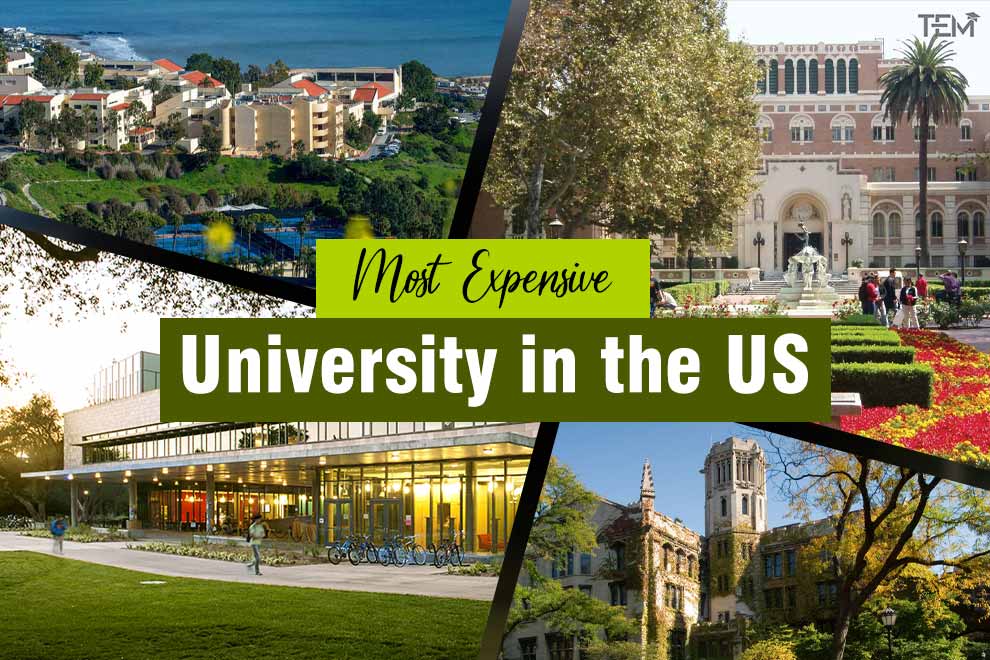
The most expensive university in the US now crosses the $100,000 mark for a standard undergraduate year, a milestone that would have seemed unimaginable a decade ago. For many families, the first glance at tuition and cost-of-attendance figures sparks both awe and concern, but the truth is more nuanced than just a six-figure price tag.
In this article, we break down the 2025–2026 most expensive universities, highlighting not only sticker prices but also the total cost of attendance, housing, fees, and what students actually pay after financial aid. We’ll explore why costs are rising, which institutions dominate the high-price rankings, and the hidden realities behind net price versus the headline figures.
From the sun-soaked campuses of Pepperdine University to the elite STEM powerhouse of Harvey Mudd College, we examine where your dollar goes and why some universities demand such a premium. By the end, you’ll understand not just which universities are the most expensive in the US, but also how families and students can navigate these numbers with clarity and confidence.
What Defines the Most Expensive University in the US?
Before diving into rankings, it’s crucial to understand what “most expensive” really means in the context of US higher education. There are three key metrics to consider:
- Tuition: The base cost charged for classes alone.
- Cost of Attendance (COA): Tuition plus room, board, mandatory fees, and estimated living expenses. This is the figure that often pushes universities into six-digit territory.
- Net Price: The actual amount a student pays after financial aid, grants, and scholarships. Many top-tier institutions with high sticker prices have generous endowments, which drastically reduce the net cost for qualifying families.
Confusion between these metrics is common. Many rankings list tuition only, while headlines often claim “most expensive university” based on COA or, less commonly, sticker price. Our rankings are based on verified 2025–2026 COA data from official university sources, and federal tracking via the NCES College Navigator, ensuring both accuracy and relevance.
Most Expensive Universities in the US (2025–2026 Ranking)
The 2025–2026 academic year marks a historic milestone: the first undergraduate programs officially crossing the $100,000 total cost of attendance. While tuition alone is high, housing, fees, and urban living costs often push the total to six figures. Below are the top contenders:
1. Pepperdine University (Malibu, CA)
- Total Cost of Attendance: ~$101,450
- Tuition Only: ~$72,672
- Key Cost Driver: Housing and location (“Sunshine Tax”)
- Insight: Pepperdine is the first major institution to breach the $100,000 mark for a standard undergraduate year. Its Malibu location inflates living costs, making this university the ultimate example of sticker price meeting lifestyle premium.
2. University of Southern California (Los Angeles, CA)
- Total Cost of Attendance: ~$99,139
- Tuition Only: ~$73,260
- Key Cost Driver: Fees and urban living
- Insight: Situated in downtown LA, USC’s mandatory fees and city cost of living push it to the top of most expensive US university lists, just shy of the six-figure line.
3. Harvey Mudd College (Claremont, CA)
- Total Cost of Attendance: ~$98,984
- Tuition Only: ~$72,699
- Key Cost Driver: STEM facilities and academic resources
- Insight: Known for rigorous STEM programs, Harvey Mudd combines high sticker prices with one of the best ROI outcomes in the nation. Graduates often start at salaries above $120,000.
4. University of Chicago (Chicago, IL)
- Total Cost of Attendance: ~$98,301
- Tuition Only: ~$68,000+
- Key Cost Driver: Administrative services and urban location
- Insight: A prestigious institution whose urban environment and comprehensive services keep costs near $100k. Robust financial aid programs mean many families pay far less.
5. Brown University (Providence, RI)
- Total Cost of Attendance: ~$97,184
- Tuition Only: ~$71,000+
- Key Cost Driver: Ivy League premium, room & board costs
- Insight: Brown’s total cost is driven by both its elite status and local living expenses. High sticker prices coexist with substantial financial aid for qualifying students.
6. Columbia University (New York, NY)
- Total Cost of Attendance: ~$96,990
- Tuition Only: ~$70,000+
- Key Cost Driver: Location in New York City
- Insight: NYC’s high cost of living escalates food, housing, and personal expenses. Generous financial aid mitigates costs for many families.
7. Northwestern University (Evanston, IL)
- Total Cost of Attendance: ~$96,236
- Tuition Only: ~$69,375
- Key Cost Driver: Elite facilities and proximity to Chicago
- Insight: Northwestern’s $96k figure reflects a comprehensive budget including $1,214 in mandatory fees and $3,672 in estimated books, travel, and personal expenses. It remains one of the most expensive private university experiences in the Midwest.
8. Dartmouth College (Hanover, NH)
- Total Cost of Attendance: ~$95,588
- Tuition Only: ~$71,265
- Key Cost Driver: Residential life and high-end campus programming
- Insight: Even in a rural setting, Dartmouth’s comprehensive student experience and luxury campus amenities keep it among the most expensive colleges.
9. Yale University (New Haven, CT)
- Total Cost of Attendance: ~$97,422
- Tuition Only: ~$69,900
- Key Cost Driver: Ivy League reputation and need-blind policies
- Insight: Yale’s total bill includes $20,650 for housing and food plus a mandatory $3,422 Yale Health insurance fee (unless waived). For those navigating the complexities of Ivy League admissions, these numbers represent the new standard of “elite” investment.
10. Vanderbilt University (Nashville, TN)
- Total Cost of Attendance: ~$95,280 (Estimated for incoming freshmen)
- Tuition Only: ~$68,000+
- Key Cost Driver: Tuition hikes to fund campus renewals
- Insight: Vanderbilt has experienced significant tuition increases to finance massive campus projects, placing it permanently among the most expensive US schools.
Is a $100,000 Degree Worth It? Analyzing the Educational ROI
While the sticker price of the most expensive university in the US has crossed the $100,000 yearly mark, the more meaningful question for families in 2026 is not cost alone, but Return on Investment (ROI). Educational ROI measures how quickly graduates recover the total cost of their degree through higher earnings, career access, and long-term growth opportunities.
One practical way to understand ROI is the break-even point, the number of years required for the graduate’s earnings advantage to equal the net cost of the degree after aid. These calculations are supported by performance data from the U.S. Department of Education College Scorecard.
The “Speed of Return” Comparison (Class of 2026 Estimates)
| University | Median Starting Salary | Estimated Net Degree Cost | Break-Even Point |
| Harvey Mudd College | ~$124,999 | ~$150,488 | ~2.6 years |
| University of Southern California (USC) | ~$74,200 | ~$148,000 | ~4.1 years |
| Vanderbilt University | ~$78,500 | ~$141,772 | ~3.8 years |
| University of Pennsylvania (Wharton) | ~$92,000 | ~$160,000 | ~3.2 years |
Approximate estimates based on early-career salary advantage compared to national averages.
Key insight: Harvey Mudd graduates not only earn some of the highest starting salaries in the United States, but many also reach lifetime-earnings parity with non-degree earners within roughly six years after graduation, one of the fastest recovery timelines in higher education.
The Three Pillars Behind High ROI
1. The Network Multiplier
Elite universities often provide access to powerful alumni networks, internship pipelines, and employer partnerships. These connections frequently translate into faster job placements and higher starting offers, accelerating the break-even timeline.
2. Strong Financial Aid Reduces Actual Cost
Many top private universities meet 100% of demonstrated financial need, meaning the real cost students pay is often far lower than the published tuition figure. As a result, graduates from elite high-cost institutions sometimes carry less debt than those attending mid-tier private colleges.
3. Major-Specific Earnings Impact
ROI varies significantly by field of study. Degrees in STEM, finance, economics, and data science typically generate faster financial returns, while fields with lower starting salaries may take longer to recover the same investment. Choosing a university should therefore involve evaluating both institutional strength and intended major outcomes.
Bottom Line: A university may appear to be the most expensive in the US at first glance, but when strong financial aid, high starting salaries, and elite career pipelines combine, many of these institutions deliver some of the fastest long-term financial returns in higher education.
Sticker Price vs What Students Actually Pay
While the sticker price grabs headlines, the net price what students actually pay after financial aid, grants, and scholarships, tells a very different story. Many families are surprised to learn that the most expensive universities often provide substantial aid, reducing the financial burden by 50–70% for eligible students.
Many top-tier private universities often have endowments large enough to make the real cost significantly lower than the headline figure.
Example Net Price Realities (2025–2026)
| University | Sticker Price (COA) | Average Net Price |
| Harvey Mudd College | $98,984 | ~$37,622 |
| Vanderbilt University | $95,280 | ~$35,443 |
| University of Chicago | $98,301 | ~$27,979 |
| Columbia University | $96,990 | ~$22,000 |
Net price varies by family income and eligibility. Top-tier private universities often have endowments large enough to make the real cost significantly lower than the headline figure.
Insight: This demonstrates that a high sticker price does not always mean unaffordable. Families should consider both COA and net price when planning.
Hidden Cost Leaders Most Rankings Miss
Beyond the usual suspects, some art, design, and specialized colleges can also be financially demanding. These institutions often have smaller endowments, limited financial aid, and high operational costs relative to enrollment.
Examples of “Hidden Sticker Price Villains”
- The New School (NYC): Strong arts programs, limited aid
- Ringling College of Art and Design (FL): Niche programs, smaller endowment
Key Takeaway: While the Ivy League and top private universities dominate the public conversation, hidden-cost leaders exist in specialized sectors. Understanding net price vs sticker price is especially critical for these schools.
Why the Most Expensive Colleges in the US Keep Getting Costlier
The headline figures of $95,000 to $101,000 per year reflect more than tuition hikes alone. According to The College Board 2025 Trends Report and expert analyses from SSTI, there are three primary factors driving these increases:
1. Administrative Expansion (Bloat)
Universities have significantly increased spending on non-academic staff, including student services, compliance, admissions, and marketing. This administrative growth contributes to rising tuition and total cost of attendance, even when academic programming remains unchanged.
2. The Amenities Arms Race
Many top-tier institutions invest heavily in luxury dormitories, recreational facilities, and campus enhancements to attract full-pay students. From lazy rivers and boutique-style housing to state-of-the-art fitness centers, these amenities create a premium living experience but inflate costs for all students.
3. Declining State Support & Public Tuition Shifts
Public universities increasingly rely on out-of-state tuition to compensate for decreased state funding. While private universities are insulated by endowments, public institutions with rising out-of-state rates contribute to the perception of escalating costs across the higher education landscape.
Insight: The combination of administrative bloat, luxury amenities, and reduced public subsidies explains why the total cost of attendance has surged faster than inflation, placing even well-funded universities in the six-figure territory.
So, is a $100,000 University Worth It for you?
The most expensive university in the US may grab headlines with a six-figure price tag, but understanding sticker price versus net price is essential. While institutions like Pepperdine, USC, and Harvey Mudd top the charts in total cost of attendance, many students pay significantly less after financial aid, scholarships, and grants.
Key Takeaways:
- Always compare COA to net price headline tuition rarely reflects what families actually pay.
- Specialized schools or urban campuses may appear “cheaper” in tuition, but can become costlier due to living expenses.
- The value of an education should be measured not just in dollars, but in ROI, career opportunities, and personal growth.
Ultimately, whether a six-figure college experience is “worth it” depends on individual goals, financial planning, and the opportunities offered by each institution.
If this guide helped clarify the real costs of US universities, share it with fellow students, parents, or friends planning for college. Bookmark it for financial planning, or use it as a conversation starter to make informed choices about higher education costs.
FAQs
- What is the most expensive university in the US?
For the 2025–2026 academic year, Pepperdine University tops the list with a total cost of attendance (COA) of ~$101,450. This includes tuition, housing, meals, fees, and other living expenses. While tuition alone is ~$72,672, location and lifestyle costs in Malibu push the total over six figures.
- How much do students actually pay at the most expensive US universities?
The net price that students pay after financial aid and scholarships is often much lower than the sticker price. For example, Columbia University’s COA is ~$96,990, but many qualifying students pay around $22,000. Similarly, Vanderbilt University’s $95,280 COA can drop to ~$35,443 for aid recipients.
- Why are US universities becoming so expensive?
Costs rise due to several factors:
- Administrative bloat: More staff and services increase operational costs
- Amenities arms race: luxury dorms, gyms, and recreation facilities
- Declining public support, particularly for public institutions, is leading to higher out-of-state tuition
- Are Ivy League schools always the most expensive?
Not necessarily. While Ivy League universities like Brown, Yale, and Columbia have high sticker prices, generous financial aid programs often lower net costs significantly. Some specialized or urban private schools may actually cost more for certain families, depending on aid eligibility.
- What’s the difference between tuition, cost of attendance, and net price?
- Tuition: cost of classes alone
- Cost of Attendance (COA): tuition + room, board, fees, personal expenses
- Net Price: COA minus financial aid, scholarships, and grants
Understanding the difference is essential when comparing universities.