Reported by The Education Magazine | February 10, 2026
A newly introduced bill in the United States Congress is drawing national and international attention after proposing a complete H-1B visa ban.
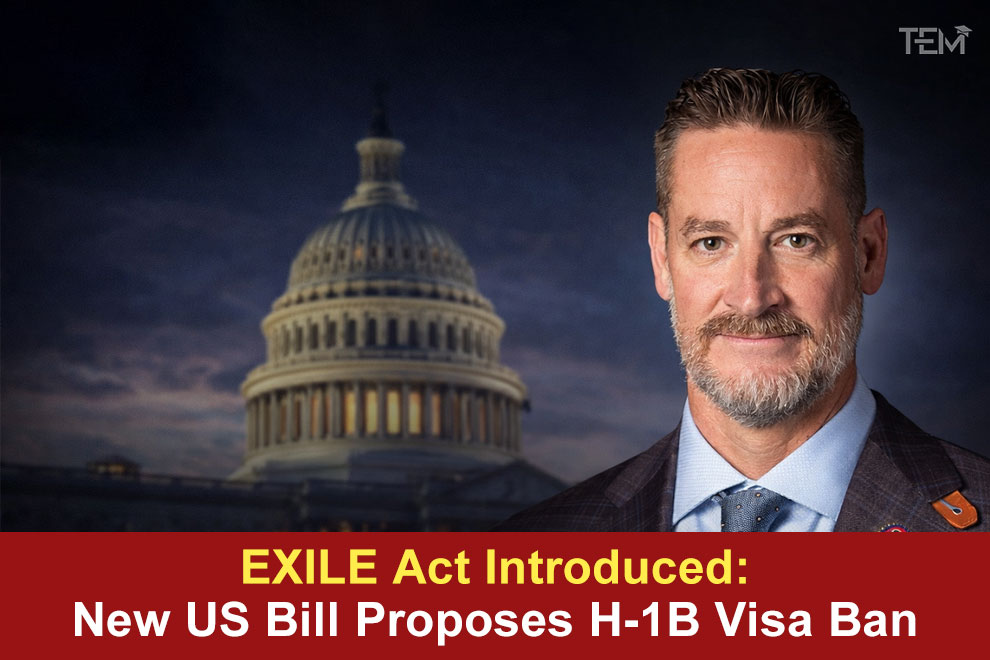
The legislation, titled the EXILE Act, was introduced on February 9, 2026, by Representative Greg Steube. If enacted, the bill would abolish the H-1B program entirely, marking one of the most sweeping employment-based immigration proposals in recent years.
While the proposal has not yet advanced beyond introduction, its implications have already triggered widespread discussion among international students, skilled workers, universities, and employers.
What the EXILE Act Proposes
According to the bill’s official text, the EXILE Act frames the H-1B program as a system of “corporate misuse” that allegedly impacts domestic wages.
The proposed H-1B visa ban would:
- End issuance of new H-1B visas
- Terminate continuation of existing H-1B statuses
- Remove employer-sponsored pathways for foreign skilled workers
- Eliminate the OPT-to-H-1B transition commonly used by international graduates
Immigration analysts note that previous reform efforts focused on wage thresholds or visa caps. This proposal instead calls for the structural dismantling of the program.
Impact on International Students and Workers
The H-1B visa serves as the primary employment pathway for international graduates in fields such as technology, engineering, healthcare, finance, and research.
As reported by major international news outlets, the proposal has sent ripples through the global tech community, particularly among those from countries with high H-1B participation.
For students currently studying in the United States or planning enrollment in 2026–2027, the proposed H-1B visa ban could create uncertainty around:
- Post-OPT employment options
- Employer sponsorship timelines
- Long-term residency strategies
Education advisors report increased inquiries from students seeking clarity on alternative destinations, including Canada, the UK, and Australia, where post-study work frameworks remain more stable.
Employer and University Response
Universities and employers reliant on global talent are closely monitoring the bill’s progress.
Technology firms, research institutions, and healthcare providers have previously argued that the H-1B program fills specialized skill gaps. Industry stakeholders suggest that eliminating the visa could intensify talent shortages in high-demand sectors.
Higher education leaders also note that visa stability plays a critical role in international enrollment decisions. Policy uncertainty alone can influence student mobility trends even before legislation is enacted.
Legislative Outlook
At this stage, the EXILE Act has been formally introduced but not voted on.
For the proposed H-1B visa ban to become law, it must:
- Pass committee review
- Secure majority approval in both the House and Senate
- Receive presidential approval
Policy experts note that similar sweeping immigration measures have historically faced significant debate and resistance in Congress. However, the introduction of the bill signals renewed political focus on employment-based immigration reform.
Further hearings, amendments, and stakeholder responses are expected in the coming weeks.
Reality Check: What This Means Right Now
To clarify the current situation:
1. Is the H-1B program banned today?
No. The EXILE Act is currently a proposal and has not been passed into law.
2. Does this affect the March H-1B registration cycle?
No immediate changes have been announced to the existing registration framework.
3. What should students and employers do?
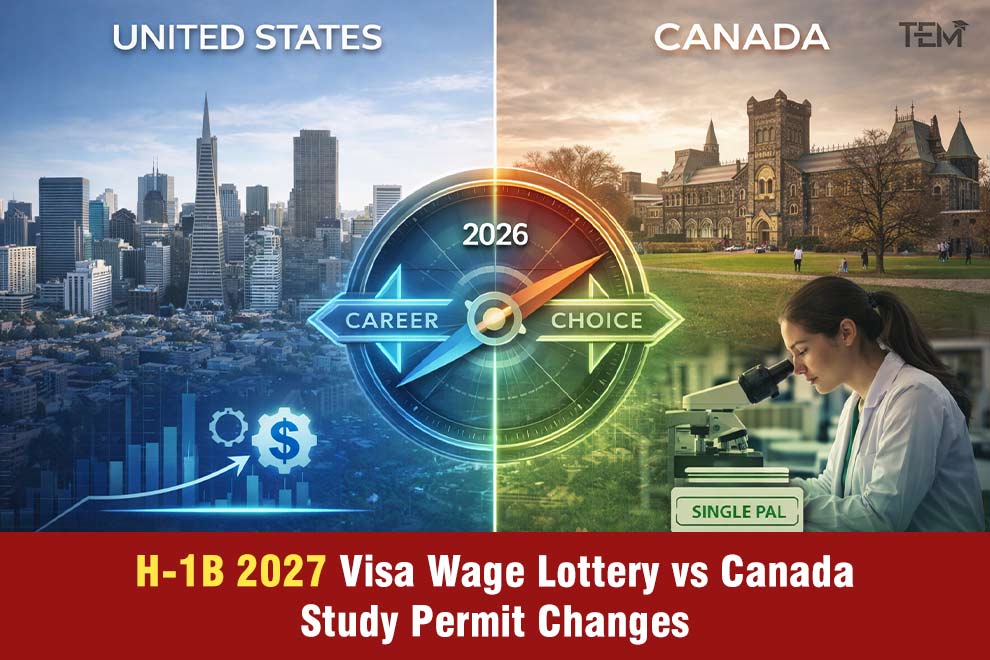
Experts advise monitoring official USCIS and congressional updates while continuing standard application procedures. It is also helpful to understand how other recent shifts, such as the H-1B 2027 Wage Lottery, are already changing the landscape for high-earning tech professionals.
What Happens Next
The bill is expected to move to committee review, where lawmakers, industry representatives, and education leaders may provide testimony or propose amendments.
As the debate unfolds, international students and employers are encouraged to rely on official government sources and verified policy updates.
The situation remains fluid, and additional developments are likely as the legislative process advances.
FAQs
- Does the EXILE Act immediately end H-1B visas?
No. The bill has only been introduced and has not been enacted.
- Who would be most affected if an H-1B visa ban were passed?
International graduates, current H-1B holders, and employers in sectors dependent on specialized global talent.