By the Education Magazine | June 24, 2026
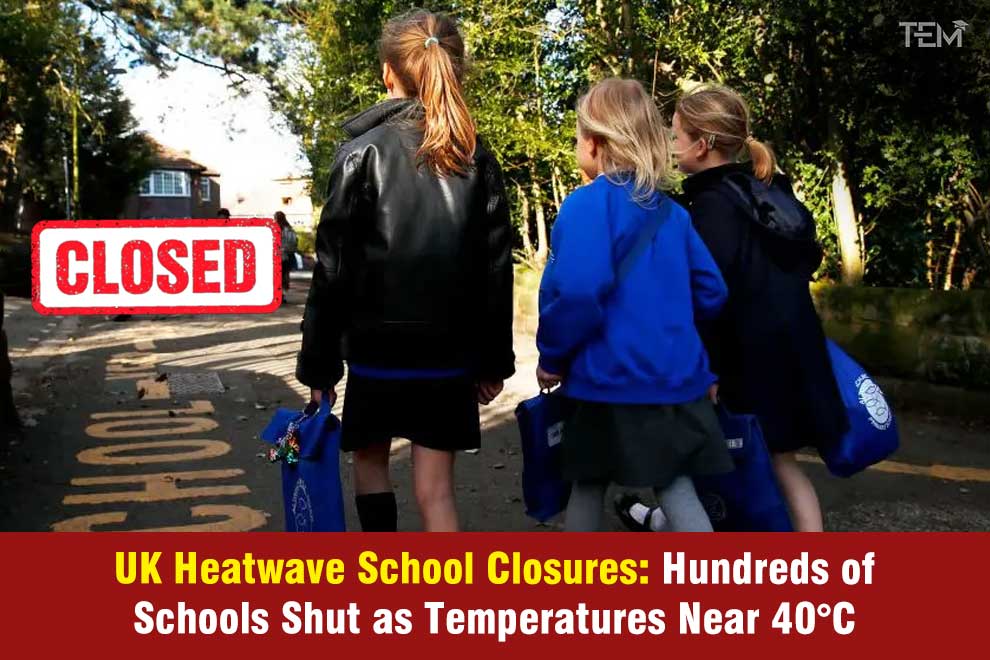
At least 312 schools across England and Wales have closed, shortened the school day, or switched to remote learning as temperatures climb towards 40°C during one of the most severe June heatwaves in recent UK history.
The UK heatwave school closure comes despite official government guidance advising schools to remain open wherever possible.
Why Are Schools Closing?
Many school leaders say government guidance is not enough during a red heat warning. While official advice encourages schools to stay open, headteachers argue that some classrooms are not safe in extreme heat.
- Classrooms are overheating throughout the day
- Limited ventilation and no air conditioning
- Concerns about dehydration and heat-related illness
- Overcrowded buildings during peak temperatures
- Challenges in keeping pupils and staff safe
Education unions have also backed the decisions taken by local school leaders. Stacey Booth, National Officer for the GMB Union, said:
“No pupil or staff member should be expected to learn or work in unsafe levels of heat. If practical steps to lower room temperatures cannot be taken, school leaders should absolutely consider closing parts of their buildings.”
These comments reflect growing concerns that student safety during heatwaves must come first when classrooms are hard to cool, especially in older buildings without modern ventilation or temperature control systems.
Where Are Schools Being Affected?
The disruption is not limited to one region. From Oxfordshire to South Wales, schools are taking different approaches to cope with extreme temperatures while trying to protect pupils and staff.
| Region | Impact |
| Oxfordshire | 99 schools reported closures, early finishes, or timetable changes. |
| Hackney, London | 21 schools altered schedules, including Stoke Newington School and Sixth Form. |
| Wiltshire | St John’s Marlborough suspended normal operations. |
| South Wales | Schools in Blaenau Gwent and Torfaen paused in-person learning for two days. |
Emergency Measures Introduced by Schools
- Early dismissals before peak afternoon temperatures
- Remote learning for selected year groups
- Optional parental collection arrangements
- Partial building closures
- Temporary suspension of in-person classes
Education leaders say many older school buildings lack proper cooling and ventilation, making student safety during heatwaves harder to maintain.
The growing number of UK heatwave school closures is raising a critical question: if official education settings guidance encourages schools to stay open, why are hundreds of headteachers deciding otherwise?
What Does the Government’s Heatwave Guidance Say?
Despite rising UK heatwave school closures, the Department for Education still advises schools to stay open where possible. Current education settings guidance does not set a legal maximum temperature for closure.
Instead, leaders are expected to take practical steps to reduce risks and protect student safety during heatwaves.
Key Measures Recommended by the Government
| Guidance Area | Recommended Action |
| Hydration | Ensure pupils have constant access to drinking water and encourage regular hydration. |
| Ventilation | Open doors and windows to improve airflow and reduce indoor heat build-up. |
| Uniforms | Relax dress code rules and allow lighter clothing where appropriate. |
| Physical Activity | Reduce or cancel strenuous outdoor activities during peak temperatures. |
The government’s hot weather guidance is designed to help schools manage extreme temperatures in schools without disrupting learning.
Why Many UK School Buildings Are Struggling
Many school buildings across the country were designed for a cooler climate and are now struggling to cope with prolonged periods of extreme heat.
Why Older Schools Overheat
- Built to retain heat during cold winters
- Large glass windows increase solar heat gain
- Thick brick and concrete structures absorb heat throughout the day
- Limited ventilation in many classrooms
- Little or no air conditioning in most schools
As temperatures rise, many classrooms become heat traps. Buildings absorb heat during the day and stay warm overnight, making it harder for pupils and staff to learn the next morning safely.
Daniel Kebede, General Secretary of the National Education Union (NEU), said:
“Our Victorian school buildings have essentially become greenhouses in the summer. Standard desk fans become completely ineffective once indoor air temperatures cross 35°C, as they simply circulate hot air and accelerate dehydration.”
Education leaders argue that temporary measures alone will not solve the problem. They are calling for long-term investment in ventilation upgrades, shading systems, and climate-resilient school infrastructure to help schools manage future periods of extreme temperatures.
Signs of Heat-Related Illness
During active heat health alerts, schools and parents are being advised to watch for symptoms of heat exhaustion and heatstroke.
| Condition | Common Symptoms | Recommended Action |
| Heat Exhaustion | Heavy sweating, dizziness, headache, nausea, pale skin, extreme fatigue | Move the child to a cool area, provide water, and apply cool, damp cloths. |
| Heatstroke (Medical Emergency) | Body temperature above 40°C, confusion, loss of consciousness, red or dry skin, rapid pulse | Call 999 immediately and begin cooling the person while waiting for emergency help. |
Children are more vulnerable to high temperatures than adults and can develop heat-related illnesses more quickly when classrooms become excessively warm. In such situations, schools are often forced to make safety-based decisions similar to other education disruption scenarios.
Broader education policies, including initiatives like free school meals in Wales, show how governments are trying to support student welfare beyond classroom conditions.
Final Note
The current heatwave has exposed a growing challenge for Britain’s education system. While schools have worked to protect pupils and staff, the UK heatwave school closures highlight how vulnerable many older buildings remain during periods of extreme heat.
As heatwaves become more frequent, the focus is shifting from short-term emergency responses to long-term investment in climate-resilient school infrastructure. The challenge now is ensuring schools are prepared for the hotter summers ahead.