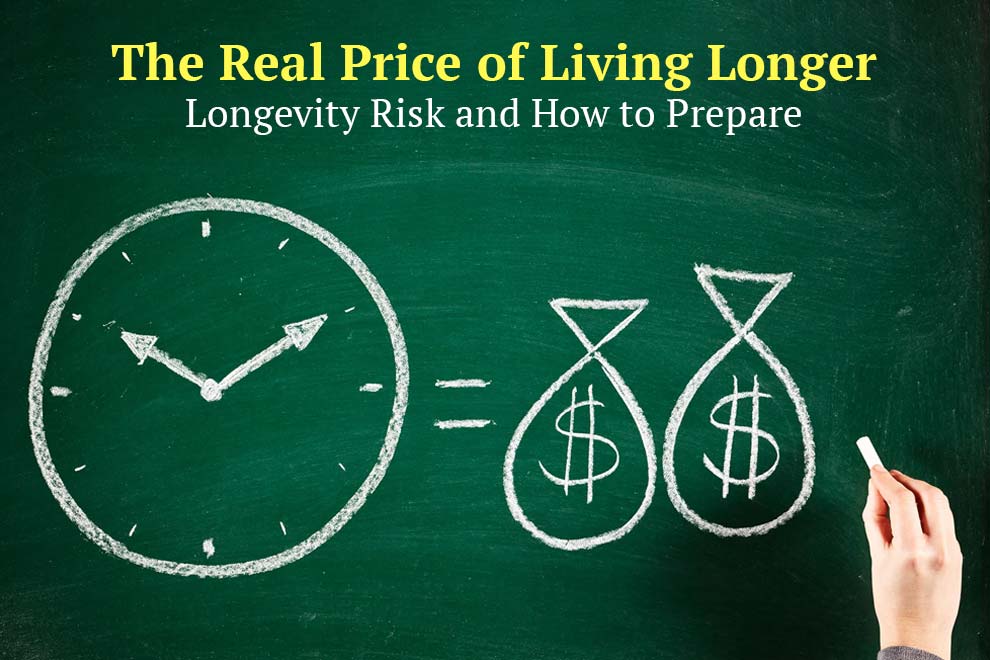
Living longer is a gift and it introduces a significant financial challenge called longevity risk. In the United States, the risk is growing as lifespans lengthen and retirement can last 20-30 years. It is important to plan not only for the average life expectancy but beyond that as well.
Living Longer
The costs accelerate in the final years of life.
● Inflation: Even modest inflation can erode purchasing power over a 25–30 year retirement, meaning the same lifestyle costs significantly more later. Medicare helps, but retirees still face premiums, deductibles, copays, prescriptions, dental/vision gaps, and potential out-of-pocket spikes. Longer life generally means more years exposed to these costs.
● Long-Term Care: A period of assisted living, memory care, or extended in-home support can create major expenses late in life.
● Social Security: Social Security is a great asset but there are often struggles with rising costs. The longer your retirement lasts, the better.
Strategic Preparation
Preparing for longevity risk requires shifting from a “savings” mindset to an “income” mindset. Here is how to prepare effectively in the current U.S. landscape:
1. Optimize Social Security
The most effective way to combat longevity risk is to delay Social Security. For every year you wait past your Full Retirement Age, your monthly benefit increases by approximately 8%. This creates a higher “guaranteed floor” that is inflation-adjusted and lasts as long as you do.
2. Consider “Longevity Insurance”
Financial advisors are increasingly recommending Qualified Longevity Annuity Contracts (QLACs). These allow you to take a portion of your IRA and purchase an annuity that begins paying out much later in life, such as at age 80 or 85. This provides a “second wind” of income just as healthcare costs typically peak.
3. Adopt the “Dynamic” 4% Rule
The traditional 4% withdrawal rule may be too aggressive for a 35-year retirement. Experts now suggest a dynamic withdrawal strategy, lowering your spending in years when the market is down to preserve capital for your later years.
4. Health Savings Accounts (HSAs)
If you are still working, maximize your HSA. It is the only “triple-tax-advantaged” tool in the U.S. tax code. By investing these funds rather than spending them on current Band-Aids, you can build a tax-free war chest specifically for the medical costs of your 80s and 90s.
Conclusion
Longevity is no longer about reaching a “finish line” at age 65; it is about sustaining a marathon that could last 30 or 40 years. By securing guaranteed income streams and accounting for the rising cost of care, you can ensure that a long life remains a blessing, not a burden.
Also Read: FUTURE-PROOFING YOUR BUSINESS: THE ROLE OF IT SUPPORT IN FINANCIAL SERVICES