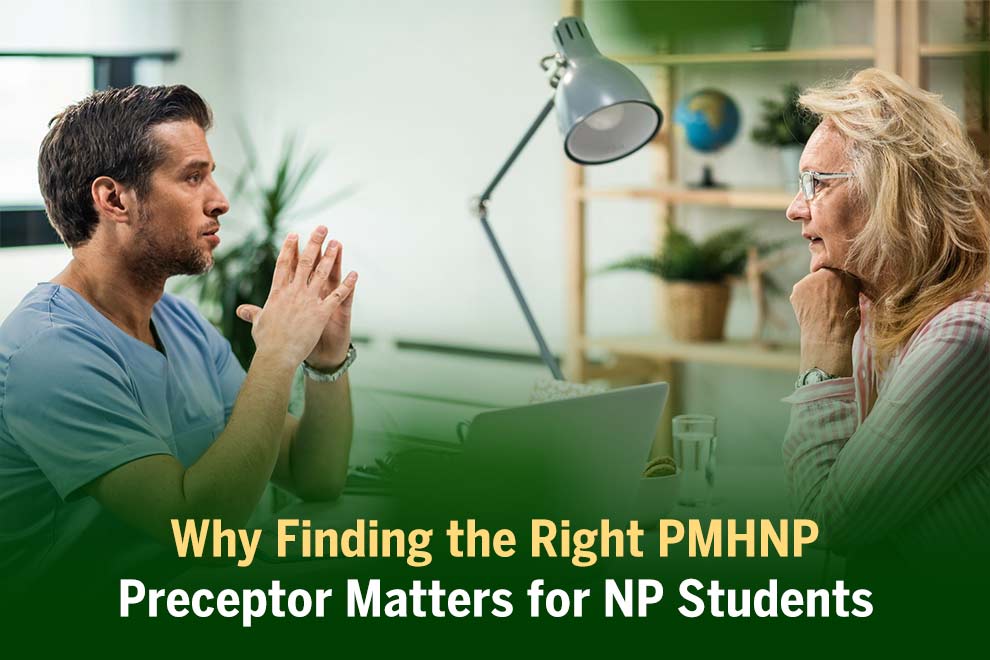
PMHNP clinical rotations rely heavily on guidance from experienced preceptors because the work involves assessing complex mental health conditions, managing medications, and supporting patients through sensitive situations.
PMHNP preceptors introduce students to the realities of mental health care across clinical settings and for PMHNP students, this is the first time they gain real experience with psychiatric conditions and psychotherapy within a structured healthcare environment.
When NP students train with someone who understands their program’s requirements, career goals, and the responsibilities of the role, the entire placement process becomes a stronger learning experience.
The right PMHNP preceptor helps students grow, stay grounded, and enter advanced practice with confidence.
PMHNP Training Requires a Different Kind of Support
Because psychiatric care is unpredictable, students need PMHNP preceptors who can offer steady, practical guidance from the start. A strong preceptor helps students learn how to handle core parts of mental health care, including:
- Assessing patient behavior and symptoms in a clear, structured way
- Approaching difficult conversations with calm, therapeutic communication
- Understanding different care settings, such as outpatient clinics, inpatient units, or substance use programs
This support gives them confidence to participate in patient care without feeling overwhelmed. It also helps them develop the stability and awareness needed to grow into the psychiatric mental health nurse practitioner role.
A Strong Preceptor Shapes Clinical Judgment
PMHNP students rely on their preceptors to understand how real psychiatric decisions are made. Good preceptors explain how they assess symptoms, organize information, and choose appropriate interventions. This helps students see how clinical judgment develops in everyday practice.
With steady guidance, students learn to think more clearly during patient encounters. They begin to recognize patterns, evaluate risk, and participate in treatment planning with more confidence.
The right PMHNP preceptor also provides structure during early decision making. This support allows students to practice new skills without feeling overwhelmed.
The Right Clinical Environment Builds Confidence
PMHNP students learn best in settings where they feel supported and steady and a good preceptor creates this atmosphere by giving clear direction, setting realistic expectations, and checking in when situations become challenging.
They can observe, ask questions, and practice new skills without feeling rushed. This reduces anxiety and helps students understand how psychiatric care functions in everyday practice, plus a supportive environment also encourages gradual growth where students can take on new responsibilities, which leads to stronger learning and a more positive clinical experience.
PMHNP Preceptors Model Essential Communication Skills
Communication is a core part of psychiatric care, and students learn these skills best by watching experienced PMHNP preceptors in real situations.
Mental health encounters often involve sensitive topics, strong emotions, and moments where patients need calm, clear guidance. Observing how a preceptor navigates these conversations gives students a practical foundation they cannot get from textbooks.
They also see how preceptors set boundaries, maintain safety, and support patients who feel distressed. With guided exposure, students begin to apply the same communication strategies during their own patient encounters. This helps them grow into the PMHNP role with a stronger sense of how to support patients through challenging moment
The Right PMHNP Preceptor Supports a Strong Start During Clinical Rotations
PMHNP students gain more than required hours during clinical rotations. They build habits and skills that influence how they will practice once they graduate.
A strong preceptor helps students grow at a steady pace and develop confidence in their ability to support patients with psychiatric conditions.
Another benefit comes from understanding how NP students can connect with the right PMHNP preceptors, especially when choosing someone who matches their learning style, communication needs, and long term career goals. A good match creates a smoother clinical experience and prepares students for the responsibilities they will take on after graduation.
A strong preceptor sets the tone for early clinical practice and helps students enter the field with a clear sense of direction and stability.
The Impact of Choosing the Right PMHNP Preceptor
Finding the right PMHNP preceptor matters, because your preceptor directly shapes how you learn to practice psychiatric care.
The quality of your mentorship influences how well you understand assessments, how you approach treatment planning, and how prepared you feel when you begin working with patients on your own. Also, the right preceptor also helps you connect classroom knowledge to real experiences in mental health care.
They show you how to apply skills in actual clinical settings and how to make decisions that support patient stability and this type of leadership has a lasting impact on how you grow as a practitioner.
Also Read: PMHNP Certification: Steps to Advance Your Career