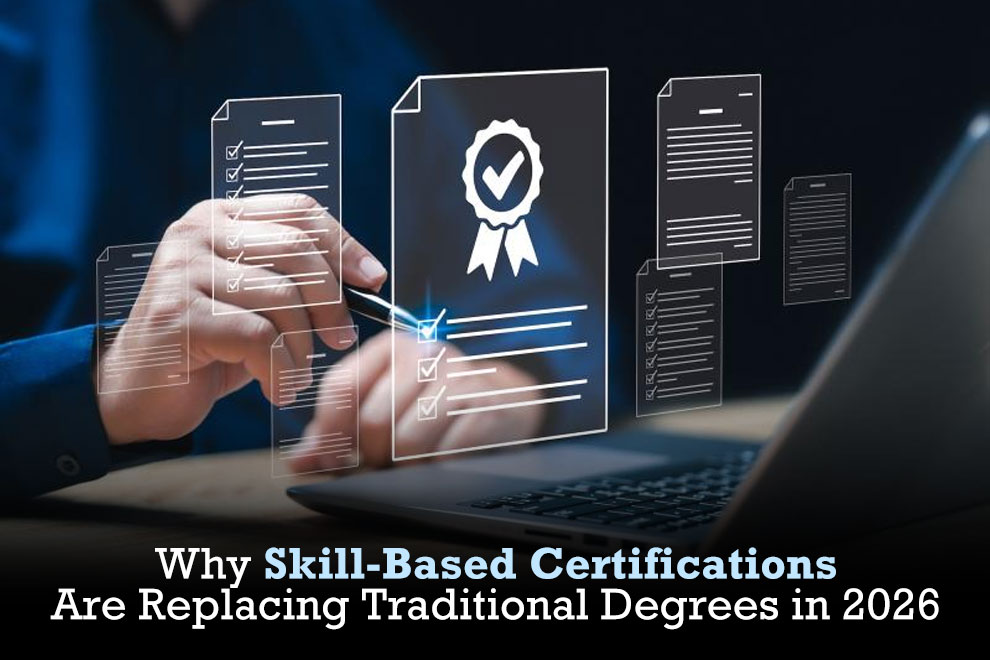
The education landscape is evolving quickly in 2026. For decades, traditional degrees were considered the most reliable path to career success. Students spent years studying broad subjects, often with the expectation that a diploma alone would secure employment. However, employers today are shifting their focus. Instead of prioritizing degrees, companies are increasingly looking for candidates who can demonstrate real-world skills and practical knowledge.
This shift has created a strong demand for skill-based certifications. These programs focus on specific abilities that learners can apply immediately in the workplace. Whether it’s healthcare training, digital skills, or technical knowledge, certifications allow individuals to learn faster and enter the workforce sooner. As a result, skill-based certifications are becoming more relevant than traditional degrees.
The Growing Demand for Job-Ready Skills
Employers in 2026 want candidates who can contribute from day one. Traditional degree programs often emphasize theory, while modern workplaces require practical application. This mismatch has encouraged learners to choose skill-based certifications that provide hands-on experience.
For example, individuals entering healthcare support roles often pursue CPR and safety training to improve employability. Platforms like MyCPRcert offer training in CPR (Cardiopulmonary Resuscitation), helping learners gain practical emergency response skills that are directly useful in workplaces such as schools, gyms, offices, and healthcare environments.
These types of targeted certifications show employers that candidates are prepared for real-world responsibilities.
Faster Entry Into the Workforce
One of the biggest advantages of skill-based certifications is speed. Traditional degrees can take three to four years, while certifications can often be completed in weeks or months. This allows learners to start working sooner and gain experience early in their careers.
This is especially important in industries that evolve quickly. By the time a student finishes a degree, job requirements may have changed. Skill-based certifications reduce this gap by focusing only on relevant and updated knowledge.
Many learners now prefer this faster route because it helps them avoid long academic commitments and start earning sooner.
Cost-Effective Learning Options
The rising cost of college education is another reason for the shift. Tuition fees, living expenses, and study materials can make degrees expensive. Not everyone can afford this long-term investment.
Skill-based certifications provide a more affordable alternative. Learners can invest in specific training without paying for unrelated subjects. This makes education accessible to more people.
Short-term certifications also reduce financial risk. Instead of committing to years of study, individuals can explore different skills and choose what suits them best.
Flexibility and Online Learning
Traditional education often requires fixed schedules and classroom attendance. This can be difficult for working professionals or those managing other responsibilities. Skill-based certifications, however, are usually flexible and available online.
Learners can study at their own pace and from any location. This flexibility allows individuals to upgrade their skills without leaving their jobs. It also makes education more inclusive for people with different schedules.
Modern learning platforms like Hellollesson provide opportunities to explore new skills in a convenient format. This type of learning environment supports continuous development and encourages professionals to keep improving their abilities.
Continuous Learning Is the New Standard
In 2026, careers are no longer linear. Professionals frequently change roles, industries, or responsibilities. This makes continuous learning essential. A single degree is no longer enough for long-term career growth.
Skill-based certifications allow individuals to keep upgrading their knowledge. Instead of enrolling in another degree, they can take short courses whenever needed. This helps them stay competitive in the job market.
For example:
- A teacher may learn safety certification
- A fitness trainer may update CPR knowledge
- A manager may learn leadership skills
- A freelancer may explore new digital tools
These short learning paths help professionals adapt quickly.
Employers Value Demonstrated Skills
Hiring managers today focus on what candidates can do, not just what they studied. Certifications demonstrate that an individual has completed focused training and gained practical knowledge.
This is especially important in roles that require hands-on abilities. Candidates with certifications often require less training and can perform tasks immediately. This makes them attractive to employers.
Skill-based learning also helps individuals build confidence. When learners practice real-world scenarios, they are better prepared for workplace challenges.
Ideal for Career Switchers
Many professionals are changing careers in 2026. Some want better salaries, while others seek flexible work environments. Returning to college for another degree can be time-consuming.
Skill-based certifications provide a faster transition. Individuals can learn new skills and move into different fields without starting from scratch. This makes certifications ideal for career switchers.
Examples include:
- Office workers moving into safety roles
- Students entering healthcare support fields
- Hospitality staff learning emergency training
- Freelancers expanding service offerings
Short certifications reduce the time needed to switch careers.
Practical and Hands-On Training
Skill-based certifications emphasize practical learning rather than theory. Learners practice real-world scenarios, which helps them develop confidence and competence.
Hands-on training may include:
- Emergency response simulations
- Scenario-based learning
- Interactive exercises
- Practical assignments
- Real-world case studies
This approach prepares learners for workplace responsibilities more effectively than lecture-based education.
Increased Recognition of Certifications
Certifications are gaining more recognition across industries. Many employers now list them as preferred qualifications in job descriptions. This shows how valuable skill-based learning has become.
Organizations understand that certifications focus on current industry needs. Candidates with relevant training often stand out in competitive job markets.
This growing acceptance is encouraging more learners to choose certifications over traditional degrees.
A More Accessible Learning Path
Skill-based certifications are suitable for a wide range of learners. They benefit:
- Students exploring career options
- Professionals upgrading skills
- Job seekers improving employability
- Freelancers expanding services
- Entrepreneurs learning practical knowledge
This accessibility makes certifications more inclusive. Anyone can learn at their own pace and build job-ready skills.
The Future of Education
Education in 2026 is becoming more flexible, affordable, and skill-focused. Traditional degrees still have value, but they are no longer the only path to success. Many individuals now combine degrees with certifications, while others rely entirely on skill-based learning.
This shift reflects the needs of modern industries. Employers want adaptable professionals who can learn quickly and apply knowledge effectively. Skill-based certifications meet these expectations.
Conclusion
Skill-based certifications are replacing traditional degrees in 2026 because they offer faster learning, lower costs, flexibility, and practical training. Employers are prioritizing skills over theoretical knowledge, making certifications more valuable in today’s job market.
Programs that focus on real-world abilities help learners become job-ready quickly. As industries continue to evolve, individuals who invest in skill-based education will have a strong advantage. The future belongs to those who continuously learn, adapt, and develop practical skills that match workplace demands.
Also Read: Top 7 Project Management Certifications to Get in 2025