Somewhere in a maker space above the Pacific coast, in a room that smells of warm resin and the steady hum of machines at work, a small group of engineering students is arguing pleasantly about a catapult.
Not a metaphorical catapult. A real one, spring-loaded, aimed at a miniature soccer goal, designed from scratch to be assembled by children in Quito, Ecuador, using only the kit these students are building for them. One student wants to adjust the tension. Another is holding an Arduino controller and doing the math quietly. A third is thinking about how to explain the spring force to a twelve-year-old who does not speak English.
This is Tuesday afternoon at Westmont College in Santa Barbara, California. This is also, it turns out, what the future of engineering education looks like.
A College Built for the Long Game
Westmont was founded in 1937 as a liberal arts college on the vision of Ruth Kerr, the principal founder and business owner of the Kerr mason jar. Her vision, coupled with the leadership of esteemed scholar Wallace Emerson, Westmont’s first President, exemplified from the start that intellectual excellence and deep Christian faith were not competing ambitions but a single, unified one.
That conviction has aged well.
Westmont today ranks among the leading liberal arts colleges in California, earns a prominent place on Forbes’ List of America’s Top Colleges 2025, and has been spotlighted as a “Hidden Gem” in College Raptor’s 10th year of ranking the nation’s best-kept-secret colleges and universities.
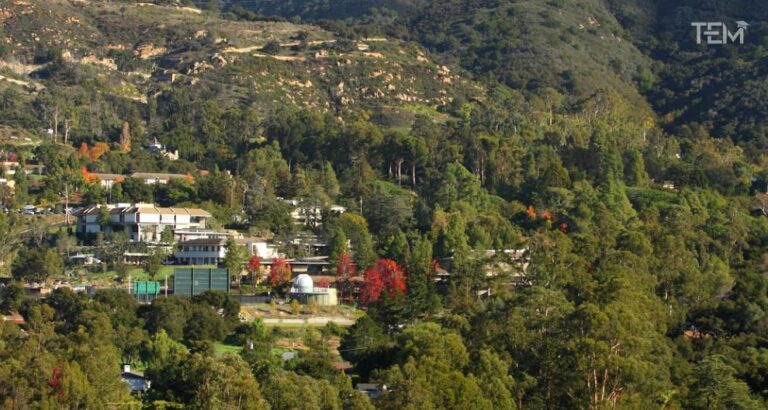
The campus itself sits in a striking coastal setting, framed by the foothills of the Santa Ynez Mountains and minutes from the Pacific Ocean. In Santa Barbara, California, students enjoy year-round wonderful weather, easy ocean access, and a variety of outdoor activities that have a way of reminding even the most focused engineer that the world is larger than whatever problem is currently on the whiteboard. While the college offers nearly 100 academic programs, the engineering program is newer. But it has wasted no time.
Built on Three Pillars, Proven by Numbers
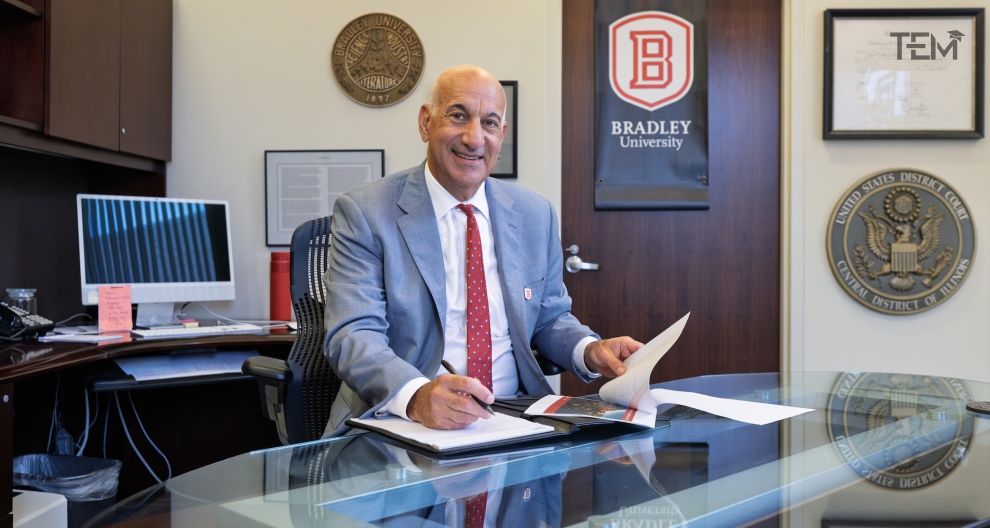
Dr. Daniel Jensen, who directs Westmont’s engineering program and holds the Allder Chair position, describes the program’s foundation with the kind of calm precision that suggests he has tested every word of it against reality.
The program rests on three pillars: The first is a solid Christian liberal arts foundation. The second is excellence in technical engineering training, delivered in small classes through hands-on, active learning with professors personally engaged with each student. The third is the integration of engineering design and innovation throughout the entire curriculum, from the earliest courses to the final semester.
“Great engineering programs begin with superb technical education,” Dr. Jensen has said, “this is necessary, but not sufficient. Our other pillars provide true distinction”
The program earned full ABET accreditation, making Westmont one of only three Christian colleges in California to hold that distinction.
The outcomes this model produces are difficult to dismiss. 89 percent of Westmont engineering students graduate in four years, against a national average hovering between 40 and 50 percent. Over 70 percent complete internships and/or funded research experience before they graduate. The four-month job placement rate stands at 94 percent, with employers including Northrop Grumman, Lockheed, Raytheon, the Department of Energy, and the U.S. Army, among others. Engineering students have also been admitted into graduate programs at institutions including the University of Michigan and Rensselaer Polytechnic Institute.
All engineering faculty carry external research and/or consulting funding, and all are active in scholarly publishing. Over the last four years, Westmont engineering students have accumulated 45 co-authorships on peer-reviewed publications, a figure that would be notable at programs ten times this size.
Artificial Intelligence, Investigated Honestly
The present moment in engineering cannot be understood without artificial intelligence, and Westmont has not pretended otherwise.
The department maintains a significant AI focus in its research work and has published three recent peer-reviewed papers in that area. Grounded in a user-centered design framework called Design Innovation (DI), the Westmont research team has been testing with methodical care which AI tools genuinely improve engineering methods and which ones do not.
In a 2025 paper presented at the American Society for Engineering Education Annual Conference, co-authored with the Air Force Research Laboratory, the team evaluated tools like ChatGPT and Viscom against traditional design methods. The findings were reported without inflation: while AI proved highly effective for rapid mind mapping and specific functional decomposition, it struggled with complex CAD generation and image sketching. A second paper, accepted for the ASEE Annual Conference in 2026, went further. A team of Westmont undergraduates developed a custom AI tool built on OpenAI’s GPT-4o model that generates bio-inspired mind maps for engineering design ideation. In a controlled experiment, designers using the AI tool produced more than double the number of ideas than those without it, yielding a significant leap in productivity.
Four courses in the engineering curriculum focus extensively on design. The Design Innovation methodology also threads through every other course in the program, embedded as mini design experiences that give students repeated, hands-on opportunities to apply technical content to real design challenges.
One of the featured projects is the annual remote-controlled vehicle challenge that reflects the program’s Design Innovation approach. Student teams design, build, test, and refine remote-controlled cars before presenting them in a design competition, where performance, creativity, and engineering decisions are evaluated. The competition gives students an opportunity to apply classroom concepts in a realistic design environment while strengthening teamwork, problem-solving, and iterative engineering skills before sharing those experiences with students in Ecuador.
The Course That Goes to Ecuador
The Junior Design course asks students to design and manufacture STEM educational kits for children in developing countries, and then to travel there and use them. In May 2026, fifteen students from the engineering department flew to Quito, Ecuador, to deploy their kits in an after-school program run by Academia Matices, an Ecuadorian organization working in cooperation with Compassion International to serve under-resourced children.
The students added a design competition for older students, sponsored by The Alliance Academy International, a school in Quito. Approximately 200 Ecuadorian students and family members attended an open house to see the students’ final robotics projects. The program has since grown significantly enough to produce Westmont’s first application from an Ecuadorian student who participated in the after-school program.
Dr. Jensen described the ambition of the work in terms that were, at once, modest and vast.
“We are obviously a very small cog in the overall gear system here,” he said, “but if God chooses to bless this project, we can change a slice of the world. We can pilot this in Ecuador and determine ways that it works well. Then, if we can expand it to places all over the world, we can scale this and multiply the impact for children across the world.”
To the Edge of Space and Back
The two-semester Senior Capstone Design course operates at a different altitude.
In the 2024-2025 academic year, one senior team partnered with the Air Force Research Laboratory to design a wearable biometric measurement system for monitoring mental stress and its effect on physical performance. The students built devices measuring heart rate variability, respiration rate, and body temperature, and developed a student-built app that received the raw data and recommended appropriate responses based on a user’s overall mental state.
Senior Maya Pablos described the experience directly.
“The value is that we’re able to design something that’s very real-world. Being able to do that through Westmont Engineering is vital. How many people can say that they’ve worked with the Air Force in college?”
A second team worked with Northrop Grumman Corporation to design a capsule protecting equipment as it traveled to the “edge of space” and returned, engineered to survive parachute failure during descent and temperatures reaching negative 40 degrees Celsius during the ascent and descent cycle.
Senior Noah Shen reflected: “I think it’s really awesome to work on a project that is impacting actual researchers. Researchers who work with Northrop Grumman will actually use the product, or at least the ideas that we bring to them, to get information and data about the edge of space.”
For 2025-2026, three new capstone projects are underway. Mission Darkness is sponsoring a project to limit radio frequency communication in drones that could be used for harmful purposes, with recent Westmont graduate Maria Judy serving as the student team’s industry mentor. Northrop Grumman has tasked a second team with developing powering capabilities for underwater drones. The Department of Energy is sponsoring a third team to create a system for sensing airborne particles in a way that has never been accomplished before.
Faculty Who Build and Serve
Faculty research at Westmont is as purposeful as its curriculum, and often inseparable from it.
Will Allison, Lab Manager and Instructor of both Engineering and Physics, is working to characterize the mechanical properties of 3d printed materials. This work was just presented at an American Society of Mechanical Engineers technical conference.
Dr. Adam Goodworth, Professor of Engineering, is examining the use of 3D printed lower extremity prosthetic sockets for amputees. The need is acute: only 10 to 15 percent of people worldwide who need a prosthesis currently have one.
“The socket is the most time-consuming part of making a prosthesis internationally,” Dr. Goodworth has said. “If we can successfully integrate 3D printing methods into current service trips, many more children in need of prostheses can be fit.”
Dr. Goodworth’s sabbatical has taken him to Africa to work within a local hospital system and NGO, collecting pilot data, using portable rehabilitation equipment, and working with an orthopedic department to establish the foundation for future student research projects. He has a number of Westmont Engineering students joining him in Africa this summer.
The Question Behind the Degree
The final semester brings engineering and physics students together in the Senior Seminar, co-taught by Dr. Jensen and Dr. Robert Haring-Kaye. The course explores how an understanding of technology, science, and design interfaces with faith, engaging questions about ethics in defense work, cosmology, and the weight carried by engineers whose decisions affect how people live.
Westmont has also embraced the challenge set by the National Science Foundation to prepare adaptive engineers who can blend science, engineering, and the arts, treating that challenge not as an external mandate but as an extension of what the program has always believed.
Senior Zach Yates described what the seminar gave him:
“They have so many nuggets of advice from their own personal faith walks and their own epiphanies. It’s really cool to have professors who really care about your personal development and want to help you fast forward that process of learning things the hard way.”
Three new scholarships, named for Roy G. Johnston, Naomi Johnston-Catherine Barsotti, and a designated leadership scholarship, have been established exclusively for engineering students through generous gifts. An Engineering Design Innovation Summer Camp Experience, a week-long program and residential campus experience for high school students, is an annual event perfect for high school students. This offers participants a meaningful introduction to innovative engineering product development alongside a genuine taste of Westmont campus life.
What Employers Know and the Numbers Confirm
What industry has made increasingly clear is that technical competence, while essential, is not enough on its own.
Employers are looking for professionals who can demonstrate leadership, teamwork, conflict management, interpersonal skills, empathy, negotiation, and both written and oral communication. These are precisely the qualities that a Christian liberal arts education has been cultivating for generations.
Westmont’s engineers graduate with technical depth, with research experience, and with a formed capacity to ask not only whether something works but whether it should be built and for whom. They leave having worn Air Force sensors, designed kits that children assembled on the other side of the world, and tested the limits of AI tools reshaping their field in real time.
Since 1937, Westmont has been building people for a world that rewards precision and demands wisdom. Today, that combination has never been more relevant. The program’s engineers are carrying it forward, one carefully designed solution at a time. The question is no longer just what engineers can build. It is whether they understand the consequences of building it and who they are building it for.
Quote