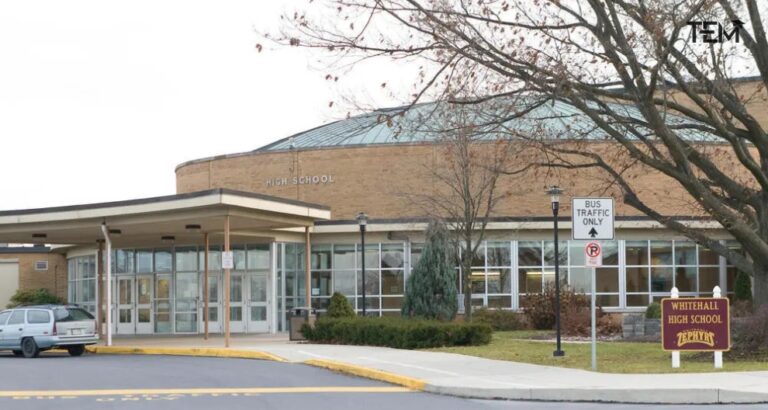
There is a particular kind of quiet that settles over the stretch of highway between La Crosse and Eau Claire, a quiet made of dairy fields and grain silos and the occasional water tower announcing a town before the town itself appears. It is the kind of landscape that, from a car window, looks like it hasn’t changed in fifty years. And in some ways, it hasn’t. But somewhere in that quiet, on a single connected campus serving fewer than 800 students, something has been steadily evolving, under the leadership of a man who has led the district for more than two decades, and that evolution is changing what a small rural school district can offer its students.
Whitehall School District, tucked between the cities of La Crosse and Eau Claire in western Wisconsin, is not the kind of place that announces itself with fanfare. It serves students from Whitehall, Pigeon Falls, Northfield, York, Pleasantville, and the rural pockets in between, a geography that reads less like a map of a school district and more like a map of a community that has decided, collectively, to raise its children together.
A Vision Written in the Present Tense
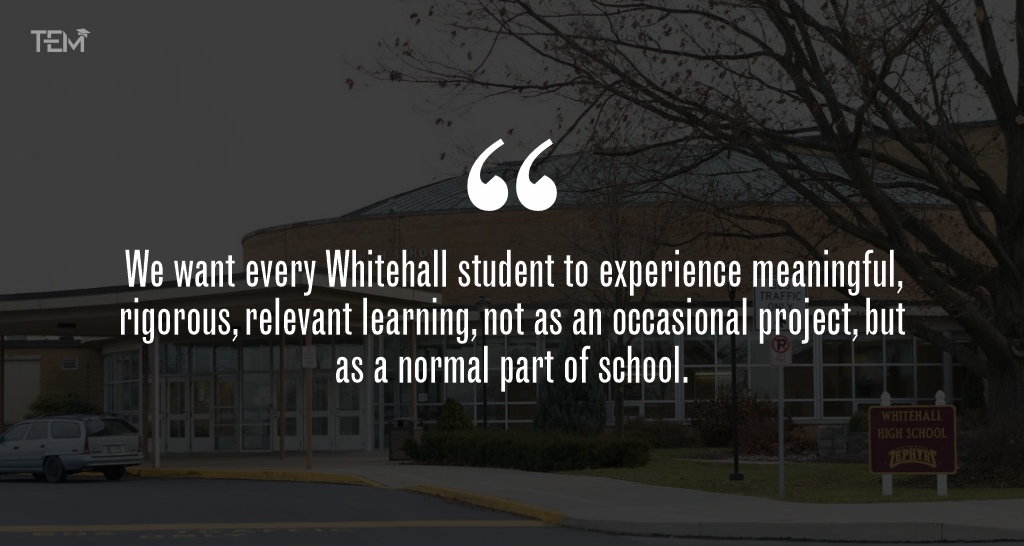
Ask Whitehall to describe itself, and it will not lead with test scores. It will lead with a sentence that sounds almost like a promise: “Our community and school will work cooperatively to create a positive climate which fosters high academic achievement, life-long learning, integrity and productive citizenship.” That is the district’s vision, and it has not changed much in structure, even as the world around it has changed considerably.
The mission follows in the same register, insisting that the district exists “to provide learning experiences that empower students to create a positive vision of their future through the interaction of school, family and community.” What is notable is not the language itself, which could belong to any number of school districts across the country, but the way Whitehall has chosen to treat that language less as a plaque on the wall and more as a working document. Strong academics remain the foundation, while personalized learning, hands-on experiences, emerging technology, career and community connections, and durable skills have become increasingly important parts of how that mission is brought to life.
The Arithmetic of a Small Place
Numbers, in Whitehall’s case, offer useful context for understanding the district’s scale and reach. The district serves just under 800 students, spanning grades 4K through 12, all of them housed on one connected campus. Current regional data places district resident enrollment at approximately 735 students, a figure that, in a district this size, is not just a statistic but something closer to a roster of familiar faces.
That single campus matters more than it might first appear. It means students experience continuity across grade levels, with younger and older learners sharing the same broader school community from 4K through graduation. It means continuity is not an abstraction here. It is architecture.
Building With What You Have
Whitehall has treated its size and its rural location less as a limitation to be managed and more as a set of raw materials to be built with, and the recent milestones bear that out. Chief among them is the opening of the 16,000-plus-square-foot Whitehall Regional Emerging Technology Laboratory, a facility whose square footage alone signals that this is not a token gesture toward modernization but a genuine bet on it.
Alongside the lab, the district has continued expanding its dual-credit and career-connected learning offerings, and has developed something called LIFToFFS Learning, a model that recurs throughout Whitehall’s answers like a thread pulled through the whole fabric of the district’s philosophy. Whitehall has also helped lead a piece of regional infrastructure called the Trempealeau Valley Cooperative 2.0, an arrangement that allows neighboring rural districts to collaborate with one another rather than compete for students. In a region where small districts can face similar challenges around providing broad opportunities, this is a quietly strategic choice.
Classrooms That Grow Up With the Student
Walk through Whitehall’s academic programming by age group, and what emerges is less a static curriculum than something closer to a relay race, with each level handing off to the next. At the elementary level, the emphasis sits on literacy, mathematics, science, and social studies, paired with hands-on learning, STEM exposure, problem-solving, and an early introduction to the future-ready skills the district will keep building on later.
By middle school, students are layering core academics with career exploration, emerging technology, and project-based experiences, a bridge period where the abstract foundations of elementary school start to take on practical shape. And by high school, the offerings widen considerably: traditional coursework sits alongside career and technical education, advanced manufacturing, robotics, automation, AI and coding experiences, dual-credit courses, industry-recognized credentials, work-based learning, Youth Apprenticeship, and regional college and career pathways.
The goal, as the district frames it, is not uniformity. It is not to place every student on the same path, but to help every student build a meaningful one.
More Than a Score on a Page
There is a temptation, in education journalism, to reduce a district’s success to a single number: a test score, a graduation rate, a ranking. Whitehall resists that reduction, and does so explicitly. Academic growth matters, the district says, but so do adaptability, communication, collaboration, creativity, problem-solving, and perseverance, along with the harder-to-measure ability to apply learning in authentic settings.
That philosophy shapes where Whitehall’s strategic energy actually goes: toward durable skills, personalized pathways, strong relationships, high-quality instruction, the responsible use of emerging technology, and the structural changes needed to give both students and educators the time and flexibility to do this kind of work well. It is a definition of excellence that asks more of a district, not less, precisely because it refuses the shortcut of a single metric.
Meeting Every Student Where They Actually Stand
For a district this size, diversity of learning needs is not an abstraction handled by a policy binder. It shows up in classrooms daily, and Whitehall’s response leans on personalized instruction, intervention and enrichment, special education, English learner services, counseling, and mental health supports, alongside flexible learning opportunities and space for student voice.
Technology, notably, is framed here as a tool rather than a substitute. It exists to expand access and personalize learning, not as a replacement for the relationships between students and educators. That distinction, small as it might sound, is treated as central to the LIFToFFS model itself, a reminder that the district’s embrace of emerging technology is deliberate rather than reflexive.
That same philosophy extends into how Whitehall thinks about equity. A student’s ZIP code, background, learning need, or family circumstance, the district insists, should not determine the quality of opportunity available to them. The work of closing that gap happens through individualized support, accessible programming, regional partnerships, technology, transportation, mental health and student services, and multiple postsecondary pathways, all aimed at a fairly simple ambition: that every student can be seen, supported, challenged, and able to imagine a future that feels possible.
Partners, Not Spectators
Rural districts often talk about community partnership as a nice-to-have. Whitehall talks about it as infrastructure. Families, local businesses, civic organizations, higher education institutions, regional school districts, and industry partners are described not as supporters standing on the sidelines but as participants in the learning process itself.
Named among those partnerships are Ashley Furniture Industries, the Ronald and Joyce Wanek Foundation, Western Technical College, University of Wisconsin–Stout, and CESA, alongside neighboring districts. Together, these relationships have helped build facilities, programs, credentials, career experiences, and learning pathways that, as the district puts it plainly, would be difficult for one small rural district to construct alone. It is an honest admission, and a strategic one: Whitehall knows what it cannot do by itself, and has built a network around that knowledge.
A Campus Where Growing Up Happens in Public
Student life at Whitehall carries a texture that is specific to 4K-12 campuses, where the youngest and oldest students share hallways rather than separate buildings entirely. Students participate in athletics, music and fine arts, FFA, FCCLA, academic and service organizations, esports, leadership opportunities, competitions, and community events. Because of the connected campus structure, younger students regularly see older students leading, competing, mentoring, and serving, a kind of ambient mentorship that happens simply because of proximity. Whitehall describes this as part of building a culture where students can find belonging and room to grow beyond the classroom, and it is not hard to imagine how those daily connections can make the school community feel continuous from one grade level to the next.
The Architecture of Leadership
Behind any of this sits a leadership structure that Whitehall describes as collaborative rather than siloed. It includes the superintendent, building principals, special education and pupil services, curriculum and assessment, technology, business and operations, student services, facilities, food service, transportation, and instructional staff. The district is careful to note that while these roles remain distinct, the work connecting them is intentional. In a district this size, collaboration is not a leadership style. It is a necessity, since decisions land better when academic, operational, student-support, and community perspectives are weighed together rather than in isolation.
Support Beyond the Classroom Door
Academics, in Whitehall’s telling, are only one thread of what a student needs to move forward. The district also offers school counseling, special education and pupil services, mental health support, academic intervention, career and postsecondary planning, work-based learning, dual-credit advising, Youth Apprenticeship, and connections to community and higher education partners.
One addition stands out: the creation of a Future-Ready Advisor role, designed to strengthen individualized career exploration and help students understand their own strengths and interests and the opportunities available to them before making decisions about life after graduation. It is a small structural detail, but it speaks to a district trying to make career exploration more intentional and personalized.
A Future Built Into the Structure Itself
Whitehall’s next chapter, as described, is less about adding new programs and more about weaving what already exists into the basic architecture of school. That means expanding LIFToFFS Learning, strengthening AI and emerging technology literacy, building clearer personalized pathways, continuing schedule and structural redesign, and intentionally developing durable skills across every grade level. The emphasis is increasingly on making these elements part of the structure of school itself, so that future-ready learning is embedded across the student experience rather than confined to individual initiatives.
The Man Who Stayed
At the center of all this sits Superintendent Mike Beighley, who has spent nearly three decades as a rural Wisconsin superintendent, more than two of those decades leading Whitehall itself. His tenure provides continuity as the district adapts its approach to a rapidly changing world.
His message to current and prospective families is not sentimental. Our responsibility is not merely to prepare students for the next test or grade, but for a world that is changing rapidly. Whitehall, in his framing, intends to remain community-strong while being unapologetically future-ready, ensuring students carry the skills, confidence, adaptability, and relationships needed to lead wherever their next step takes them.
Out on that quiet stretch of highway between La Crosse and Eau Claire, it would be easy to drive past Whitehall and assume nothing much is happening there. That would be a mistake. The district’s work is happening close to the community it serves, combining the advantages of a small rural setting with an increasingly broad range of academic, career, technological, and personalized opportunities.
Quotes