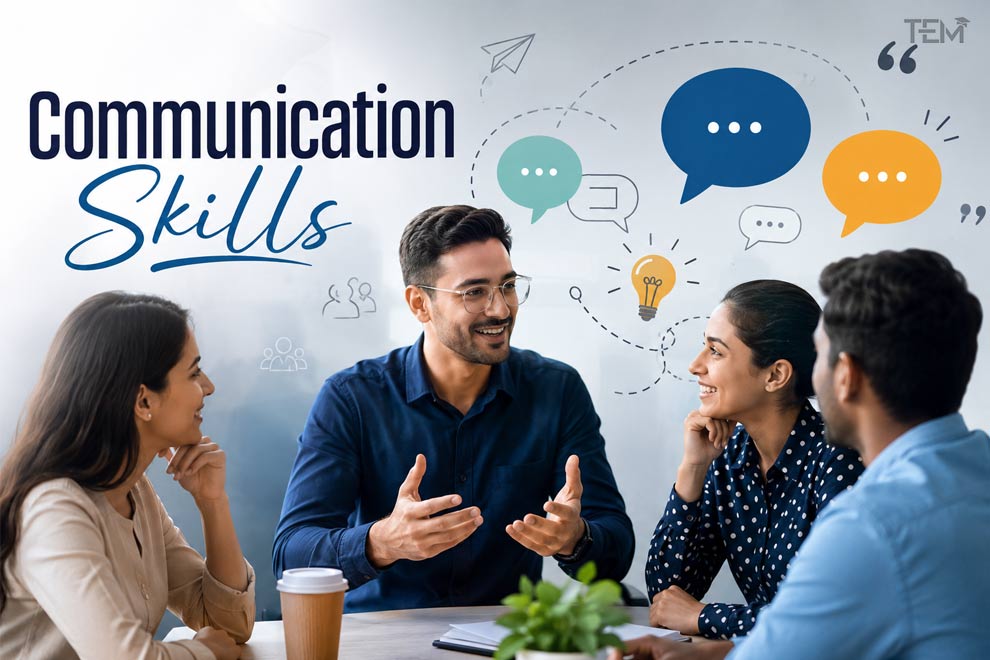
Imagine sitting in a crucial job interview or standing up to give a final classroom presentation. You have the right knowledge and brilliant ideas in your head, but when you open your mouth, the words just do not come out right. We have all been there. This common frustration highlights exactly why mastering communication skills is so important. Whether you are trying to ace an exam, pitch a project to a new client, or simply resolve a misunderstanding with a friend, the way you convey your message changes everything.
Communication skills bridge the critical gap between merely having an idea and successfully sharing it with the world. In education, they are the key to actively participating in discussions and absorbing complex subjects. In your career, they serve as the foundation for effective teamwork, strong leadership, and long-term professional growth. Even in daily life, these abilities help you build deeper, more meaningful relationships. Simply put, learning how to speak, write, and listen effectively is one of the most valuable investments you can make in your future.
What Are Communication Skills?
Communication skills are the abilities used to give and receive different kinds of information clearly and effectively. These essential soft skills encompass verbal, nonverbal, written, visual, and listening communication. Mastering them allows you to express ideas confidently, understand others accurately, and build strong relationships in educational and professional settings.
Key Takeaways
- Communication skills help people share ideas clearly and effectively.
- Strong communication improves learning, teamwork, and career success.
- Listening is just as important as speaking.
- Communication skills can be developed through regular practice.
- Digital communication is now an essential professional skill.
Why Are Communication Skills Important?
The importance of communication skills cannot be overstated. In educational settings, they are the foundation of academic success, enabling students to participate actively and absorb complex concepts. As you transition into the workforce, these abilities directly drive career growth and open doors to new opportunities.
Effective communication is also the bedrock of strong leadership and seamless team collaboration. Whether you are managing personal relationships or tackling complex problem-solving scenarios, the ability to articulate thoughts and understand others prevents misunderstandings and fosters mutual respect.
Types of Communication Skills
1. Verbal Communication
Verbal communication involves expressing ideas clearly through spoken words. For instance, a student presenting a science project or a manager explaining a new quarterly strategy relies entirely on verbal cues to ensure their audience understands the message. Speaking confidently, choosing precise language, and adjusting your tone to suit the room are what make verbal exchanges truly effective.
2. Nonverbal Communication
Nonverbal communication is the silent language of gestures, expressions, and posture that accompanies our words. When a student nods during a lecture or a colleague maintains steady eye contact during a pitch, they are using nonverbal cues to signal engagement and reliability. Being aware of your body language ensures your physical presence aligns with your spoken message.
3. Written Communication
Written communication requires clarity, correct grammar, and a well-organized structure to convey ideas through text. Examples include drafting a concise email to a professor, writing a formal business proposal, or putting together a comprehensive lesson plan. Clear writing removes ambiguity and leaves a permanent, professional record of your thoughts.
4. Visual Communication
Visual communication leverages imagery, graphs, charts, and multimedia to make complex information easy to digest. A teacher using a diagram to show the water cycle, or a presenter displaying a pie chart to break down a department’s budget, relies on visual aids. This method bridges the gap for visual learners and makes data instantly memorable.
5.Listening Skills
Listening is the active, deliberate process of absorbing and understanding the message behind someone else’s words. For example, a student who takes notes and asks relevant questions, or a customer service agent who repeats a client’s problem back to them, is practicing active listening. True listening requires putting aside distractions and resisting the urge to formulate your reply while the other person is still speaking.
Digital Communication
Digital communication covers how we interact across online spaces, from instant messaging apps to video conferencing tools. A professional scheduling a brief video call instead of sending a messy, 50-word email chain is demonstrating strong digital literacy. It requires balancing a professional tone with an understanding of screen-to-screen etiquette.
Communication Skills Examples in Everyday Life
You use effective communication skills daily across various environments:
| Situation | Effective Communication | Why It Matters |
| Asking a Teacher a Question | Politely ask for clarification with a specific, focused question. | Improves understanding and boosts classroom engagement. |
| Group Projects | Listen to teammates, share ideas respectfully, and clearly agree on responsibilities. | Encourages smooth teamwork and prevents misunderstandings. |
| Job Interviews | Give clear, structured answers backed by relevant past examples. | Creates a highly capable, positive professional impression. |
| Team Meetings | Provide concise progress updates and ask thoughtful questions when needed. | Keeps everyone aligned on project goals and timelines. |
| Customer Service | Listen carefully to the issue, show empathy, and offer practical solutions. | Builds consumer trust and resolves problems effectively. |
| Daily Conversations | Listen to friends or family without interrupting and respond thoughtfully. | Strengthens personal relationships and mutual understanding. |
Why Communication Skills Matter for Students
For students, strong communication is the key to unlocking academic potential. It leads to better classroom participation, making it easier to engage in lively group discussions and deliver standout academic presentations.
Furthermore, these skills directly impact exam success by helping students write clearer essays and articulate answers effectively. As graduation approaches, strong communication is vital for college admissions interviews and serves as the ultimate foundation for future Career Development and readiness.
Why Communication Skills Matter in the Workplace
Workplace communication skills are what transform a good employee into an indispensable leader. They build strong professional relationships and make team collaboration smooth and efficient.
Additionally, excellent client communication builds trust and drives business success. In today’s era of remote work, being able to convey ideas clearly across digital platforms is critical for career advancement and stepping into Leadership roles.
How to Improve Communication Skills
Anyone can refine their communication habits with intentional practice. Here are ten actionable steps to elevate your personal and professional interactions:
- Practice Active Listening: Focus entirely on the speaker instead of planning your response. Example: In your next conversation, wait two seconds after the person finishes talking before you reply.
- Read and Expand Your Vocabulary: A broader vocabulary lets you choose the exact right words for your message, avoiding vague statements.
- Improve Your Body Language: Maintain an open posture and comfortable eye contact to naturally project confidence.
- Speak with Confidence: Slow down your speech and consciously reduce filler words like “um,” “like,” and “basically.”
- Practice Public Speaking: Join a local group or volunteer for presentations to get comfortable speaking in front of crowds.
- Ask Thoughtful Questions: Show engagement by asking open-ended questions that naturally advance the discussion.
- Write Regularly: Practice drafting clear, concise summaries of your thoughts to sharpen your written precision.
- Seek Constructive Feedback: Ask trusted peers or mentors for honest critiques on your delivery style and tone.
- Improve Digital Communication Etiquette: Double-check your email tone before hitting send to ensure it reads as professional, not abrupt.
- Practice Consistently in Real-Life Situations: Actively step out of your comfort zone by initiating conversations in diverse social and professional settings.
Common Communication Mistakes to Avoid
Even seasoned professionals fall into bad habits. Keep an eye out for these common communication pitfalls:
- Interrupting Others: Cutting someone off signals that you value your own thoughts over theirs, which instantly stifles collaborative problem-solving.
- Poor Eye Contact: Shifting your gaze or staring at your phone makes you appear untrustworthy, distracted, or entirely disengaged from the conversation.
- Speaking Without Listening: Rushing into a conversation just to speak creates a one-way wall, turning what should be a dialogue into an ineffective monologue.
- Using Unclear Language: Rambling or failing to get straight to the point leaves your audience confused about the actual takeaway or request.
- Ignoring Body Language: Missing the physical cues of your audience, like crossed arms or checked-out glances, means you cannot adjust your approach to win them back.
- Overusing Technical Jargon: Using overly complex industry terms alienates anyone outside your specific field, blocking a clear understanding.
- Sending Unclear Emails: Hiding a critical request at the bottom of a massive, unformatted wall of text ensures your message will be ignored or misunderstood.
Communication Skills in the Digital Age
The rise of remote work has made digital communication skills mandatory. Navigating online meetings requires understanding when to mute and how to read digital body language. Similarly, mastering email etiquette and instant messaging ensures your tone isn’t misinterpreted across screens.
Professionals must also understand social media communication and adapt to AI in Education and the workplace. Using AI-assisted communication tools responsibly while maintaining a human touch is the new frontier of digital collaboration.
The Educational Importance of Communication Skills
To truly excel, students must understand how these soft skills transform the learning experience.
1. Improving Classroom Learning
When students can articulate their confusion or curiosity, teachers can provide targeted help. This fosters a dynamic environment where personalized learning thrives and knowledge retention increases.
2. Building Confidence
Being able to speak up in a safe educational environment builds self-esteem. As students practice their verbal and nonverbal skills, they become more comfortable sharing their unique perspectives.
3. Developing Critical Thinking
Communication and Critical Thinking go hand-in-hand. Discussing diverse viewpoints forces students to analyze information, challenge their own assumptions, and formulate logical, evidence-based arguments.
4. Strengthening Teamwork
Group projects require delegation, empathy, and clarity. By practicing these Soft Skills early, students learn how to navigate different personalities and achieve a shared goal.
5. Preparing Students for Future Careers
The modern workplace hires for skills, not just degrees. Educational communication prepares students for the collaborative, fast-paced environments they will face immediately after graduation.
- Supporting Lifelong Learning
Effective communicators know how to ask the right questions and seek out new information. This curiosity is the engine that drives continuous personal and professional development long after formal schooling ends.
Communication Skills at a Glance
| Communication Skill | Why It Matters | Example |
| Active Listening | Better understanding | Classroom discussions |
| Verbal Communication | Clear expression | Presentations |
| Written Communication | Professional communication | Emails |
| Nonverbal Communication | Builds trust | Eye contact |
| Digital Communication | Remote collaboration | Video meetings |
Conclusion
Communication skills are absolutely essential for academic, personal, and professional success. By mastering how to convey ideas and actively listen, individuals can dramatically improve their relationships, leadership capabilities, team collaboration, and overall confidence.
With deliberate, regular practice, anyone can transform themselves into a highly effective communicator. Keep refining your Time Management and interpersonal skills, and remember that mastering communication is a lifelong educational journey that continually pays dividends in every area of your life.
FAQ
- Why are communication skills important?
They are essential because they prevent misunderstandings, build strong relationships, and foster collaboration. Whether you are leading a team, trying to pass an exam, or resolving a conflict, strong communication is the foundation of success.
- What are the main types of communication skills?
The five primary types are verbal (spoken words), nonverbal (body language and facial expressions), written (text and emails), visual (charts and images), and listening (understanding the message being shared).
- How can students improve their communication skills?
Students can improve by actively participating in class discussions, practicing public speaking, reading regularly to expand their vocabulary, and asking for constructive feedback from teachers and peers on their written and verbal assignments.
- What is active listening?
Active listening is the practice of fully concentrating on a speaker, understanding their message, responding thoughtfully, and remembering the information. It involves maintaining eye contact, nodding, and avoiding the urge to interrupt.
- Why is body language important?
Body language is crucial because it often conveys more meaning than words alone. Good posture, appropriate eye contact, and open gestures help build trust, show engagement, and reinforce the confidence behind your spoken words.