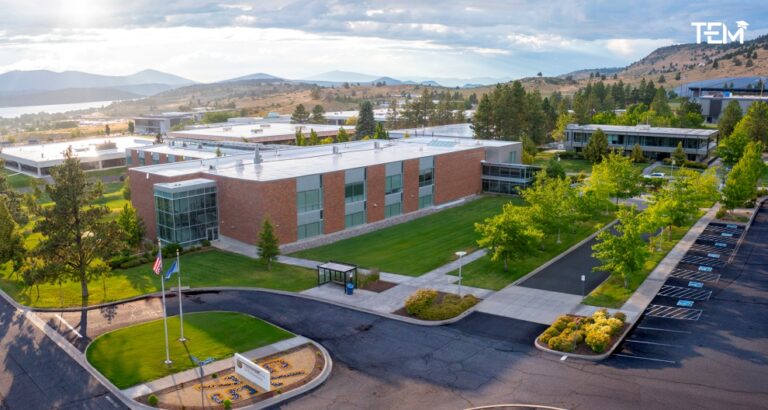
Higher education often promises opportunity, but its value is ultimately measured by what students can do with what they learn. As industries grow more complex and skills become more specialized, the demand for graduates who can move smoothly from classroom to workplace has only increased. Institutions that bridge this divide do more than award degrees. They help shape a capable workforce and support the communities they serve.
This need for practical, career-focused education became especially clear in the years following World War II. The country faced the dual challenge of reintegrating returning veterans and rebuilding an economy that required technical expertise. Traditional academic models alone could not meet these demands. What was needed was an approach rooted in application, where learning translated directly into work.
Oregon Institute of Technology emerged from this moment in 1947 with a clear and focused purpose. Established to provide technical education for returning veterans, the institution was designed from the outset to align education with workforce needs. Programs emphasized hands-on learning and problem-solving, ensuring that students gained skills they could immediately apply. This philosophy shaped not only what was taught, but how it was taught.
Over nearly eight decades, Oregon Tech has grown in step with the industries it serves. The university expanded its academic offerings, developed additional campuses, and built strong partnerships with employers and community organizations. While its footprint and reach have evolved, its core identity has remained consistent. Education at Oregon Tech is meant to be active, relevant, and grounded in real-world use.
The institution’s mission reflects this commitment. Oregon Tech prepares students to apply theory to practice, contribute positively to society, and enter their chosen professions ready to work from day one. Its vision extends beyond individual outcomes to a broader role as a polytechnic university serving Oregon and communities beyond the state. By connecting education with industry and community needs, Oregon Tech positions itself as a practical partner in economic and social progress.
In an era where outcomes matter as much as credentials, Oregon Institute of Technology continues to stand for an education that works because it is designed to be used.
An Academic Structure Designed Around Practice
Oregon Tech’s academic structure reflects the same practical mindset that shaped its founding. Rather than organizing programs around abstract disciplines, the university aligns its offerings with how work actually happens in the real world. The academic framework is built around two core colleges: the College of Engineering, Technology, and Management, and the College of Health, Arts, and Sciences.
Across both colleges, hands-on learning is not an add-on. It is embedded into the curriculum. Students spend significant time in labs, on applied projects, and in settings that mirror professional environments. Many programs also incorporate internships and direct collaboration with industry, ensuring that learning continues beyond the classroom.
What further distinguishes Oregon Tech is the role of its faculty and industry partners. Many instructors bring firsthand professional experience into their teaching, grounding theory in real situations that students are likely to encounter after graduation. Employers also play an active role in shaping curriculum, helping programs stay aligned with current workforce needs. As a result, students are not simply learning concepts. They are practicing their future professions long before they enter them.
Opening Doors through a Student-Centered Admissions Approach
Access to education matters most when the path to enrollment is clear. At Oregon Tech, the admissions process is designed to remove unnecessary complexity and help students move forward with confidence. Applications are structured to be straightforward, allowing prospective students to focus less on paperwork and more on preparing for their academic journey.
One of the ways the university simplifies entry is through direct admissions options. Students who earn Oregon Tech college credits while still in high school can transition smoothly into degree programs, shortening the distance between early exposure and full enrollment. This approach reflects the institution’s broader emphasis on practical pathways rather than rigid gates.
Equally important is Oregon Tech’s commitment to access for students from low-income families. The university supports these students through need-based financial aid, scholarships, and advising services that extend beyond admission. Outreach efforts and partnerships with high schools and community colleges play a key role in helping students understand their options, map degree pathways, and stay on track through completion. The result is an admissions model that focuses not just on who gets in, but on who succeeds once they arrive.
Leadership Focused on Purpose and Responsibility
Academic leadership at Oregon Tech is grounded in a clear belief that student success is a shared effort. Dean Neslihan Alp brings this perspective to her role, placing strong emphasis on student engagement, academic progress, and meaningful faculty support. Her approach reflects the university’s broader culture, where expectations are high but guidance is always within reach.
In her message to students and their families, Dean Alp speaks less about shortcuts and more about commitment. She encourages students to take ownership of their education and to actively use the resources available to them, from faculty mentorship to academic support services. Time at Oregon Tech, she reminds them, is not only preparation for a career, but also an opportunity to develop purpose and contribute to society. For families, her message is one of partnership, built on trust in a learning environment designed to support both professional growth and personal responsibility.
Growing and Diverse Student Community
Oregon Tech’s student body reflects both its statewide roots and its expanding reach. Students arrive from across Oregon, from other parts of the United States, and from abroad. Within that mix are first-time college students, transfer students, adult learners, and veterans, each bringing different goals and experiences into the classroom.
Recent enrollment trends point to steady momentum. In 2025, the university welcomed its largest freshman class in more than forty years, marking the second consecutive year this milestone was reached. Growth has been especially strong in online programs and at the Klamath Falls campus, signaling increased demand for flexible and place-based learning options.
At the same time, Oregon Tech continues to invest in early access to higher education. Through its dual credit program, high school students can earn college-level credits while still completing secondary school. This commitment to multiple entry points reflects the university’s broader goal of meeting students where they are and supporting them at every stage of their academic journey.
Supporting Different Ways of Learning and Belonging
Students do not all learn in the same way, and Oregon Tech designs its classrooms with that reality in mind. Teaching methods often blend traditional lectures with lab work, hands-on projects, and collaborative assignments. This mix allows students to engage with material in multiple ways, helping them understand concepts and apply them with confidence.
The university also recognizes that learning is shaped by cultural background and lived experience. These perspectives are reflected across the curriculum, campus programs, and student-led organizations, creating space for students to see themselves represented and heard. Support continues beyond the classroom through advising, tutoring, and peer mentorship, offering guidance at both academic and personal levels. Together, these strategies help create an environment where students are supported not just to persist, but to thrive.
Life beyond the Classroom
Life at Oregon Tech extends well beyond lectures and labs. Student life is shaped by a wide range of clubs, organizations, and campus events that encourage involvement and connection. These activities give students space to explore interests, take on leadership roles, and engage with peers in meaningful ways.
Athletics and recreational opportunities add another layer to campus life, offering outlets for competition, wellness, and teamwork. Many students also choose to participate in service initiatives or professional societies connected to their fields of study, blending personal interests with career development. Together, these experiences help students build relationships, develop practical skills, and create a sense of belonging that carries through their time at the university.
Leadership and Governance That Keep the Institution Moving
Behind Oregon Tech’s academic and student-facing work is a leadership structure designed for clarity and coordination. The university is governed by a Board of Trustees made up of leaders representing fields such as education, local government, technology, healthcare, communications, and business. This breadth of experience helps ensure that decisions are informed by both educational priorities and real-world perspectives.
Working alongside the Board, the President, Provost, Deans, and Department Chairs guide the university’s academic direction and day-to-day operations. Their leadership connects long-term planning with classroom realities, keeping programs aligned with institutional goals. Administrative teams support this work by overseeing areas such as enrollment, finance, facilities, student affairs, and advancement. Together, these roles form an integrated system that keeps the university operating smoothly while staying focused on student success.
A Commitment to Equity and Respect
Oregon Tech approaches equity and inclusion as essential to the quality of its academic and work environment. The university holds that when people with different backgrounds and experiences learn and work together, the result is a stronger and more complete educational experience for everyone on campus.
This belief is reflected in institutional policy. Oregon Tech is committed to treating all individuals equally and fairly, and to maintaining an environment free from discrimination and harassment. These principles guide campus practices and expectations, shaping a community where respect, accountability, and inclusion are part of everyday life rather than standalone initiatives.
Support Services That Extend Beyond Academics
Student success at Oregon Tech is supported by a range of services designed to address both academic and personal needs. From the start, students have access to academic advising and tutoring, helping them navigate coursework and stay on track toward graduation. Counseling and health services are also available, reinforcing the importance of well-being alongside academic progress.
Career development is a central part of this support system. Career services assist students with resume preparation, internship placement, and job search strategies, while maintaining strong connections with employers. Mentorship and networking opportunities further strengthen these efforts, linking students with alumni, faculty, and industry partners. Together, these services help students move from education to employment with confidence and clarity.
Looking Ahead with Intention
As Oregon Tech looks to the future, its direction remains closely tied to the needs of the workforce and the communities it serves. Growth is not pursued for its own sake. Instead, new programs, facilities, and partnerships are developed with a clear focus on relevance and long-term impact.
Academic expansion continues across the university, with particular momentum in the College of Engineering, Technology, and Management. New degree offerings such as Construction Management and Cybersecurity reflect fields where demand is rising, and practical expertise is essential. These programs build on Oregon Tech’s established strengths in applied education, preparing students for roles that require both technical knowledge and real-world problem solving.
Beyond academics, the university continues to invest in facilities and partnerships that support hands-on learning and industry collaboration. Relationships with employers and community organizations help ensure that curricula remain current and that students graduate with skills aligned to evolving professional standards. This forward-looking approach allows Oregon Tech to respond to change without losing sight of its core identity.
By continuing to connect education with practice, and innovation with responsibility, Oregon Tech positions itself to remain a meaningful contributor to workforce development and community progress in the years ahead.
Quote
“Our mission is to educate students to apply theory to practice, contribute to society, and enter their professions prepared to work.”
Also Read: The 10 Most Prominent Engineering Institutes of 2026