In Northwest Louisiana, the demand for skilled healthcare workers continues to grow. Hospitals need dependable nurses. Clinics rely on trained technicians. Long-term care facilities depend on professionals who understand both compassion and clinical precision. Meeting that demand requires more than classrooms. It requires institutions that can prepare students for the realities of healthcare work.
One such place is the Division of Nursing and Allied Health at Bossier Parish Community College, where healthcare education is closely tied to the needs of the surrounding community. The division was established with a clear purpose: to open pathways into healthcare careers while strengthening the region’s medical workforce.
Its mission is direct and practical. The division seeks to provide quality educational opportunities in nursing and allied health through strong classroom teaching, hands-on laboratory instruction, and meaningful clinical training. Just as important, it aims to serve the citizens of Northwest Louisiana by preparing graduates who can step into healthcare roles with confidence and skill.
That commitment has shaped a wide range of programs. Today, the division offers 29 academic pathways designed to meet different career goals and entry points into the healthcare field. These include 12 associate degree programs, 7 certificates of technical studies, 4 technical diplomas, and 6 career and technical certificates.
Each program follows the same guiding principle. Students should leave not only with academic knowledge, but with practical training that reflects the demands of real healthcare settings. Through this balance of theory and experience, the Division of Nursing and Allied Health continues to expand opportunities for students while supporting the healthcare systems that serve Northwest Louisiana.
Programs Designed for Exploration and Workforce Readiness
Healthcare education often asks students to make early decisions about their careers. Many arrive with a strong interest in healthcare but only a vague sense of where they belong. The Division of Nursing and Allied Health at BPCC approaches this reality with flexibility and range.
The college focuses entirely on undergraduate training through two-year or shorter programs designed to move students into the workforce quickly. Students can pursue associate degrees in fields such as diagnostic medical sonography, respiratory therapy, surgical technology, occupational therapy assistant, paramedic care, fire science, and practical nursing. Nursing students may also enroll in the Associate of Science program through either the traditional pathway or the LPN-to-RN transition track.
Beyond these degrees, the division offers technical diplomas and certificates in areas including medical assisting, phlebotomy, pharmacy technology, and emergency medical services. What sets the model apart is its advising structure. Every student selects both a Plan A and a Plan B. This approach encourages exploration across healthcare roles while improving retention and long-term success.
Training That Mirrors the Real World
For students preparing to enter healthcare, practice matters just as much as theory. The ability to handle equipment, respond to emergencies, and work inside clinical settings cannot be learned from lectures alone. It requires spaces where students can rehearse real situations before they encounter them in hospitals or clinics.
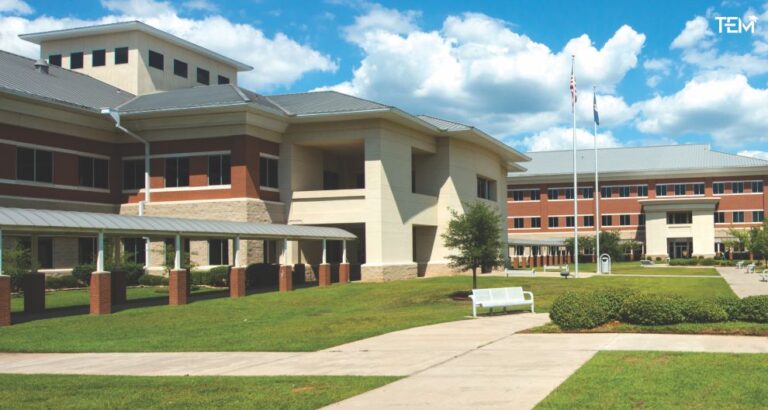
The Nursing and Allied Health building at the college was designed with that idea in mind. Several programs operate from this facility, including paramedic training, pharmacy technology, phlebotomy, anatomy and physiology, and nursing. Each space is built to resemble the environments students will eventually work in.
Inside the paramedic lab, students train using a full-size ambulance simulator along with a mock apartment where emergency scenarios can unfold. The nursing lab houses nineteen human simulators, including adult, infant, pediatric, and birthing models. Nearby rooms replicate hospital units such as ICU, obstetrics, pediatrics, and medical-surgical care. In another section, the pharmacy technician lab resembles a working retail pharmacy, complete with prescription software, pill counting stations, and sterile preparation areas.
Clinical Partnerships That Extend Learning beyond Campus
Hands-on training is built into every healthcare program at BPCC. To make that possible, the college works closely with hospitals and care facilities across the region.
Students complete clinical rotations at healthcare institutions such as Willis-Knighton Health System, CHRISTUS Shreveport–Bossier Health System, and Ochsner LSU Health Shreveport, along with several regional hospitals and specialty clinics. These rotations place students directly inside working healthcare environments, where they learn to navigate patient care, team coordination, and the daily pace of clinical practice.
The college has also experimented with new training models. BPCC recently launched Louisiana’s first LPN-to-RN nursing apprenticeship pilot. The program allows working nurses to complete their clinical requirements at their current workplace while continuing their education and moving toward RN licensure.
A Message Rooted in Student Success
Student outcomes remain the guiding measure of success for the Division of Nursing and Allied Health. That philosophy is shaped by Michael Whitaker, Dean of Nursing and Allied Health, who keeps the division’s priorities firmly tied to student achievement.
Michael approaches the role with a simple principle in mind. Programs must help students graduate, secure meaningful employment, and feel confident stepping into healthcare careers. “Our success will always be defined by the academic and professional success of our students,” he says.
That focus extends beyond coursework. Michael emphasizes a supportive learning environment where students receive personal guidance while developing the practical skills healthcare employers expect. At the same time, he encourages constant improvement within the division, regularly seeking feedback from faculty, students, and healthcare partners to strengthen both curriculum and training experiences.
A Snapshot of Student Reach and Outcomes
More than 6,000 students enroll each year at BPCC, attending classes across multiple campuses as well as through online programs. The student body reflects the varied communities of Northwest Louisiana, bringing together learners with different career goals, life experiences, and paths into higher education.
Within the healthcare programs, the results have been especially strong. Students in nursing have recorded a 98.72 percent pass rate on the NCLEX, the highest among both two-year and four-year nursing programs in Louisiana. The exam serves as the national licensing requirement for nurses entering professional practice.
These outcomes point to a program that places equal weight on academic rigor and practical preparation. Graduates leave not only with credentials but also with the confidence and clinical readiness needed to enter healthcare roles across the region.
A Campus Community That Extends Beyond Academics
Student life at BPCC moves well beyond lectures and clinical rotations. Across campus, students find opportunities to get involved, take on leadership roles, and connect with peers outside their programs.
Clubs and academic organizations play an important role in that experience. Groups such as Phi Theta Kappa give students a chance to pursue academic recognition while participating in service projects and leadership activities that complement their studies.
Athletics add another layer to campus life. The college’s Cavalier teams compete in intercollegiate sports, with baseball and softball programs that have earned strong national recognition. Whether through sports, student organizations, or service initiatives, these activities help students build confidence, expand their professional networks, and develop a sense of belonging within the campus community.
Preparing Students for the Demands of Modern Healthcare
Healthcare careers require more than technical training. Professionals must be able to think quickly, adapt to new technologies, and work effectively in fast-moving clinical settings. The Division of Nursing and Allied Health structures its programs with these expectations in mind.
The division offers a broad range of programs that prepare students for high-demand healthcare roles. These include nursing, respiratory therapy, surgical technology, paramedic care, physical therapist assistant, occupational therapy assistant, and diagnostic medical sonography. Each program is designed to address specific workforce needs while giving students a clear pathway into professional practice.
Training follows an integrated model. Students move between classroom instruction, simulation-based labs, and clinical placements with regional healthcare providers. This combination allows them to develop technical proficiency while strengthening the critical thinking and decision-making skills required in today’s healthcare environment.
Opening Doors to Healthcare Careers
Many students who pursue healthcare education are balancing work, family responsibilities, and financial pressures. At BPCC, the goal is to make sure those realities do not stand in the way of opportunity.
The college keeps its pathways into healthcare programs accessible through open admissions, financial aid options, and flexible program structures that support working adults and first-generation college students. These pathways allow students to begin their training without needing a traditional academic background or a full-time schedule.
Support also extends beyond academics. Through the Cavalier Care Center, students can access services that address everyday challenges, including food insecurity and emergency financial needs. By offering these forms of support, the college helps students stay focused on their studies and continue progressing toward graduation.
Support Systems That Carry Students Forward
Students rarely move through healthcare programs alone. Along the way, they rely on guidance, mentorship, and practical advice that help them stay on course. At BPCC, that support begins early and continues throughout a student’s academic journey.
Academic advisors work closely with students to plan their coursework and keep them progressing through their programs. When students need additional help with challenging subjects, tutoring services provide structured academic support. These resources help many students maintain momentum, particularly in demanding healthcare courses that require both theoretical understanding and technical skill.
Faculty members also play an important role as mentors. Many instructors come from clinical backgrounds and bring real-world insights into the classroom. Their guidance often extends beyond lectures, helping students understand workplace expectations, professional standards, and the responsibilities that come with patient care.
Career preparation is woven into this support system. Through counseling services, students receive help with resumes, interview preparation, and career planning. Clinical placements further expand those opportunities, allowing students to build professional relationships with hospitals, clinics, and healthcare providers across the region, connections that often lead directly to employment after graduation.
Expanding New Pathways in Healthcare Training
Healthcare systems continue to face workforce shortages, and education providers are being asked to respond with new training models. Several recent initiatives within the Nursing and Allied Health division reflect that shift.
One of the most notable developments is the LPN-to-RN Nursing Apprenticeship Program at BPCC. The program allows licensed practical nurses to continue working while completing the clinical training required to earn their RN credentials. Instead of stepping away from their jobs, nurses are able to advance their education within the same healthcare settings where they already practice.
The program has recently grown through partnerships with additional hospitals across the region. These collaborations expand the number of clinical placements available while giving healthcare employers a practical way to support the professional growth of their staff.
The initiative reflects a broader shift toward workforce-aligned education, where learning and employment move forward together. For many working nurses, it creates a practical route to career advancement while helping regional healthcare providers strengthen their clinical teams.
Dean’s Message
“I will maintain an unwavering focus on student success, placing the highest priority on attaining our goals for graduation rates and placement rates while giving our students a competitive return on their investment.
I will educate within a supportive learning environment focused on personalized, real-world education.
I will foster a culture in which we recognize the individual needs of our students. I will seek feedback and outside perspectives to constantly improve curricula content and student experiences.
I will define our success by the academic and professional success of our students.
The Faculty and Staff of the Nursing and Allied Health Division will promote integrity, accountability, and professionalism within each program and among every graduate.”
- Michael Whitaker, Dean of Nursing and Allied Health
Also Read: The 10 Most Admired Colleges for Health Professions