In higher education, titles often tell only the last chapter of a much longer story. The word dean suggests arrival. It rarely reveals the years of risk, doubt, and steady construction that come before it.
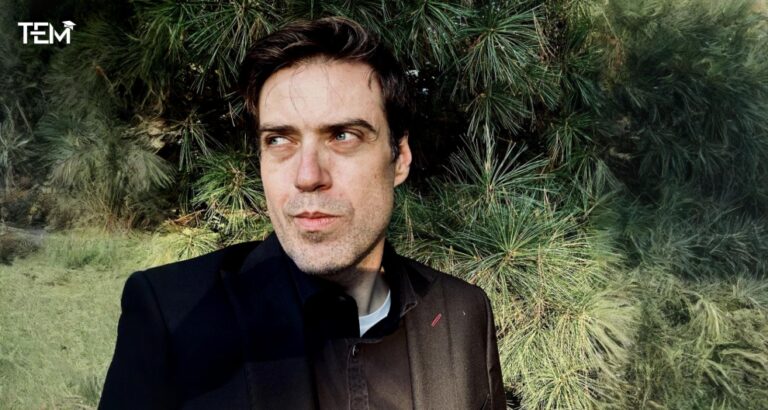
James Eckler’s path to becoming Dean of the Reap College of Creative and Professional Studies at Marywood University began with a first. He was the first person in his immediate family to complete a college degree. That achievement did not come with a roadmap. It came with resolve.
He earned both his undergraduate degree and two graduate degrees at the University of Florida, including a Master of Architecture and a Master of Science in Architectural Studies: Pedagogy. By his sophomore year, he had already begun asking questions that stretched beyond studio walls. “The broader questions of academia and architecture we experimented with were always fascinating to me,” he says. He did not want to design buildings alone. He wanted to shape the way architecture was taught and understood.
That decision led him into the pedagogy program and into the classroom. He taught at the University of Florida and later at the University of Cincinnati before arriving at Marywood with a rare assignment: build something new. He helped launch the School of Architecture, serving first as Program Coordinator and then as Director.
Today, he leads Reap College of Creative and Professional Studies, where Architecture sits alongside Business, Visual and Performing Arts, Education, the Humanities, and a PhD in Strategic Leadership. He has not simply joined institutions. He has built them.
Leading with Vision and Measured Growth
As dean, Mr. Eckler manages budgets, faculty, strategy, and long-term planning, but he speaks most about momentum. He works closely with each program to develop new initiatives, refine curriculum, and expand academic reach. “What I find truly rewarding,” he says, “is leading programs to author new ideas and innovate academically and pedagogically.”
One milestone stands above the rest. Under his direction, Marywood’s School of Architecture earned its first full accreditation. For him, that recognition marked more than compliance. It affirmed years of groundwork, faculty trust, and belief in a young program finding its footing.
An Interdisciplinary Framework with Purpose
Mr. Eckler leads Reap College with a structure that balances oversight and collaboration. He works alongside assistant deans who manage international compliance and key administrative functions, while directors guide their respective schools and ensure academic offerings stay aligned with student needs. The leadership team meets often and works toward shared outcomes rather than isolated goals.
The college advances Marywood University’s broader mission by preparing students to apply their expertise within real communities. Its interdisciplinary design allows Architecture, Business, Visual and Performing Arts, Education, and the Humanities to intersect, giving students room to shape paths that reflect both skill and curiosity.
Expanding Across Disciplines and Borders
Looking toward 2026 and beyond, Mr. Eckler has set a clear direction for Reap College: deepen interdisciplinary work and extend Marywood’s reach internationally. He believes professional programs, the arts, and the humanities should not operate in isolation. Instead, he encourages them to inform one another, creating academic models that differ from institutions that separate fields too strictly.
International growth remains a central priority. Through global partnerships, study abroad programs, and expanded degree offerings overseas, he aims to position Marywood for a workforce that operates across borders. He measures progress through hybrid programs, new certifications, and the growing presence of Marywood degrees beyond the United States.
Aligning Priorities with Practice
For Mr. Eckler, equity begins with process, not slogans. He relies on consistent and transparent program reviews to assess where resources flow and why. “Budgets are boring,” he admits, “but the budget indicates the priorities of the institution.” For him, spreadsheets tell a story. They reveal what the college values in action.
Allocation decisions are never made alone. He works with his leadership team to evaluate needs, assess impact, and ensure initiatives reflect shared goals. This collaborative approach keeps funding aligned with strategy and helps distribute opportunities in ways that support students across programs and backgrounds.
Measuring What Truly Matters
Assessment at Reap College does not follow a single formula. Mr. Eckler understands that each discipline carries distinct learning outcomes shaped by accrediting bodies and professional standards. Architecture does not measure success the same way as business or education might. His role is to ensure each program stays current and delivers an education that holds value in today’s market.
Yet numbers alone do not satisfy him. Retention rates and grades offer data, but he looks deeper. He pays close attention to student feedback and asks whether students see the relevance of their work. Are they connecting ideas across courses? Do they recognize growth beyond transcripts? Those questions guide his evaluation of institutional effectiveness.
Leadership in Motion
Mr. Eckler does not view leadership tests as rare events. He sees them as steady, often quiet pressures that surface in daily decisions. The most demanding moments, he explains, come not from crisis but from priority. When the college advances certain initiatives, others must wait. That reality can unsettle even committed faculty and staff.
His response centers on communication. He makes space for conversation, explains the reasoning behind decisions, and reinforces that deferred ideas are not dismissed ones. Helping colleagues feel heard and valued, even when timing differs, requires patience. “Sometimes,” he acknowledges, “just communicating that people need to wait is the biggest challenge.”
A Commitment to Access
When asked what he would change about higher education with unlimited resources, Mr. Eckler does not outline grand architectural plans or sweeping reforms. His answer is direct. He believes education should be broadly accessible.
For him, access is not a slogan. It shapes how institutions think about tuition, outreach, program design, and support systems. If given the means, he would remove as many barriers as possible so that opportunity does not depend on background or circumstance. Expanding accessibility, in his view, strengthens not only individuals but the communities they will one day serve.
Building Without a Finish Line
Mr. Eckler does not describe the future as a fixed destination. He speaks of expansion and renewal as ongoing work. A major focus remains on international growth. He wants Marywood’s presence to extend further through global partnerships and broader academic reach.
At the same time, he concentrates on the curriculum. Integrating current content and emerging technologies into every discipline is not a one-time upgrade. It requires constant review and adjustment. There is no final version of a program, only its next iteration. For Eckler, progress lies in staying responsive to a world that refuses to stand still.
Beyond the Office
Outside the demands of leadership, Mr. Eckler protects time for family, travel, and the kitchen. He enjoys cooking as a creative reset. When schedules allow, he still designs and builds. Making things, even now, keeps him connected to the craft that first shaped his career.
A Philosophy of Empowerment
Mr. Eckler believes education extends beyond information. Its deeper purpose, he says, lies in empowerment. A strong education equips people to seek knowledge independently and make informed decisions. In doing so, it serves not only personal growth but also the well-being of communities they influence.
Quote
“The fundamental mission of education has more to do with empowerment than knowledge.”
Also Read: The 10 Leaders Transforming Education, 2026