
In small, close-knit communities, schools often carry more than the responsibility of education. They shape identity, opportunity, and the long-term health of the place itself. In the Arkansas Delta, where generational challenges meet great local pride, educational leadership is not just about academics. It is about deciding what message young people carry with them when they cross the graduation stage. That question sits at the center of Ryan Halbert’s work.
Long beforeRyan Halbert became the superintendent of the Palestine-Wheatley School District, he faced challenges as a student struggling with dyslexia. This learning difficulty made school a challenge for him, but a few dedicated teachers were determined to help him succeed. Their unwavering support left a lasting impact and shaped his understanding of leadership. He began his career in the classroom, teaching middle school science and coaching football, where he learned that trust is built through individual relationships.
A defining moment came early in his career at a Palestine-Wheatley graduation. A visiting superintendent told students to leave the Delta and never return. Mr. Halbert heard resignation in those words, and he rejected it. From that day, he committed himself to leading the very district others were willing to abandon.
Mr. Halbert’s mission is rooted in improving life across the Arkansas Delta through education, with a sharp focus on early literacy and life after high school. Guided by his Christian faith, he leads through service. “If Christ can wash feet,” he says, “I can serve in whatever way my community needs.”
Leadership in Practice
As superintendent, Mr. Halbert treats leadership as a daily responsibility to students and families. “Every decision has to strengthen their future,” he says, whether it involves instruction, operations, budgeting, or community relationships. One of his earliest priorities was rebuilding the district’s special education program. Within his first year, he established compliance, a clearer structure, and higher-quality services.
Mr. Halbert also introduced learning walks, Tier 1 instructional expectations, and stronger data systems to support teaching. Innovation has followed through AI-supported reading interventions, flexible micro-school models, and workforce pathways tied to real employment. Alongside these changes, he focused on restoring trust through transparent communication and partnerships, helping rebuild unity and pride across the district.
Driving Systemic Change
Since stepping into the superintendent role, Mr. Halbert has centered his work on reforms built to last. “Programs come and go, but systems carry a district forward,” he explains. His initiatives emphasize student engagement through structured learning walks and clear feedback cycles. Early literacy has been strengthened with AI-driven tools that give teachers real-time insight into student needs.
Mr. Halbert has also prioritized safety, introducing the Centegix crisis alert system and leading phased ADA compliance upgrades. Beyond academics, he expanded workforce readiness through ACT WorkKeys, industry certifications, and college partnerships. Teacher support remains central, with ongoing coaching, professional development, and a collaborative, data-informed culture that gives schools consistency and direction for long-term growth.
Vision for the Years to Come
Mr. Halbert’s vision for the years ahead is focused and measurable. “Clarity matters,” he says. “If people know where we’re going, they can help get us there.” His strategy rests on three priorities. The first is stronger literacy and numeracy through consistent Tier 1 instruction, coaching, and aligned materials. The second is building a teacher pipeline that attracts and retains educators who feel supported and motivated to grow.
The third is flexibility, with expanded micro-schools, virtual options, workforce preparation, and enrichment programs. Halbert plans to track progress through student growth, early literacy benchmarks, ACT and WorkKeys results, post-secondary outcomes, staff retention, and community engagement, keeping the district accountable to real results.
Equity in Action
For Mr. Halbert, equity is practical, not theoretical. “It means every student has what they need to succeed,” he says, regardless of background, income, ability, or circumstance. The district closely monitors participation, performance, and access across student groups to identify gaps early. Investments are made with intention, from technology and intervention services to wraparound supports and expanded learning opportunities.
He is clear that being rural should not mean settling for less. His budgeting and long-term planning are guided by a simple belief: students in the Arkansas Delta deserve the same quality of resources and opportunities found in larger districts.
Measuring What Matters
Mr. Halbert believes progress has to be visible. “If we’re serious about growth, we have to measure it honestly,” he says. The district tracks a broad set of indicators, starting with K–3 literacy and numeracy benchmarks and extending to formative and summative assessments. Learning walk data helps gauge student engagement, while ACT, WorkKeys, graduation rates, and postsecondary enrollment reflect long-term outcomes.
Attendance, discipline, and school climate trends offer insight into daily culture, and teacher effectiveness is supported through coaching cycles. Together, these measures provide a clear picture of both academic performance and district health, allowing leaders to respond quickly and with purpose.
A Defining Moment
On October 1, during Ryan Halbert’s first year as superintendent, he faced a challenge that no leadership training could adequately prepare him for. The sudden passing of Randy Cannon, a longtime principal, community leader, and Halbert’s personal mentor, sent the entire district into shock. Grief swept through classrooms, staff rooms, and families, while Halbert mourned the loss of someone who had significantly influenced his career path.
At the same time, the work of the district could not stop. As a new superintendent, Mr. Halbert had to hold the community together while guiding students and staff through heartbreak. He leaned on his faith and on the strength of his team, believing that leadership means showing up fully in the hardest moments. That experience reshaped how he leads, grounding his approach in compassion, steadiness, and a deep responsibility to care for people first.
If Resources Were Unlimited
With unlimited resources, Mr. Halbert would focus on removing the barriers that hold students and teachers back. His priorities would include universal early childhood education, smaller class sizes, and highly trained instructional specialists dedicated to coaching teachers.
He would expand mental health services, modernize facilities and technology, and strengthen teacher pipelines. Incentive-based pay tied to student growth would reward excellence, ensuring opportunity is shaped by talent, not zip code.
Life beyond the Office
Outside of work, Mr. Halbert stays grounded through family. Time with his wife and children provides balance and perspective. He is an avid sports fan, especially when it comes to the Palestine-Wheatley Patriots and the Arkansas Razorbacks. Cooking, gardening, and working on his land offer a way to slow down, recharge, and remain closely connected to the community he serves.
Looking Forward
Mr. Halbert’s long-term vision reaches beyond district lines. He aims to show what is possible in rural education through AI-driven literacy tools, micro-school networks, high-engagement instruction, and advanced workforce pathways.
By pushing innovation where it is least expected, he wants Palestine-Wheatley to serve as a national model. At the core of that vision is a stronger Arkansas Delta, one where young people choose to stay, serve, and lead.
A Closing Perspective
“People over programs, and progress over perfection,” says Ryan Halbert, capturing the heart of his leadership philosophy. He strives to lead with humility, purpose, and the love of Christ. By equipping students with strong literacy, meaningful opportunities, and the confidence to shape their future, he believes education can transform not just individual lives but the entire Arkansas Delta. For Mr. Halbert, rural schools are not defined by limits, and they are places of immense potential. At Palestine-Wheatley, that potential is realized one student at a time.
Quote
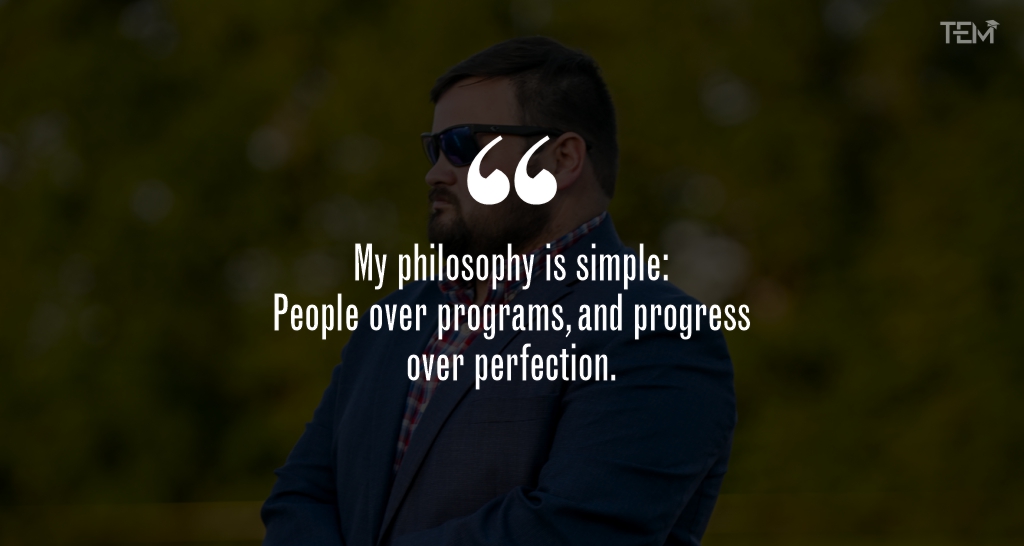
“My philosophy is simple: People over programs, and progress over perfection.”
Also Read: The 10 Leaders Transforming Education, 2026