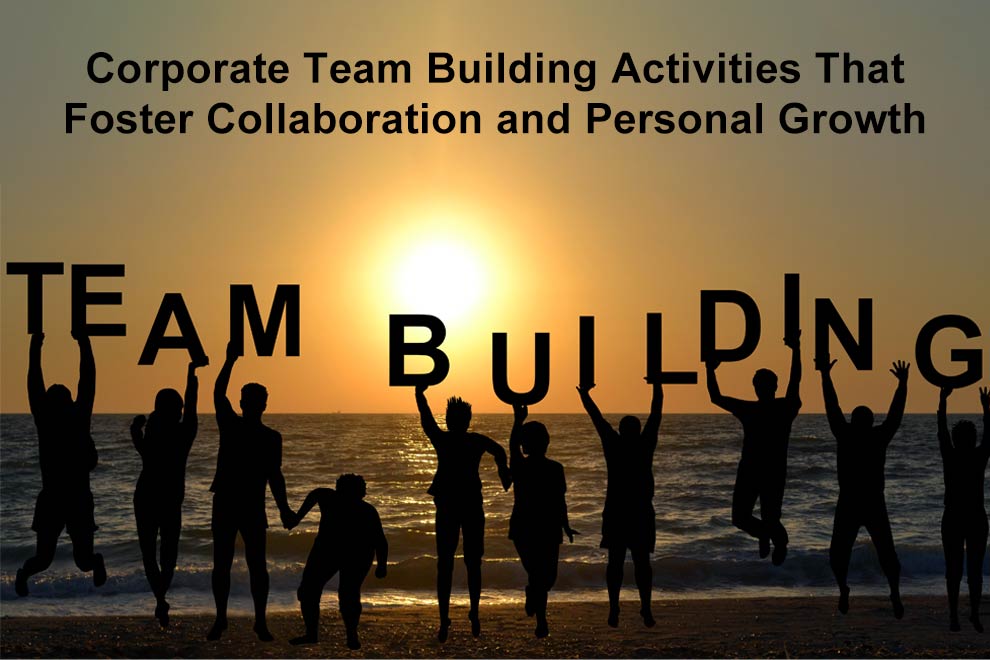
Retreats fill calendars, yet desks welcome back unchanged employees. A calendar full of exercises does little if people leave without new insight or stronger trust.
Effective corporate team building demands more than games and catered lunches for American employees. Discover practical ways to build collaboration and real growth.
Silent Strategy Games
Communication habits surface quickly when speech disappears. Silent strategy games, often styled as an escape room, forbid verbal communication. Written notes, gestures, and observation guide the process.
Some organizations take this concept outdoors through physical challenge courses. Rope courses and climbing towers demand coordination under fatigue and uncertainty. The physical setting of these corporate team building activities heightens awareness of trust and shared responsibility.
Dominant personalities must adjust, while quieter members gain space to contribute. Frustration often appears, then gives way to creative coordination that reshapes team dynamics. Debrief discussions examine how daily meetings mirror those patterns.
Sharper tone and clarity emerge through disciplined active listening. The exercise encourages patience and deliberate expression. A team building event benefits from moments that challenge routine behavior.
Skill Swap Labs
Offices hide quiet talents that never appear in job descriptions. Hidden talents surface, from photography skills to clear budgeting lessons. Employees lead short sessions built around personal strengths rather than formal job duties.
Participants rotate in small groups, spending twenty minutes in each session. Conversation flows easily because the subject feels personal and voluntary. Public speaking improves naturally, boosting employee welfare and supporting professional development programs. Listeners gain respect for colleagues they once viewed through narrow roles.
At the end, reflection cards prompt each person to note one skill worth pursuing. Managers can track new mentorship pairings sparked by these sessions. Growth becomes visible in daily collaboration, not only in workshop photos.
Rotating Role Challenges
Misunderstandings often start with assumptions about someone else’s workload. By rotating roles, team members spend a full day working inside another department’s daily routine. For instance, marketing joins operations meetings, while finance shadows sales calls. This exposure eliminates assumptions and strengthens team dynamics.
Participants record bottlenecks they encounter and moments that surprise them. Later, debrief circles invite honest reflection through focused brainstorming sessions. Blame fades when people witness real constraints and competing priorities.
Future projects benefit from realistic timelines and clearer communication. Individuals develop adaptability and sharper problem-solving in unfamiliar settings. Empathy grows from direct contact, not policy memos.
Community Impact Projects
Purpose unites teams in ways internal targets rarely achieve. Local schools and nonprofits gain support through sustained service and charity events. Instead of a single volunteer day, the initiative runs for several weeks with defined roles.
Teams plan milestones, divide responsibilities, and deliver measurable outcomes. Titles fade, allowing healthier team dynamics to emerge. Emerging leaders step forward because the environment feels less formal.
Participants often report renewed motivation upon returning to regular tasks. Participating in charity events broadens perspective and sharpens ethical awareness. Team building events gain depth when they link company effort with public good.
Reflection Workshops
Some teams need space for honest conversation more than physical challenges. Guided conversations examine work styles using a clear facilitation method. Participants complete short assessments before meeting in facilitated groups.
Discussion focuses on how colleagues prefer feedback and handle conflict. Misinterpretations surface and receive thoughtful clarification. Psychological safety grows when people hear one another without interruption.
Each attendee selects one development goal and pairs with an accountability partner. Follow-up sessions occur over sixty days, not just one afternoon. Corporate team building succeeds when insight turns into sustained action.
Problem Labs
Abstract puzzles rarely address daily frustrations inside an organization. Pressing operational issues connect daily work with long-term customer success. Onboarding and approvals improve through tools from design thinking workshops.
Cross-functional groups analyze root causes and draft practical solutions. Participants present proposals to leadership and receive structured feedback. The process builds analytical thinking alongside presentation confidence.
When leadership adopts viable ideas, momentum spreads across departments. Visible contributions reshape policy and strengthen team dynamics. A team building event feels purposeful when outcomes reach beyond the workshop room.
Growth Panels
Employees rarely hear honest accounts of failure within company walls. Respected staff members speak candidly about career turning points and hard-earned lessons. Grounded discussion unfolds with support from experienced event planners.
Trust deepens when vulnerability enters professional dialogue. Teams collaborate more openly after hearing authentic experiences. Corporate team building thrives in environments where asking for help feels safe.
Innovation Sprints
Fast-paced innovation sessions energize even seasoned teams. Intensive sessions unite cross-functional teams, even during virtual events.
Time limits force clear delegation and focused thinking. Instead of trophies, organizations offer resources to implement the strongest ideas. Clear commitment appears when high-tech A/V enhances presentations.
Creativity flourishes when participants know their concepts may reach production. Strategic thinking sharpens under defined constraints. Team building activities prove their value when fresh ideas move into practice.
Mentorship Circles
Remote work can isolate employees despite constant digital contact. Monthly discussions continue in person or through virtual events.
Facilitator roles rotate so everyone practices guiding dialogue. Accountability grows as participants revisit goals at each session. Cross-department ties grow as team builders manage logistics at a conference center with strong entertainment options and dependable food and beverage.
Consistency matters more than spectacle in this setting. Employees gain clarity about their direction and feel supported in pursuing it. Thoughtful corporate team building activities often look simple yet carry lasting impact.
Conclusion
Companies thrive when employees trust one another and understand their own strengths. Team building events that encourage empathy, reflection, and shared problem-solving produce stronger results. Excellent team dynamics carry maturity into daily work, where collaboration shapes real success.