In the South Bay area of Los Angeles County, public schools often reflect the character of the neighborhoods around them. They serve families who value stability, opportunity, and forward movement. Over time, some campuses grow into something more than educational spaces. They become institutions that carry both memory and momentum.
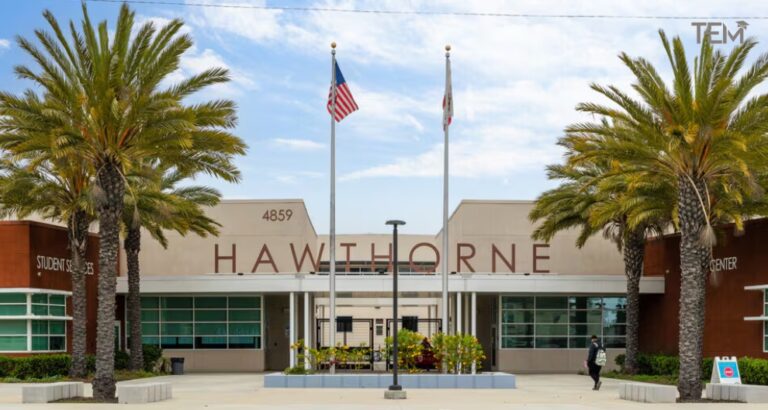
Founded in 1951, Hawthorne High School stands firmly in that category. For more than seven decades, it has served as a central part of the community. Many know it as the “Home of the Beach Boys,” a title that ties the school to one of California’s most recognizable music groups. It is also the alma mater of Grammy-winning artist Tyler, the Creator, who was recently featured by the Los Angeles Times for his technological contribution to the graduating class. These milestones form part of the school’s story, but they represent only a portion of its identity.
In recent years, Hawthorne High School has undergone major renovations that reflect purposeful growth. The campus now houses two technical academies and a dedicated technical career pathway, alongside varied academic programs designed to meet diverse student interests. The structure signals intent. Students should graduate prepared for real options.
The school’s mission focuses on providing a safe and healthy learning environment supported by rigorous coursework and quality instruction. Its vision is direct and practical. Every student should graduate academically competitive and self-reliant, ready for college and careers. More importantly, each student should develop the drive to solve problems and contribute positively to society.
Hawthorne High School continues to evolve while remaining grounded in its community roots, preparing students not only to graduate but to move forward with purpose.
Engineering the Future from Day One
Hawthorne High School became the first high school in California to adopt the Project Lead the Way model, setting a clear direction for its academic structure. However, the school is not merely a participant in technical education; it is a driver of it. Within the School of Manufacturing and Engineering, students take one career technical course every year alongside their core classes.
The School has effectively built a modern manufacturing and product development shop inside of a high school. Technical education here has deep roots, but what began as traditional shop classes has evolved into a powerhouse engineering pathway shaped by digital design, CNC machining, aerospace manufacturing, and advanced prototyping.
Hawthorne High School is not following the lead of community colleges and industry; it is a major driver of dual enrollment development and success. By graduation, students earn not only a high school diploma but also 12 dual-enrollment credits from El Camino College and a Certificate of Accomplishment as a Mechanical Engineering Design Technician.
Leadership Rooted in Experience
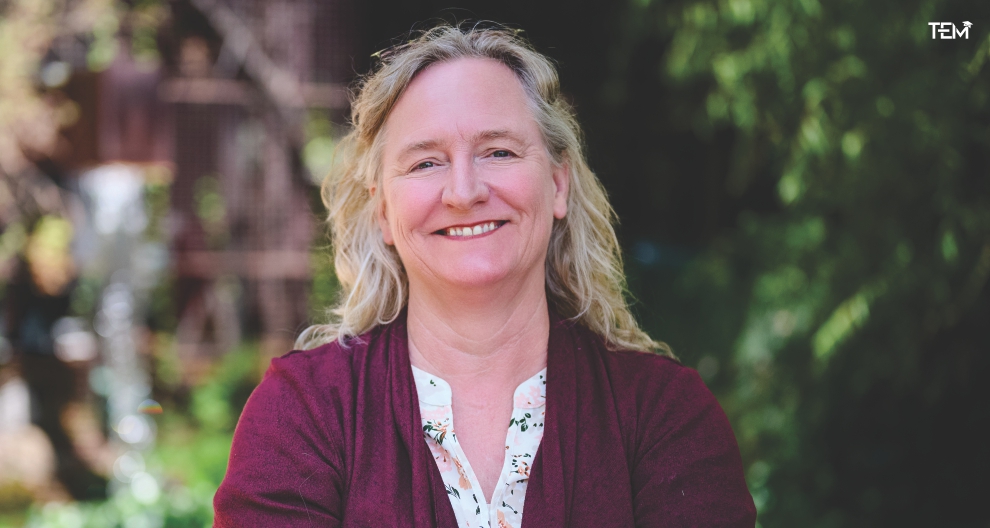
The institute draws its soul and stability from the coordinator of the Manufacturing and Engineering Academy, Lucas Pacheco. His leadership is defined by a powerful, deeply personal full-circle reality: he was once a kid standing in the exact same shop he now runs. He did not arrive at this role through theory alone. He chased a dream that started in these very classrooms, and he returned with an emotional commitment to intentionally recreate that same transformational opportunity for a new generation.
Mr. Pacheco walked these halls in the early 1990s. He grew up in a family of builders. His grandfather, a self-taught engineer who emigrated from Indonesia, introduced him to technology. His father worked as an electrician and mechanic. Aerospace machinists filled his extended family. Making things was normal.
A life-altering moment arrived right in the Hawthorne High School shop when, as a student, he machined emergency parts for a racing team competing in the Long Beach Grand Prix. Seeing a car race on television using a part he made with his own hands changed the trajectory of his life. Today, his current students attend and work at that same Long Beach Grand Prix each year; a testament to his dedication to replicating the experiences that shaped him.
He later discovered he had dyslexia while studying at El Camino College, transferred to Cal State Long Beach, and returned to Hawthorne to ensure current students have the same chances he did. “I don’t try to turn kids into machinists or engineers,” he says. “I just open the door. They figure out the rest.”
Milestones That Define the Program
Over the decades, the Manufacturing and Engineering Academy has proven that a public high school can operate as a credible, advanced engineering environment. Students do not simulate industry. They actively participate in it, driving workforce development forward. Hawthorne High School is not simply following external partners; it is actively part of the ecosystem. The academy acts as a vital, highly respected pipeline, supported by legacy aerospace giants like Northrop Grumman and intimately connected to the fast-paced hard tech startup culture like Hadrian. These industries do not merely sponsor the school; they actively engage with and need the talent Hawthorne High School produces.
Students have contributed to aerospace initiatives connected to NASA programs. In one milestone, they manufactured parts for NASA’s Jet Propulsion Laboratory that are now aboard the International Space Station. During the COVID-19 pandemic, the shop shifted production to support first responders, producing protective masks for nurses, firefighters, and police officers.
For 24 years, the academy also competed as an award-winning First Robotics Competition team. Team 207 earned championships while teaching generations of students to design and innovate. The program has since transitioned toward electrical vehicle racing, continuing its commitment to advanced technical competition and applied engineering.
Open Access with Structured Support
Hawthorne High School approaches admissions with clarity and openness. As a Title I school, it serves a community where many families qualify for additional academic support. That designation is not symbolic. It allows the school to provide expanded services, targeted interventions, and structured resources designed to strengthen student outcomes.
Admission to the school follows district guidelines, and once enrolled, every student has equal access to its academic pathways. The Manufacturing and Engineering Academy does not operate on selective screening or performance thresholds. Any student who shows interest may join. The expectation is not that students arrive prepared for technical rigor. The expectation is that they are willing to learn.
Faculty members then build the structure around them. The school provides instructional support, tutoring, and targeted interventions to help students meet academic demands. Rather than filtering applicants, Hawthorne High School focuses on creating conditions where committed students can succeed, regardless of financial background.
Enrollment and Student Representation
Hawthorne High School’s Manufacturing and Engineering Academy currently serves 190 students, a number that reflects steady participation and sustained interest in the program. While the academy operates within the larger high school community, its outcomes stand out. The academy maintains a 100 percent graduation rate, compared to 97 percent across the general high school population. That difference may appear small on paper, but in practice, it represents consistent academic follow-through.
The student body reflects the broader diversity of the community. The academy enrolls English learners and students with special needs alongside traditional college-bound students. Representation spans different academic backgrounds and learning profiles. This mix shapes the classroom environment in practical ways. Instruction must remain adaptable, and support systems must remain active.
Rather than narrowing its reach, the academy continues to serve a broad range of learners while maintaining high completion rates. The data shows that access and performance can operate together.
Meeting Students Where They Are
Hawthorne High School serves a student population with varied learning styles, academic starting points, and cultural backgrounds. The school responds with structure rather than assumption. Teachers rely on data-driven instruction to identify where students need support and where they are ready to advance. Instruction adjusts based on performance, not guesswork.
Students choose from multiple academic pathways, including technical academies, career-focused programs, and college-preparatory tracks. This flexibility allows them to engage with coursework that matches their strengths and long-term plans. Learning feels more connected when it reflects personal direction.
Cultural responsiveness remains part of daily practice. Faculty integrate culturally relevant curriculum and maintain active partnerships with families and community organizations. Staff training emphasizes equity and restorative approaches, ensuring discipline and support remain constructive.
Beyond academics, students access counseling, academic advising, tutoring, and social-emotional learning programs. The goal stays clear. Every student should have both the tools and the environment needed to succeed.
Student Life and Real-World Exposure
Student life at Hawthorne High School balances school spirit with opportunity. The campus promotes inclusion and connection, encouraging students to participate rather than observe from the sidelines. This year’s motto, “Make it Memorable: Memories start by showing up,” reflects that mindset. Clubs, leadership groups, performing arts, and athletics give students multiple ways to build community and represent Cougar pride.
For students in the Manufacturing and Engineering Academy, enrichment extends beyond campus. They may enroll in the Aero-FLEX summer pre-apprenticeship program and apply for paid summer internships with Hadrian. Juniors also have the opportunity to intern with Boeing for high school credit. Selected upperclassmen attend the Long Beach Grand Prix to collect manufacturing data using 3D scanning technology. Ongoing mentorship with Northrop Grumman connects students with industry professionals, while job shadowing, recruitment events, and networking opportunities run throughout the year, linking classroom learning to career pathways.
Structured Support beyond the Classroom
Student support at Hawthorne High School extends well beyond instruction, with a specialized organizational structure ensuring no student falls through the cracks. While the high school features multiple specialized programs, each guided by its own dedicated coordinator, Lucas Pacheco exclusively coordinates the Manufacturing and Engineering Academy. This focused leadership allows him and his engineering teachers to deeply monitor academic progress and professional growth within this specific pathway. Their role goes beyond curriculum delivery; they guide students through real-world preparation.
A dedicated CTE Pathway Specialist supports dual enrollment, internships, field trips, guest speakers, campus tours, and program logistics. This position ensures that opportunities do not remain ideas but move into action. Students also have access to an on-site College and Career Counselor who assists with postsecondary planning. An intervention specialist tracks attendance and academic progress, providing additional structure for students who need it.
Support continues through partnerships. A counselor from El Camino College visits weekly to assist with applications, enrollment, and transcripts. A representative from the South Bay Workforce Investment Board conducts workshops and helps students apply for internships and apprenticeships, strengthening their transition from school to career.
Building the Next Phase of Technical Education
Hawthorne High School is reshaping what a traditional high school shop can become. The goal is clear. The campus is rebuilding that space into a modern engineering lab that mirrors the pace and structure of advanced manufacturing environments.
One major initiative centers on scaled Formula SAE-style vehicles. These projects align with the energy and automotive sectors and introduce students to hybrid systems, energy storage, drivetrain integration, wiring, and system-level problem-solving. Students do not complete isolated exercises. They move through a full development cycle. They design, build, test, and refine using real materials and firm deadlines. Mechanical design, electrical systems, CNC machining, and digital tools all operate together.
Formula SAE serves as a long-term pipeline model that actively drives workforce development. The vision connects high school students to college design teams, internships, and technical training that lead toward aerospace, defense, electric vehicle, and energy industries. The program is deeply integrated into the local ecosystem, ensuring that curriculum and equipment reflect the rigorous demands of both legacy aerospace companies and the burgeoning hard tech startup culture. These companies actively engage with and value the students, knowing that Hawthorne produces the precise talent they need to innovate. Today, numerous alumni of the academy work full-time within these very companies, proving that the Hawthorne pipeline is a vital reality.
Leadership Structure and School Operations
Hawthorne High School runs on a leadership structure built around coordination rather than hierarchy alone. The principal sets direction and oversees campus-wide priorities, while an administrative team supports daily execution. Associate principals manage core areas such as academic programs, student services, and operational logistics. This division of responsibility keeps decision-making focused and responsive.
Beyond central administration, site leadership extends into departments and specialized programs. Department chairs guide curriculum alignment and instructional consistency within subject areas. Student support staff oversee counseling services, academic advising, and intervention programs to ensure students remain on track. Specific program coordinators and academy coordinators manage pathway-specific initiatives, industry partnerships, and enrichment opportunities.
Each role connects to the others through regular collaboration. The structure prevents gaps between instruction, student services, and operations. Instead of functioning in isolation, leadership teams align efforts around shared academic goals and student outcomes, allowing the school to operate with stability and clarity.
Advancing Diversity, Equity, and Inclusion
Hawthorne High School approaches Diversity, Equity, and Inclusion as daily practice rather than a standalone initiative. The goal remains clear. Every student should feel seen, respected, and supported inside the classroom and across campus.
Culturally responsive teaching anchors instruction. Teachers design lessons that reflect the backgrounds and lived experiences of their students, making learning relevant and grounded. Restorative practices guide discipline, focusing on accountability and repair instead of exclusion. Ongoing professional development ensures staff continues to strengthen their understanding of equity and inclusive instruction.
Targeted programs provide structured support for English learners, students with disabilities, foster youth, and other historically underserved groups. These supports extend beyond academics and include social-emotional resources, tutoring, and counseling access. The site equity coordinator regularly reviews performance data to identify gaps and respond with specific action steps.
Through consistent evaluation and intentional programming, the school works to ensure equitable access to rigorous coursework, enrichment opportunities, and long-term success.
Quote
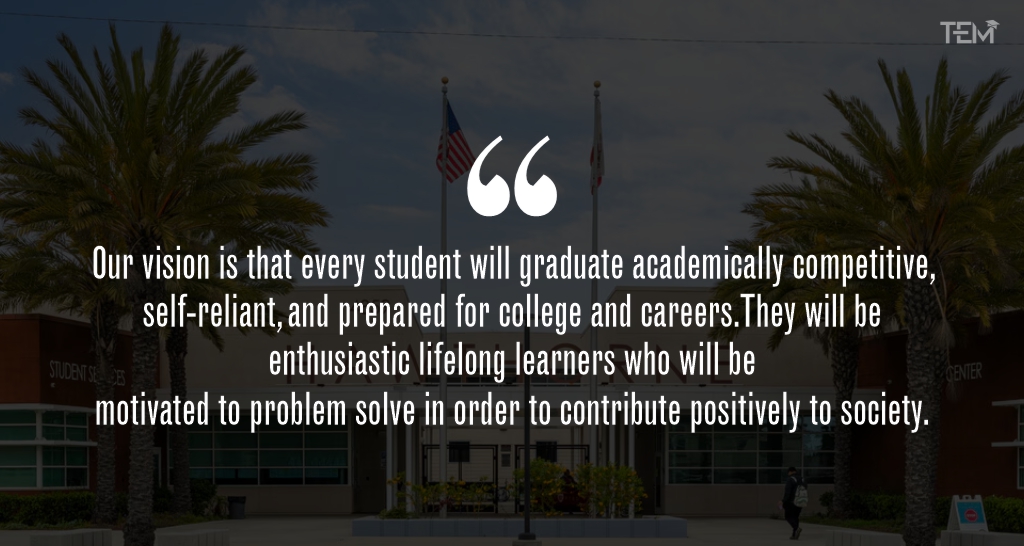
“Our vision is that every student will graduate academically competitive, self-reliant, and prepared for college and careers. They will be enthusiastic lifelong learners who will be motivated to problem solve in order to contribute positively to society.”