In Wheatland County, agriculture is not an abstract idea. It shapes routines, livelihoods, and the way families think about the future. Yet for years, much of what students learned in school sat apart from that reality. Classrooms moved in one direction, while life outside them moved in another. The question was not whether agriculture mattered. It was why it had so little space in everyday learning.
Rural Route Agriculture Academy began as a response to that disconnect. The school took shape around a simple belief. Education should reflect the world students already live in, while preparing them for the one ahead. Instead of treating agriculture as a topic tucked into a unit or elective, the academy places it at the center of the learning experience.
What makes the approach distinct is how learning happens. Students work through ideas by doing, not memorizing. Projects and real tasks guide the day, helping them understand agriculture as both practice and system. They see how food is produced, how land is managed, and how choices carry long-term effects.
The academy’s vision keeps this grounded. It aims to build a daily environment where students grow their understanding of agriculture, sustainable food production, and environmental responsibility. These ideas show up in everyday work, not just in theory.
Its mission adds direction. Students prepare for roles within agriculture while developing skills that carry across paths. They learn teamwork, communication, decision-making, and leadership. The school also focuses on individual strengths, allowing each student to build confidence at their own pace.
Guiding principles shape the structure. Sustainability and innovation remain central, while strong ties to the local community keep learning relevant. Subjects connect across disciplines, showing how agriculture links with science, technology, and society. At the same time, the academy supports personal growth, encouraging responsibility, collaboration, and respect for different strengths.
A Structure Rooted in Community and Practice
Behind the academy sits the Agriculture Charter School Society, the body that ensures the school stays true to its purpose while meeting Alberta Education standards. This balance shows up clearly in how learning is delivered. The curriculum follows provincial guidelines, yet it comes alive through project-based work, hands-on experiences, and a steady focus on land stewardship.
The team reflects this same intent. Alberta-certified teachers lead the classrooms, supported by leadership that brings together experience in education, agriculture, and child development. Their combined perspective shapes a setting that feels both structured and flexible.
Located at the Global Training Centre just outside Strathmore, the school organizes students in blended grades, encouraging collaboration across age groups. This creates natural mentorship and builds practical skills early on. The academy mainly draws families from rural and small-town communities nearby, especially those who value agriculture and outdoor learning, while remaining open to any family seeking a more grounded approach to education.
Learning That Moves Beyond the Classroom
The Alberta K–12 curriculum at the academy does not stay confined to textbooks or fixed lesson plans. It takes shape through daily work that feels real, immediate, and connected to the land. The rural setting plays a central role, turning the surrounding environment into an active part of the learning process.
A key example is the integration of 4-H projects into the school day. These are not treated as extras. They form the backbone of how students meet grade-level outcomes. Whether caring for animals, managing gardens, or tracking growth and production, students build skills in science, math, and language through direct experience. They document their work, reflect on progress, and present their findings, strengthening both academic and practical abilities.
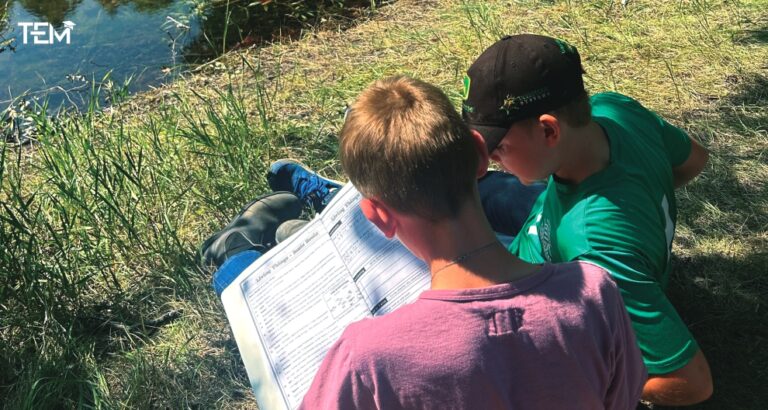
Learning extends further across the property. Students study local ecosystems through hands-on observation, from pond life to bird habitats. The farmyard introduces them to the full cycle of food production, while community programs bring their work into shared spaces, linking education with responsibility and participation.
Leadership with a Personal Stake in Every Student
Strong leadership shapes how a school feels on an ordinary day, and here that influence is easy to notice. Superintendent Karen Smith and Principal Tracy Desmet have guided the academy from its early stages to a working school where students are beginning to find their footing. Seeing that transition, from idea to lived experience, has carried real weight for both.
Their approach reflects a shared set of priorities. Education, agriculture, and family are not treated as separate tracks. They are woven into the way the school operates, shaping both learning and relationships within it. This creates an environment where students are supported not only in their studies but in how they grow as individuals.
The message they offer to families stays grounded. Each student is given the space to develop at their own pace, with guidance that feels consistent and attentive. The aim is steady progress that prepares them for what comes next, while keeping them connected to practical skills and a strong sense of self.
Meeting Students Where They Are
No two students approach learning in the same way, and the academy builds its day around that understanding. Teachers offer different entry points into the same lesson. A concept might take shape through hands-on farm work, visual tracking charts, or group discussion, allowing students to engage in ways that feel natural to them.
The structure of the day shifts to support this variety. Indoor and outdoor activities rotate, moving between whole-class instruction, small groups, and independent work. This keeps learning active while still meeting Alberta curriculum outcomes. Small class sizes and the presence of educational assistants allow for closer attention, while technology supports reading, writing, and problem-solving through tools like text-to-speech and voice input.
Support becomes more focused when needed. Students receive extra practice, guided instruction, or one-on-one help without being pulled away from shared experiences. The environment itself also plays a role. Caring for animals or working in the garden gives each student a sense of contribution, while those needing emotional support often find comfort in the calm presence of the animals.
Looking Beyond Grades
Success at the academy is not defined by test scores alone. It shows up in how students take responsibility, make decisions, and contribute to the people around them. Leadership is not reserved for a few. It becomes part of daily life, especially as older students step into roles where they guide and support younger peers.
Students also take an active role in shaping school-wide projects. They plan, organize, and see ideas through, learning how decisions carry both effort and accountability. This sense of ownership builds confidence in ways that structured assignments often cannot.
Connections to the wider community remain a steady part of that growth. Through initiatives like Grounds for Gathering, students host regular coffee mornings for seniors, creating space for conversation and service. Their routines also extend into local libraries, farms, agri-businesses, and community spaces. Activities such as garden harvests and food drives tie their work back to real needs, giving students a clear sense that what they do has value beyond the classroom.
A School Day That Feels Alive
Student life at the academy carries a rhythm that feels both purposeful and natural. The day often begins with morning chores, where each class takes responsibility for a group of animals. Feeding, watering, and caring for pigs, chickens, horses, cattle, goats, and rabbits becomes part of the routine. It sets a tone of responsibility early on.
The rest of the morning shifts into academic learning, with a clear focus on core subjects aligned with the Alberta curriculum. Afternoons open up into more varied work. Students move between projects, physical education at a local gymnasium, visits to nearby agricultural businesses, and ongoing 4-H activities.
Time outside remains just as important. Recess is not structured by adults but shaped by students themselves. They explore, build forts, use loose materials to create, and take part in seasonal activities like sledding or skating. What emerges is a school day that stays active, balanced, and closely tied to both learning and play.
A Culture of Shared Responsibility
The structure behind the academy stays simple, but it carries a clear sense of accountability. Rather than relying on rigid layers of authority, the school operates with a shared understanding that everyone has a role to play in how it runs each day.
Teachers and support staff work closely together, keeping communication open and decisions grounded in what serves students best. Parents remain part of that circle, not at a distance, but as active contributors who stay connected to the school’s direction and daily life.
Students, too, are included in this structure in meaningful ways. They are trusted with responsibilities, encouraged to take initiative, and expected to contribute to the environment around them. This approach creates a setting where governance is not only managed from the top but also supported through everyday actions.
What holds it together is a sense of respect. Each person, regardless of role, is treated as a valued part of the school, making the system feel less like a hierarchy and more like a working community. Our students are responsible for cleaning our school. Every day, students empty garbage cans, wipe table surfaces, vacuum classrooms, plus tidy and clean other assigned spaces.
Open Doors, Equal Ground
Access to the academy begins with a simple and consistent principle. Any family that connects with the school’s charter and approach is welcome to apply. There is no tuition, which removes a common barrier and allows more students to take part, provided space is available.
This openness helps create a student body shaped by shared interest rather than background. Families choose the school because they value agriculture, hands-on learning, and a close connection to the community. That common ground makes it easier for students to feel included from the start.
Equity here is not treated as a separate program. It shows up in how opportunities are offered. Every student takes part in the same learning experiences, contributes to daily responsibilities, and has access to support when needed. The goal stays steady. Each student, regardless of where they begin, is given a fair chance to grow, participate, and succeed within the life of the school.
Looking Ahead with Careful Growth
Growth, for the academy, is not about becoming bigger for its own sake. It is about reaching a point where the school can sustain itself while holding on to what makes it work. The goal of expanding to 250 students reflects that balance. It offers enough scale to remain viable, while still preserving the close, connected environment that defines daily life here.
There is a clear awareness of what could be lost with unchecked expansion. The strength of the academy lies in its relationships, its hands-on learning, and the sense of belonging students experience. Any future growth is expected to protect these elements, not dilute them.
As the student body grows, the aim is to deepen the academy’s role in both education and agriculture. A larger base allows for more collaboration, stronger programs, and wider community involvement. At the same time, the school intends to stay grounded in its original purpose, offering an approach to learning that remains practical, personal, and closely tied to the land. The path forward is steady rather than rushed, shaped by intention rather than scale alone.
Quote
Also Read: The 10 Elite School Districts Shaping Education in 2026